
Mortgage Rate Predictions and Misconceptions

The Federal Reserve Bank of New York just released their 2023 Housing Survey, which shows how the U.S. population feels about the housing market. Windermere Chief Economist Matthew Gardner digs into the mortgage rate predictions, showing how demographics played a role in the results.

This video on mortgage rate predictions is the latest in our Monday with Matthew series with Windermere Chief Economist Matthew Gardner. Each month, he analyzes the most up-to-date U.S. housing data to keep you well-informed about what’s going on in the real estate market.


Mortgage Rate Predictions

Hello there! I’m Windermere Real Estate’s Chief Economist Matthew Gardner. This month we’re going to take a look at the latest SCE Housing Survey, which gives us a really detailed look at consumers’ psyche in regard to the housing market.

I’ve always been fascinated by surveys, as they frequently give me insights that I simply don’t get from just looking at raw data and, as luck would have it, the New York Fed just released its 2023 Consumer Expectations Housing Survey. Now, this particular survey has always given me some great and often surprising insights as to how the U.S. population views the overall housing market. We certainly don’t have time to cover all of the questions that the survey poses, but there was one section I wanted to share with you today as it really resonated with me, and it relates to mortgage rates.

Will mortgage rates continue to rise?
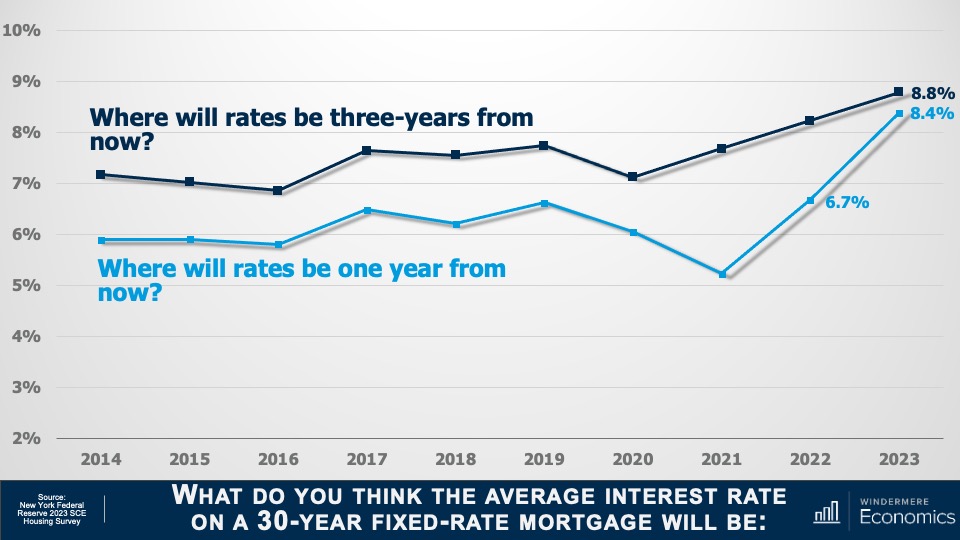
A double line graph showing mortgage rate predictions. Specifically, it shows the average interest rates for 30-year fixed-rate mortgages from 2014 to 2023 and ends with the predicted values by U.S. households as captured in the Federal Reserve Bank of New York in their 2023 Housing Survey. People think the rate will be 8.8% three years from now and 8.4% one year from now.


The first question asked was where they expected mortgage rates to be one year from now. And as you see here that, on average, households expected rates to rise all the way up to 8.4%. Although some may see this as extreme, you can see that in the 2022 survey respondents predicted rates would hit 6.7%, almost exactly where they were at the beginning of this March.

And when asked where they thought rates would be three years from now, on average, households expected to see them climb to 8.8%. Now, that’s a rate we haven’t seen since early 1995!

Well, I’m not sure about you, but I was very surprised by these results as they counter just about every analyst’s expectation regarding where rates will be over the next few years. In fact, myself and every economist I know believes that rates will slowly pull back as we move through this year. I haven’t seen a single forecast suggesting that mortgage rates will rise to a level this country hasn’t seen in decades.

But as they say, the devil’s in the details. When I dug deeper into the numbers, it became very clear to me that demographics played a pretty big part in guiding people’s answers. Let me explain.

1-Year Mortgage Rate Expectations by Education
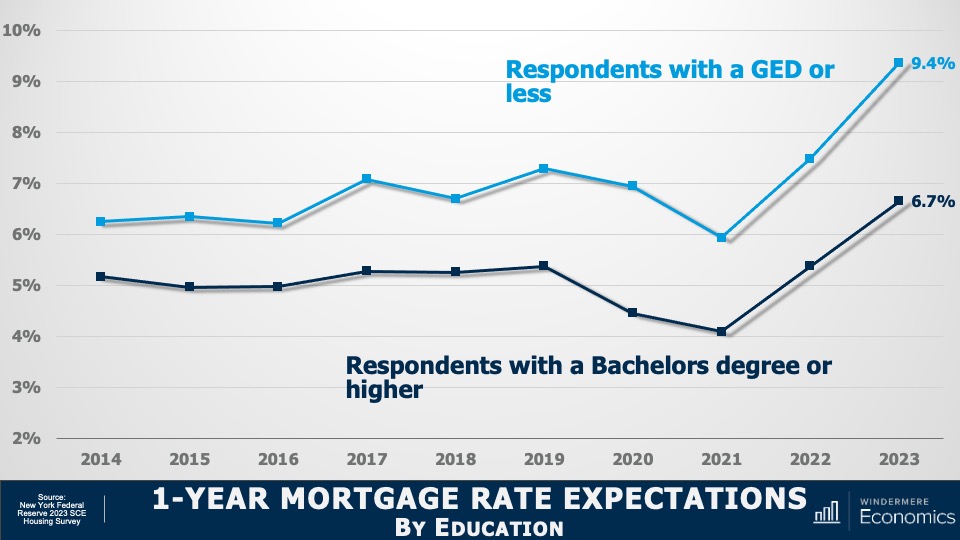
A double line graph showing mortgage rate predictions. Specifically, it shows the average interest rates for 30-year fixed-rate mortgages from 2014 to 2023 and ends with the predicted values by U.S. households separated by educational level completed as captured in the Federal Reserve Bank of New York in their 2023 Housing Survey. In the light blue line, respondents with a GED or less think the rate will be 9.4% in one year. In the dark blue line, respondents with a Bachelors degree think the rate will be 6.7% one year from now.


Here the data is broken down by educational achievement. You can see that survey respondents who didn’t have a college degree thought that mortgage rates would rise to 9.4% within a year. But college graduates were far more optimistic, and they expected rates to be in the high 6’s.

3-Year Mortgage Rate Expectations by Education
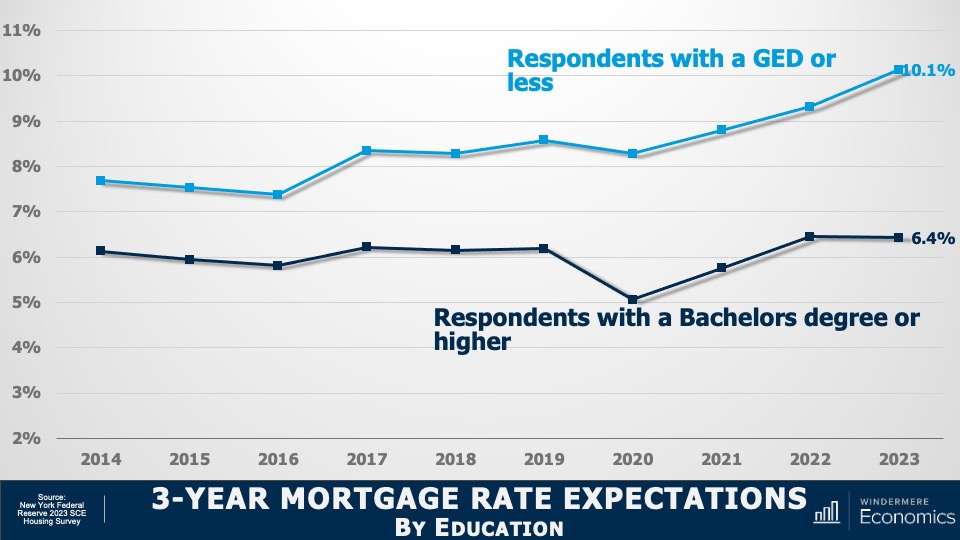
A double line graph showing mortgage rate predictions. Specifically, it shows the average interest rates for 30-year fixed-rate mortgages from 2014 to 2023 and ends with the predicted values by U.S. households separated by educational level completed as captured in the Federal Reserve Bank of New York in their 2023 Housing Survey. In the light blue line, respondents with a GED or less think the rate will be 10.1% in three years. In the dark blue line, respondents with a Bachelors degree think the rate will be 6.4% three years from now.


And when asked to look three years outrespondents without degrees expected rates to break above 10%. While college graduates saw them pulling back a little from their one-year expectations of 6.7%, down to 6.4%.

Now we are going to look at the survey results broken down by housing tenure.

1-Year Mortgage Rate Expectations by Tenure
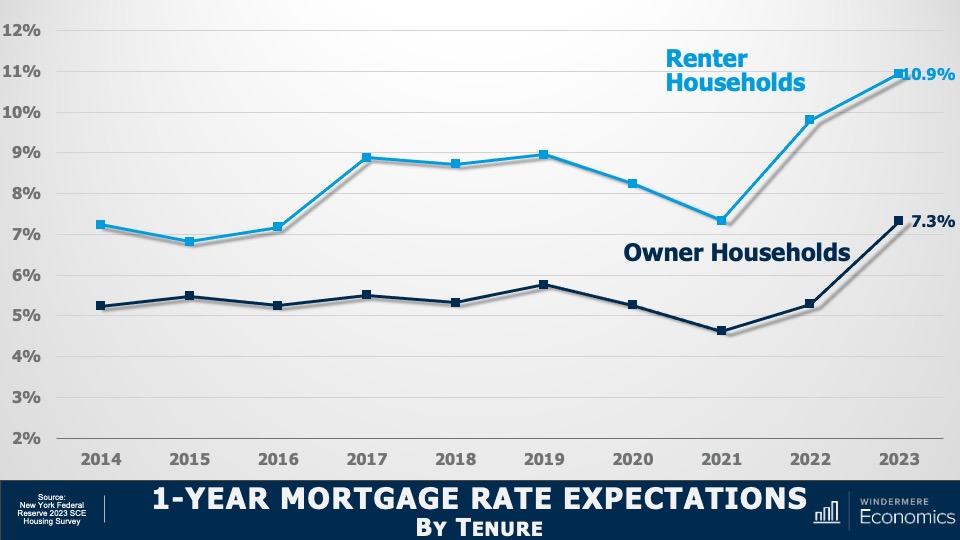
A double line graph showing mortgage rate predictions. Specifically, it shows the average interest rates for 30-year fixed-rate mortgages from 2014 to 2023 and ends with the predicted values by U.S. households separated by housing status as captured in the Federal Reserve Bank of New York in their 2023 Housing Survey. In the light blue line, renter household respondents think the rate will be 10.9% in one year. In the dark blue line, homeowner household respondents think the rate will be 7.3% one year from now.


And here you see that renters expect mortgage rates to be at almost 11% within a year. And homeowners also saw them rising, but only up to 7.3%. 

3-Year Mortgage Rate Expectations by Tenure
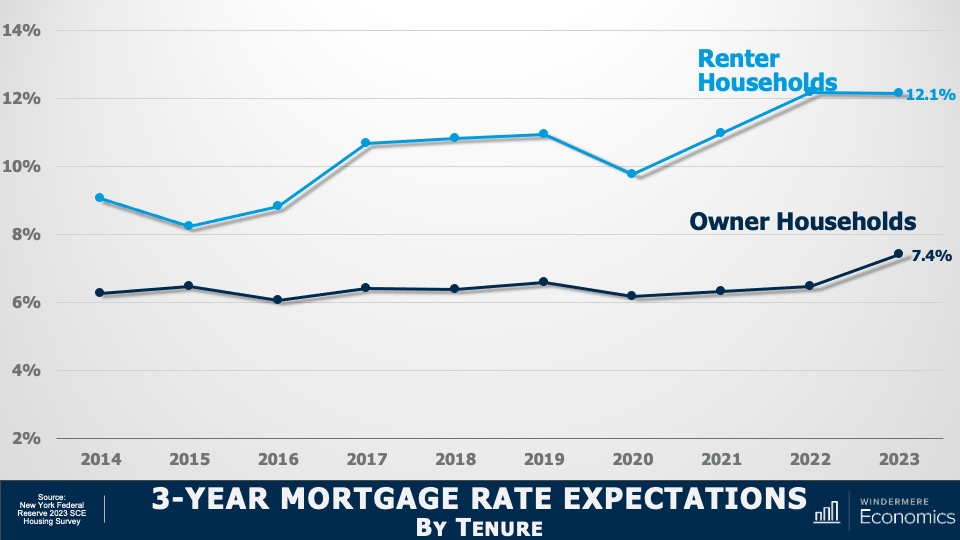
A double line graph showing mortgage rate predictions. Specifically, it shows the average interest rates for 30-year fixed-rate mortgages from 2014 to 2023 and ends with the predicted values by U.S. households separated by housing status as captured in the Federal Reserve Bank of New York in their 2023 Housing Survey. In the light blue line, renter household respondents think the rate will be 12.1% in three years. In the dark blue line, homeowner household respondents think the rate will be 7.4% three years from now.


And over the next three years, renters expected rates to break above 12%. That’s a level not seen since the fall of 1985. But homeowners expected to see rates at a somewhat more modest 7.4%.

So, what does this tell us? I see two things.

Firstly, the rapid increase in mortgage rates that we all saw starting in early 2022 has a lot of people believing that we will see rates continuing to rise, sometimes at a very fast pace, over the next few years. I mean, if it happened before, why can’t it happen again? And this mindset leads me to my second point, which is that it’s very clear that a lot of would-be home buyers just don’t understand how mortgage rates are calculated.

The bottom line here is that I see a potential buyer pool out there that needs educating and that can give an opportunity to brokers to discuss how rates are set and where the market is expecting to see them going forward.

This may alleviate the concerns that many households have who may be thinking that they will never be able to afford to buy a home because of where they expect borrowing costs to be in the future. Education is everything, don’t you agree?

As always, I’d love to get your thoughts on this topic so please comment below! Until next month, take care and I will see you all soon. Bye now.

To see the latest housing data for your area, visit our quarterly Market Updates page.


About Matthew Gardner

As Chief Economist for Windermere Real Estate, Matthew Gardner is responsible for analyzing and interpreting economic data and its impact on the real estate market on both a local and national level. Matthew has over 30 years of professional experience both in the U.S. and U.K.

In addition to his day-to-day responsibilities, Matthew sits on the Washington State Governors Council of Economic Advisors; chairs the Board of Trustees at the Washington Center for Real Estate Research at the University of Washington; and is an Advisory Board Member at the Runstad Center for Real Estate Studies at the University of Washington where he also lectures in real estate economics.

Article originally appears on windermere.com

Whidbey Island Spring Gardening Tips

Contributed by Si Fisher

As springtime tiptoes onto Whidbey Island, seasoned green thumbs and aspiring gardeners alike can't help but feel the irresistible urge to get their hands dirty. Welcome to our little slice of horticultural heaven, where the promise of sun-kissed tomatoes and fragrant herbs is just a trowel's depth away. Whether you're a seasoned pro or a wide-eyed newbie, join us on this whimsical journey through the trials and tribulations of Spring gardening on Whidbey Island.


Whidbey Island Spring Gardening Tips

(6 Tips for a successful Whidbey Island Garden)

Tip #1: Understanding the Climate on Whidbey Island and Choosing the Right Vegetables


Whidbey Island boasts a temperate climate that provides favorable conditions for a variety of cool-season vegetables. With mild winters and cool summers, plants such as peas, lettuces, collards, kale, cabbage, broccoli, and Brussels sprouts can thrive in this region. These vegetables are well-adapted to the area's weather patterns and can be grown with relative ease, making them perfect choices for both beginner and experienced gardeners.

Vegetable Seeds Garden Kit - Non-GMO and Heirloom - 16,000 SEEDS! on Amazon

Certified Organic Vegetable Seed Collection 20-Pack on Amazon


On the other hand, heat-loving vegetables, such as tomatoes, corn, melons, and peppers, may present more of a challenge on Whidbey depending on the microclimate in which your garden is located. These plants require longer growing seasons and warmer temperatures, which can be more difficult to achieve in this region. However, don't be discouraged! With careful planning, the right varieties, and some extra attention, it is still possible to successfully grow these vegetables. Be prepared to invest additional time and effort into their care, as well as research methods to help them thrive, such as using greenhouses, cold frames, or other season-extending techniques.


In summary, understanding Whidbey Island’s climate is crucial for choosing the right vegetables for your garden. By selecting cool-season vegetables and providing extra care for heat-loving plants, you can create a thriving vegetable garden that will yield a bountiful harvest.

Work with a local Realtor® to help find your slice of gardeners paradise

Tip #2: Preparing the Soil for a Successful Garden


A successful garden starts with good soil. Healthy, well-draining soil provides essential nutrients, water, and oxygen to your plants, creating an environment in which they can thrive. In this section, we'll discuss the importance of good soil, the soil types commonly found on Whidbey Island, and how to improve your soil or opt for alternative gardening methods.

The quality of your soil can significantly impact the growth and yield of your plants. Nutrient-rich soil allows plants to develop strong root systems, leading to healthier, more productive plants. Good soil also provides the proper balance of water retention and drainage, ensuring that your plants receive the right amount of moisture without becoming waterlogged.

On Whidbey Island there are two common soil types: sandy/rocky soil and hard clay soil. Both of these soil types can present challenges for growing vegetables, which generally prefer a rich, loamy, well-draining soil.

To improve your native soil, start by conducting a soil test to determine its current nutrient levels and pH. Based on the test results, you can add necessary amendments to improve the soil's structure, fertility, and pH balance. This may include adding organic matter, such as compost or aged manure, as well as specific nutrients or minerals, like lime for acidic soil or sulfur for alkaline soil.


If improving your native soil seems too daunting or time-consuming, consider alternative gardening methods like raised beds or container gardening. Raised beds involve building a frame and filling it with a soil mix specifically designed for gardening, while container gardening involves growing plants in pots or planters. Both options allow you to control the soil quality and eliminate the need to amend native soil.


When using raised beds or containers (Galvanized Raised Garden Bed Kit) , you can opt for pre-mixed soil products designed for gardening, such as FoxFarm Ocean Forest Potting Soil Mix. These products typically contain a balanced mix of nutrients and organic matter to support plant growth. However, it's essential to research the specific needs of the plants you're growing, as some may require additional fertility. Additionally, if you plan to use the same soil for multiple years, you'll need to consider crop rotation and replenishing nutrients through amendments or organic matter.

By understanding the importance of good soil and taking the necessary steps to improve or select the right soil for your garden, you'll create a strong foundation for a successful vegetable garden on Whidbey Island.

Tip #3: Choosing What to Grow in Your Whidbey Island Garden


When planning your vegetable garden, it's important to select plants that align with your family's preferences, available space, and gardening goals. In this section, we'll discuss how to choose the right vegetables to grow, taking into consideration factors such as personal taste, space constraints, and the desire to try something new.

Start by evaluating the vegetables and fruits your family enjoys eating the most. Take a look at your fridge and pantry to identify the produce items you purchase regularly. Growing your favorite vegetables will not only make the gardening experience more enjoyable but also ensures that the produce you harvest will be put to good use.

Consider the space you have available for your garden, as well as the time you can dedicate to gardening tasks. Some vegetables require more space or maintenance than others, so it's essential to choose plants that will fit your garden's dimensions and your schedule. Be realistic about your gardening capabilities and prioritize plants that suit your needs.


Reflect on your past gardening experiences and identify the vegetables that you've had success with in the past. Prioritize growing these plants, as they are likely well-suited to your region and gardening style. Additionally, consider purchasing vegetables that are readily available and inexpensive from local farmers, especially if they require more space or are more challenging to grow. This approach allows you to focus on the plants that you know you can grow successfully and enjoyably.


Purchase goods from local farmers, bakers, fermenters, cooks, and makers from Whidbey Island using the:

THE WHIDBEY ISLAND GROWN COOPERATIVE FOOD HUB!


If you have a favorite vegetable or fruit that is difficult to find at the grocery store or farmer's market, consider growing it yourself. This could be a fun and rewarding opportunity to enjoy produce that you otherwise wouldn't have access to. Some examples of unique plants that could be grown on Whidbey Island include hardy kiwi and ground cherries.


Gardening is an ongoing learning process, and it's important to embrace experimentation and trial and error. Try growing a variety of plants to see which ones thrive in your garden and which ones struggle. This experience will help you refine your garden plan for future seasons, ultimately leading to a more successful and satisfying gardening experience.

By assessing your family's preferences, taking space and time constraints into account, and prioritizing vegetables based on your personal success and local availability, you'll create a garden that is both enjoyable and productive. Don't be afraid to experiment and learn from your experiences; with time and practice, your Whidbey Island garden will flourish.

Tip #4: Deciding Between Seeds or Starts for Your Whidbey Island Garden


One of the key decisions you'll need to make when planning your vegetable garden is whether to grow plants from seeds or purchase starts (young plants). Both options have their advantages and challenges, and the choice ultimately depends on your gardening experience, available time, and personal preferences. In this section, we'll discuss the benefits of using starts, the types of vegetables that do better from seed, and the pros and cons of starting seeds indoors.


For those new to gardening, using starts can be an excellent way to gain experience and confidence in the garden. Starts are young plants that have already begun growing, making them more likely to thrive and produce a harvest. This can be especially helpful for beginner gardeners, as it allows them to focus on learning essential gardening skills without the added challenge of seed starting.


There are a couple great places to get plant starts here on South Whidbey including:

Venture Out Nursery

Bayview Garden


Some vegetables are better suited for direct seeding in the garden rather than transplanting from starts. Carrots, beets, and other root vegetables tend to perform better when grown directly from seed, as transplanting can cause damage to the delicate root systems. Peas and beans also do well when directly sown in the garden.


Starting seeds indoors offers several advantages, including a longer growing season for heat-loving vegetables like tomatoes, peppers, and melons. However, starting seeds indoors also requires additional resources, such as grow lights and trays or pots, and can be more labor-intensive. For those who are up for the challenge, starting seeds indoors can be a rewarding and cost-effective way to grow a variety of vegetables on Whidbey Island.


If you decide to start your own seeds, there are numerous resources available to help guide you through the process. Many gardening websites, blogs, and YouTube channels offer detailed instructions and tutorials on seed starting, covering topics such as choosing the right seeds, providing proper lighting and temperature, and transplanting seedlings into the garden. Venture Out also offers videos and other educational materials to support you in your seed starting journey.


Ultimately, the choice between seeds and starts will depend on your gardening goals, experience, and available resources. Whichever route you choose, remember that gardening is a learning process, and with time and practice, you'll be able to grow a bountiful and enjoyable garden on Whidbey Island.

Tip #5: Timing Your Planting for a Successful Whidbey Island Garden


Planting your vegetables at the right time is crucial for a successful harvest. Timing your planting ensures that your plants have the best possible conditions for growth and are less susceptible to damage from frost or pests. In this section, we'll discuss the importance of understanding frost dates, calculating the latest planting times, and utilizing planting calendars and local resources for guidance.

Frost dates are essential to consider when planning your vegetable garden, as they provide a guideline for when it's safe to plant outside. The first frost date marks the beginning of the growing season, while the last frost date indicates when frost is no longer expected. Knowing these dates for your specific region helps you determine the optimal planting window for each vegetable. To find the frost dates for your area, consult local resources. We have a lot of microclimates on Whidbey Island, and the online tools are not always accurate for our local communities. Reach out to a local nursery, local community gardens, or even your friendly neighborhood gardeners for more localized information about this. I have heard many locals talk about the 1st of May as a safe date from frost, but it’s important to check for your specific area.

When selecting vegetables to grow in your garden, it's essential to consider the length of time they take to grow and ripen. This information, often found on seed packets or plant labels, will help you calculate the latest possible planting date to ensure a successful harvest. Start by identifying the number of days to maturity for each plant and counting backward from the last frost date. This will give you the latest planting date, allowing for a full growing season before the risk of frost returns.

Planting calendars can be invaluable tools for planning your Whidbey Island vegetable garden. These calendars provide a month-by-month guide to sowing, transplanting, and harvesting various vegetables, tailored to your region's climate and growing conditions. Local resources, such as the Deep Harvest Farmplanting calendar for the Pacific Northwest, are particularly helpful as they take into account the unique weather patterns of the area.

Additionally, don't hesitate to seek advice from local experts, such as Master Gardeners, nursery staff, or farmers. These individuals have firsthand experience with growing vegetables on Whidbey Island and can offer valuable insights and tips for timing your planting. Many gardening groups and online forums also provide a wealth of information and support for gardeners of all experience levels.

By understanding frost dates, calculating the latest planting times, and utilizing planting calendars and local resources, you'll be well-equipped to plan your vegetable garden for a successful growing season on Whidbey.

Tip #6: Planting Your Garden for Success on Whidbey Island

Once you've prepared the soil, chosen your vegetables, and timed your planting, it's time to get your hands dirty and start planting your garden. In this section, we'll discuss essential tools for successful planting, following planting instructions for each vegetable, watering considerations, and investing in a quality irrigation system.

Having the right tools at your disposal can make planting your garden a more efficient and enjoyable experience. Some essential tools to consider include a small hand shovel, a hori hori, a larger shovel for bigger plants, a garden fork, gloves, and a stool or knee pads for added comfort. As you gain experience, you may discover additional tools that cater to your specific gardening needs and preferences.

Super Affordable 10 Piece Gardening Set on Amazon

High Rated Hori Hori Knife on Amazon

Extra Thick Kneeling Pad on Amazon

It's important to follow the planting instructions for each vegetable to ensure optimal growth and a successful harvest. These instructions, typically found on seed packets or plant labels, provide valuable information about planting depth, spacing, and proper watering techniques. By adhering to these guidelines, you'll give your plants the best possible chance to thrive in your Whidbey Island garden.

Proper watering is crucial for the health and productivity of your vegetable garden. On Whidbey Island, where the weather is cool and moist, it's essential to strike a balance between providing sufficient water for your plants while avoiding conditions that promote fungal growth. To achieve this, consider using soaker hoses or ground-level watering methods to minimize wetting the plants themselves. Ensuring adequate space between plants for airflow also helps reduce the risk of fungal issues.


A well-planned, high-quality irrigation system can save you time and effort while maintaining optimal moisture levels for your plants. By investing in an irrigation system tailored to your garden's needs, you'll be able to provide consistent water to your plants without overwatering or wasting resources. Additionally, a reliable system can help you maintain your garden's health during periods of drought or when you're away from home.

Automatic Drip Irrigation Kits with Garden Timer on Amazon


With the right tools, proper planting techniques, and an effective watering strategy, you'll be well on your way to planting a successful vegetable garden on the island.

Conclusion: Cultivating Success in Your Whidbey Island Vegetable Garden

New gardeners, take heart! Embarking on the journey of growing your own vegetables is both exciting and rewarding. Remember, every gardener starts as a beginner, and learning from experience is crucial. Embrace the challenges and celebrate your successes, using setbacks as opportunities to learn and improve your skills. As you progress, you'll find that gardening is not only a hobby but a deeply fulfilling and meaningful way to connect with the earth and engage with the world around you.

Whidbey Island boasts a thriving community of farmers, community gardening projects, and passionate hobbyist gardeners. This supportive environment is perfect for nurturing your gardening aspirations. To find the ideal spot for your island garden, work with a local Realtor® who can help you discover your very own piece of gardening paradise. Begin your journey today and immerse yourself in the vibrant Whidbey Island gardening community.


Get connected with other farmers and gardeners on the island use the links below:

Whidbey Island Grown Cooperative Members

Whidbey Island Gardening Facebook Group

Article contributed by: