Q3 2023 Western Washington Real Estate Market

The following analysis of select counties of the Western Washington real estate market is provided by Windermere Real Estate. We hope that this information may assist you with making better-informed real estate decisions. For further information about the housing market in your area, please don’t hesitate to contact your Windermere Real Estate agent.


Regional Economic Overview

The pace of job growth continues to slow in Western Washington, as the region added only 21,907 new positions over the past 12 months. This represented a growth rate of 1.4%, which was the lowest pace of new jobs added since the pandemic ended.

The regional unemployment rate in August was 5.8%, which was marginally below the 6% rate we saw in the same quarter in 2022. A few smaller counties lost jobs over the past 12 months while King County’s employment levels rose a meager .4%, mainly due to job losses in the technology sector. I’ve said before that I’m not convinced that the U.S. is going to enter a recession; I still stand by that theory. Slowing job growth does not necessarily need to be a precursor to a recession, but I expect that we will see lackluster growth until next spring at the earliest.

Western Washington Home Sales

❱ In the third quarter of 2023, 14,970 homes sold. This was down 22% from the third quarter of 2022 and 1% lower than in the second quarter of this year.

❱ Sales fell even as the average number of homes for sale increased 29.5% from the second quarter. This is clearly a sign that significantly higher mortgage rates are having an impact on the market.

❱ Sales fell in all counties except San Juan compared to the third quarter of 2022. They were up in 9 of the 14 counties covered in this report compared to the second quarter of 2023. San Juan, Mason, Grays Harbor, and Whatcom counties saw significant increases.

❱ Pending sales fell 6% compared to the second quarter of this year, suggesting that closings in the upcoming quarter may be lackluster unless mortgage rates fall, which I think is highly unlikely.
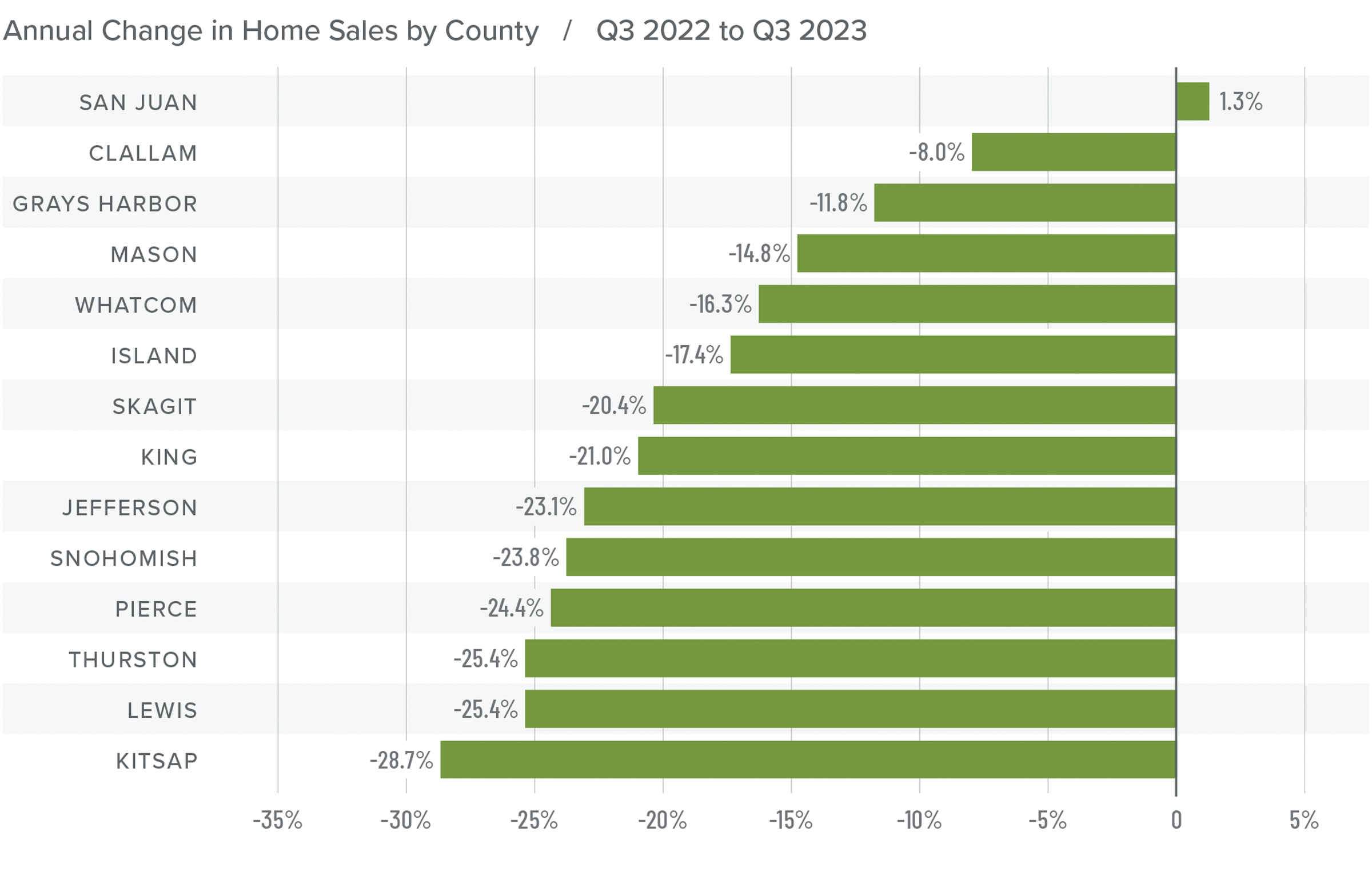
A graph showing the annual change in home sales by county in Western Washington from Q3 2022 to Q3 2023. San Juan had the least drastic change at 1.3%, while Kitsap had the largest change at -28.7%. Areas like Skagit and King were in the middle at -20.4% and -21% respectively.

Western Washington Home Prices

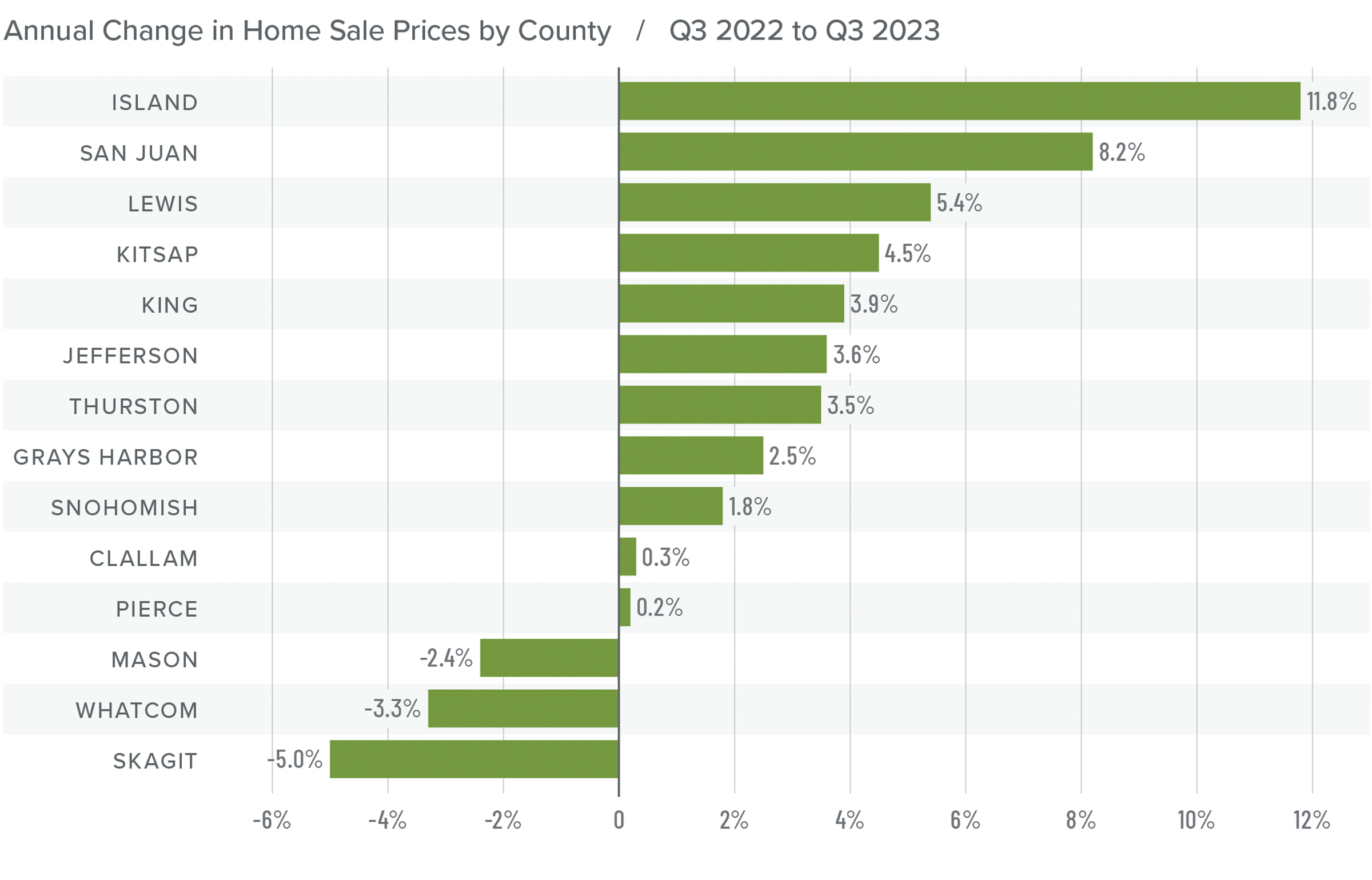
❱ Prices rose 2.8% compared to the third quarter of 2022 and were .6% higher than in the second quarter of this year. The average home sale price was $776,205.

❱ Compared to the second quarter of this year, sale prices were higher in all counties except Grays Harbor (-.5%), Kitsap (-1.5%), Clallam (-1.6%), Whatcom (-2.6%), and Skagit (-3%).

❱ Compared to the prior year, the pace of price growth slowed in the third quarter. This wasn’t too surprising given that the market was coming off record high prices in the summer of 2022. But what was surprising was that prices rose over the previous quarter despite the fact that mortgage rates were above 7% for almost the entire quarter.

❱ I don’t expect prices to move far from current levels in the coming months, and they likely won’t rise again until mortgage rates start to fall. When prices do rise, I anticipate that the pace of growth will be far more modest than we have become accustomed to.
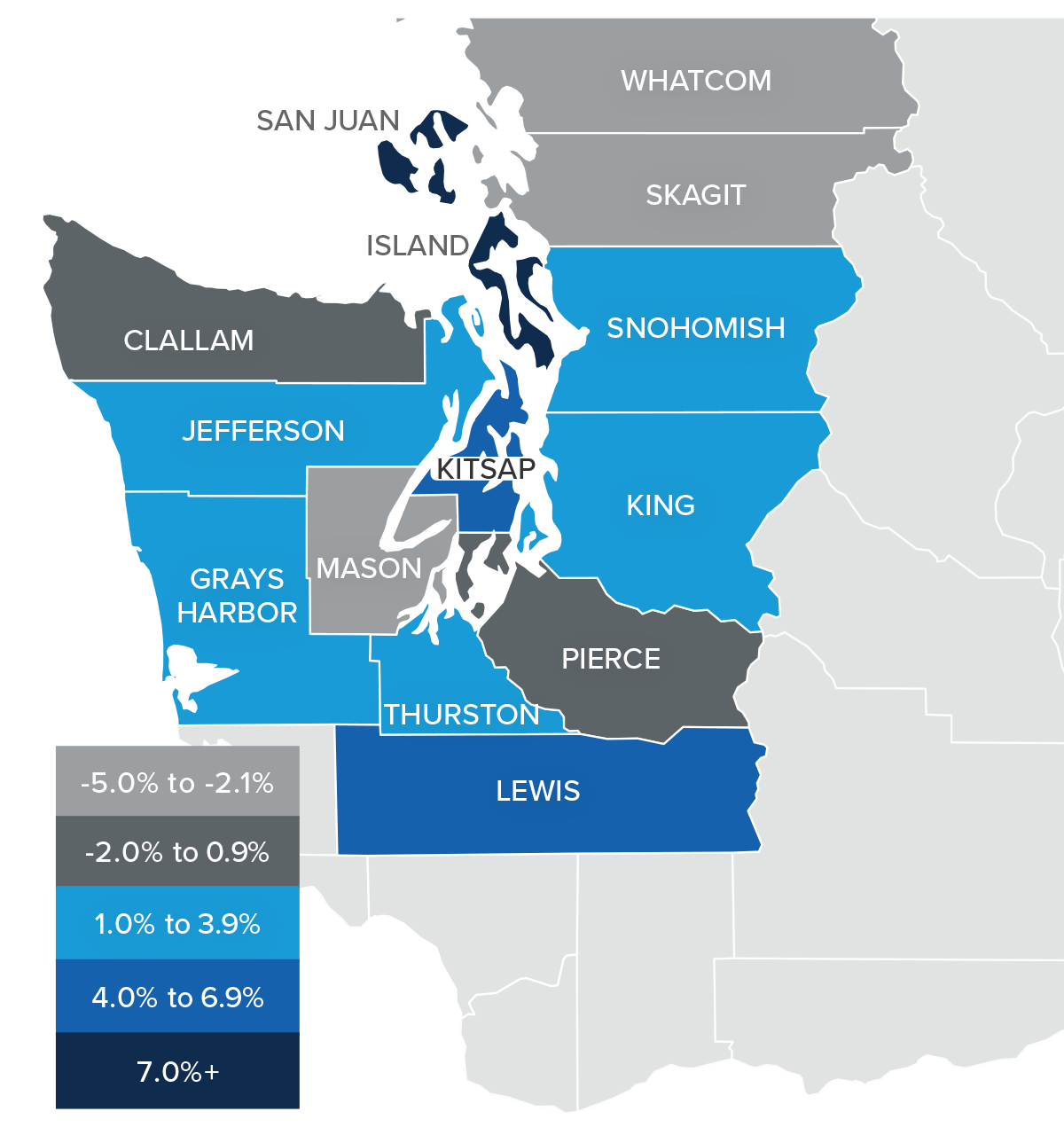
A map showing the real estate home prices percentage changes for various counties in Western Washington. Different colors correspond to different tiers of percentage change. Island and San Juan had percentage changes above 7% and are represented in the corresponding navy color. Lewis and Kitsap Counties were in the 4-6.9% range, King, Jefferson, Thurston, Grays Harbor, and Snohomish were in the 1-3.9% range. Clallam and Pierce were in the -2-0.9% range and Mason, Whatcom, and Skagit were between -5% and -2.1% represented in the light grey color on the map.

A bar graph showing the annual change in home sale prices by county in Western Washington from Q3 2022 to Q3 2023. Pierce County saw the least change with 0.2% increase, and Island saw the biggest increase at 11.8%. Skagit County's home prices decreased 5%.

Mortgage Rates

Mortgage rates continued trending higher in the third quarter of 2023 and are now at levels we have not seen since the fall of 2000. Mortgage rates are tied to the interest rate (yield) on 10-year treasuries, and they move in the opposite direction of the economy. Unfortunately for mortgage rates, the economy remains relatively buoyant, and though inflation is down significantly from its high, it is still elevated. These major factors and many minor ones are pushing Treasury yields higher, which is pushing mortgage rates up. Given the current position of the Federal Reserve, which intends to keep rates “higher for longer,” it is unlikely that home buyers will get much reprieve when it comes to borrowing costs any time soon.

With such a persistently positive economy, I have had to revise my forecast yet again. I now believe rates will hold at current levels before starting to trend down in the spring of next year.
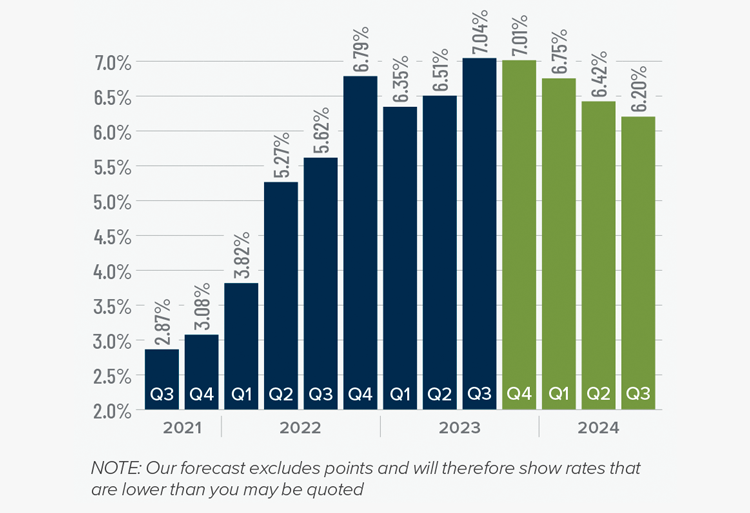
A bar graph showing the mortgage rates from Q3 2021 to the present, as well as Matthew Gardner's forecasted mortgage rates through Q3 2024. In Q3 2023 Mortgage Rates hit 7.04% and Matthew Gardner predicts rates will decrease steadily over the next 4 quarters.

Western Washington Days on Market

❱ It took an average of 32 days for homes to sell in the third quarter of 2023. This was 8 more days than in the same quarter of 2022, but 3 fewer days compared to the second quarter of this year.

❱ Snohomish and King counties were the tightest markets in Western Washington, with homes taking an average of only 19 days to find a buyer. Homes for sale in San Juan County took the longest time to find a buyer (57 days).

❱ All counties except Snohomish saw average days on market rise from the same period in 2022. Market time fell in 9 of the 14 counties compared to the prior quarter.

❱ The greatest fall in market time compared to the second quarter was in San Juan County, where market time fell 23 days.
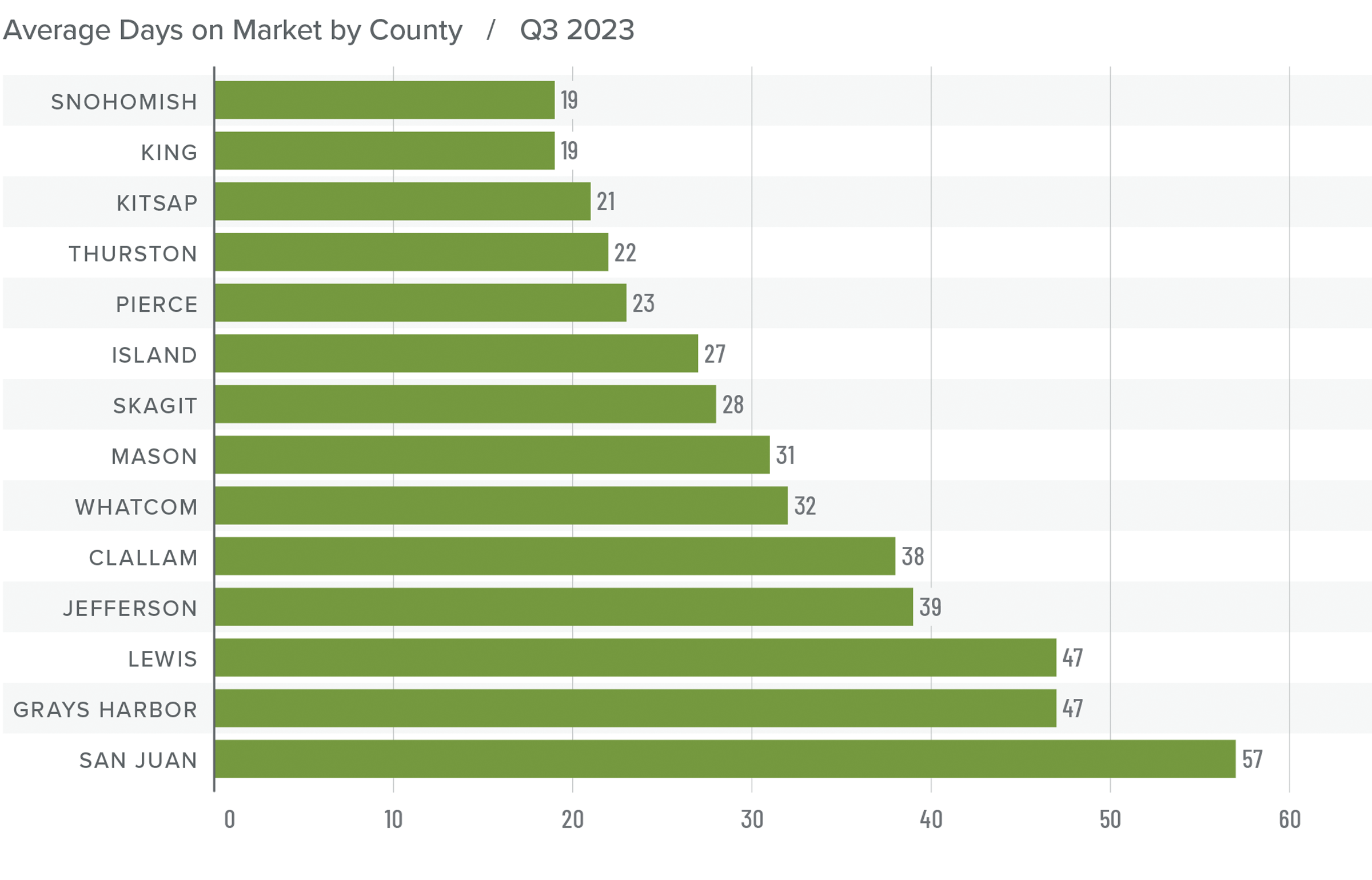
A bar graph showing the days on market by county for homes in Western Washington in Q3 2023. Snohomish County had the lowest DOM at 19, while San Juan had the highest at 57. Skagit and Mason Counties were in the middle at around 30 days on market.

Conclusions

This speedometer reflects the state of the region’s real estate market using housing inventory, price gains, home sales, interest rates, and larger economic factors.

Although it was good that listing activity rose in the third quarter, it still remains well below levels that can be considered normal. This is unlikely to change anytime soon given that over 86% of Washington homeowners with mortgages have an interest rate below 5% and more than a quarter have rates at or below 3%. There is little incentive for them to sell if they don’t have to.

More germane is the disconnect between what homeowners believe their homes are worth and what buyers can afford with mortgage rates in the mid-7% range. Most sellers appear to be getting their asking prices, or very close to it, which reflects their confidence in the market. However, home buyers are being squeezed by multi-decade high borrowing costs.

It is all quite a quandary. However, taking all the factors into consideration, sellers still have the upper hand but not enough to move the needle from the position it was in last quarter
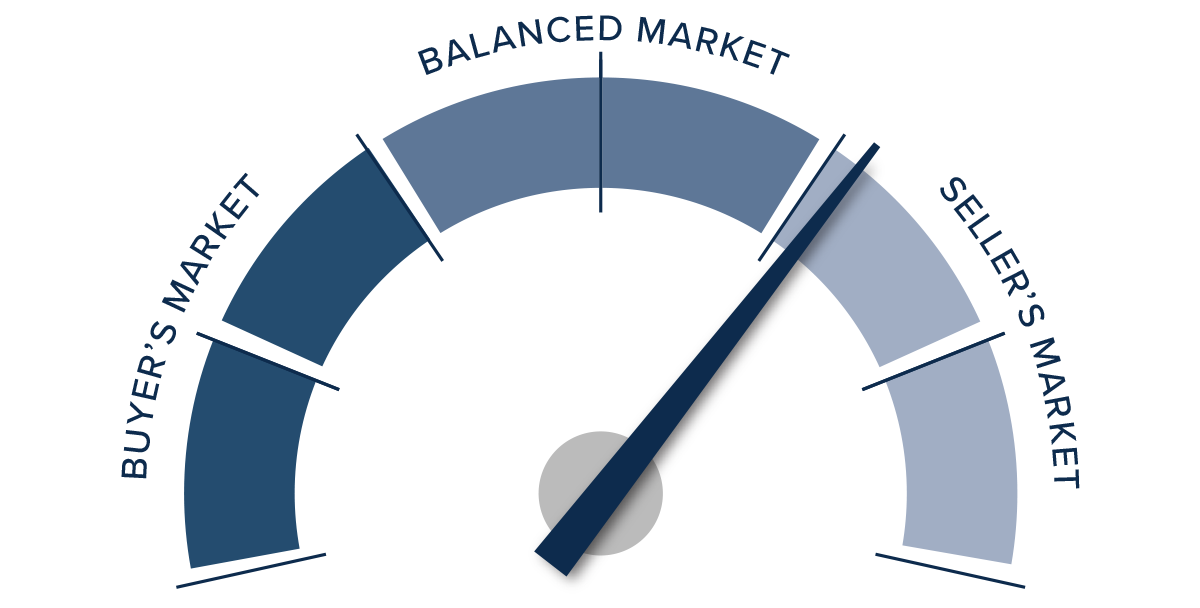
A speedometer graph indicating a light seller's market in Western Washington for Q3 2023. The meter sits in “seller’s market” but is close to the border of “balanced market.”Given all the factors discussed above, the needle stays in the same position as the last quarter. The market still heavily favors sellers, but if rates rise much further, headwinds will likely increase.


Buying a Home on Whidbey Island: The Investment You Can Live In

Contributed by Si Fisher

Lets embark on a journey of financial security and personal fulfillment! In today's dynamic world, making prudent financial decisions is paramount. When it comes to housing choices, the decision to rent or buy can profoundly impact your long-term financial well-being and overall lifestyle. While renting may seem like the path of least resistance, owning a home on Whidbey Island presents a wealth of benefits that can set you on a trajectory of financial security and personal fulfillment.

Homeownership: A Pathway to Growing Equity

Purchasing a home transcends mere acquisition of a dwelling; it's an investment in your future. Unlike renting, where monthly payments vanish into the landlord's coffers, owning a home allows you to build equity, a valuable asset that appreciates over time. As you diligently pay down your mortgage and home values rise, your equity expands, bolstering your net worth and providing a financial safety net for the future.


Want to talk with one of my preferred lenders?

Drop me a message and I will get you connected.


Escape the Endless Cycle of Rent Increases

If you've ever felt trapped in the relentless cycle of rent hikes, you're not alone. Rents have been steadily escalating for decades, straining many household budgets. Owning a home, on the other hand, offers stability and predictability. You lock in your monthly housing costs, shielding yourself from the whims of landlords and market fluctuations.

Whidbey Island: A Haven for Homeownership

Whidbey Island presents an idyllic setting for those seeking a tranquil lifestyle amidst breathtaking natural beauty. With its charming towns, vibrant arts scene, and abundance of outdoor activities, Whidbey Island is a haven for those who appreciate a slower pace of life. And when it comes to real estate, Whidbey Island offers a diverse range of options, from cozy cottages to waterfront estates, catering to a variety of tastes and budgets.


Partner with a Whidbey Island Real Estate Specialist: Your Guide to Homeownership Bliss

Navigating the real estate market can be a daunting task, but with the guidance of an experienced Whidbey Island real estate specialist, you can make informed decisions and find the perfect home that aligns with your needs and aspirations. A local real estate agent can provide invaluable insights into market trends, neighborhoods, and the home buying process, ensuring a smooth and successful transition into homeownership.


For the keen explorers among you, get my monthly real estate market report delivered directly to your inbox, tailored for your preferred zip code – just click here!


Embrace the Whidbey Island Lifestyle

Owning a home on Whidbey Island is more than just acquiring a property; it's an invitation to embrace a lifestyle of tranquility, natural beauty, and community spirit. Picture yourself strolling along pristine beaches, hiking through verdant forests, or indulging in the local arts scene. With a Whidbey Island real estate specialist by your side, you can unlock the door to this enriching lifestyle.

Seize the Opportunity to Transform Your Life

Buying a home on Whidbey Island is not just an investment in bricks and mortar; it's an investment in your well-being, happiness, and future. It's a chance to create a home that reflects your unique personality and provides a haven for you and your.

Article contributed by:

Contact a local expert to get expert advice about selling your home

Check out other articles below

U.S. Housing Market 2023: Updated Analysis

Windermere Chief Economist Matthew Gardner gives an updated analysis of the U.S. housing market in 2023, using data released by The National Association of REALTORS® on listing activity, home sales, price growth, and more.

This video is the latest in our Monday with Matthew series with Windermere Chief Economist Matthew Gardner. Each month, he analyzes the most up-to-date U.S. housing data to keep you well-informed about what’s going on in the real estate market.


U.S. Housing Market 2023

Hello there, I’m Windermere Real Estate’s Chief Economist Matthew Gardner and welcome to this month’s episode of Monday with MatthewThe National Association of REALTORS® released their data on the U.S. housing market in August, and it contained a few things which I found interesting and wanted to share with you.

Listing Activity

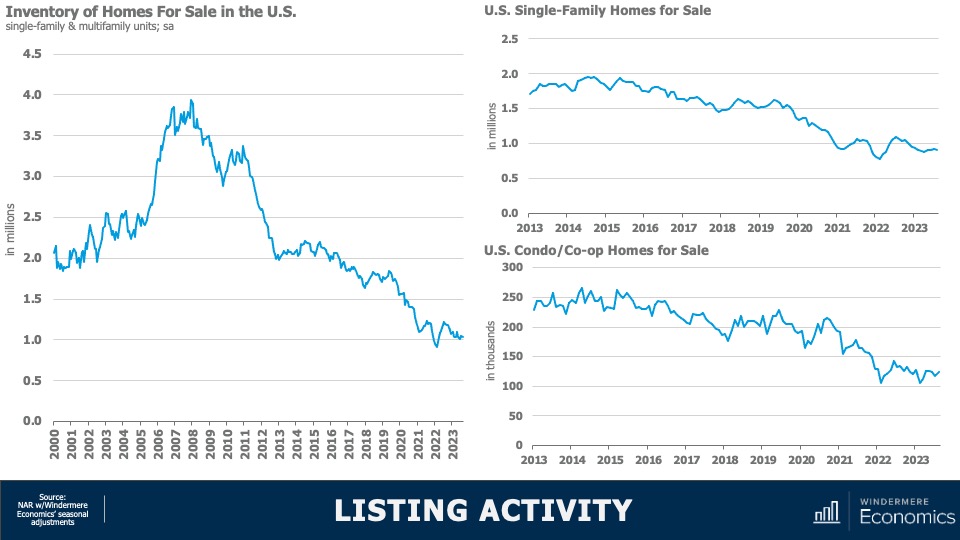
A triple line graph showing the inventory of homes for sale in the U.S. from 2000 to 2023, U.S. single-family homes for sale from 2013 to 2023, and U.S. condo/co-op homes for sale from 2013 to 2023. All three graphs show a downward trend from the mid-2010s to 2023.


As you can clearly see here, the number of homes for sale remains at close to historic lows. When adjusted for seasonality, there were just 1.03 million single-family and condominium homes for sale in the month of August, and that’s down 8.3% from a year ago and the second lowest level in 2023. When adjusted for seasonal variations, there were just over 911,000 single-family homes for sale in the month, that’s 15% lower than a year ago and 36% below August of 2019. And the condominium market is not faring any better with just over 123,000 units available for purchase, listing activity was down year-over-year by just over 9%.

Homes for Sale August 2023

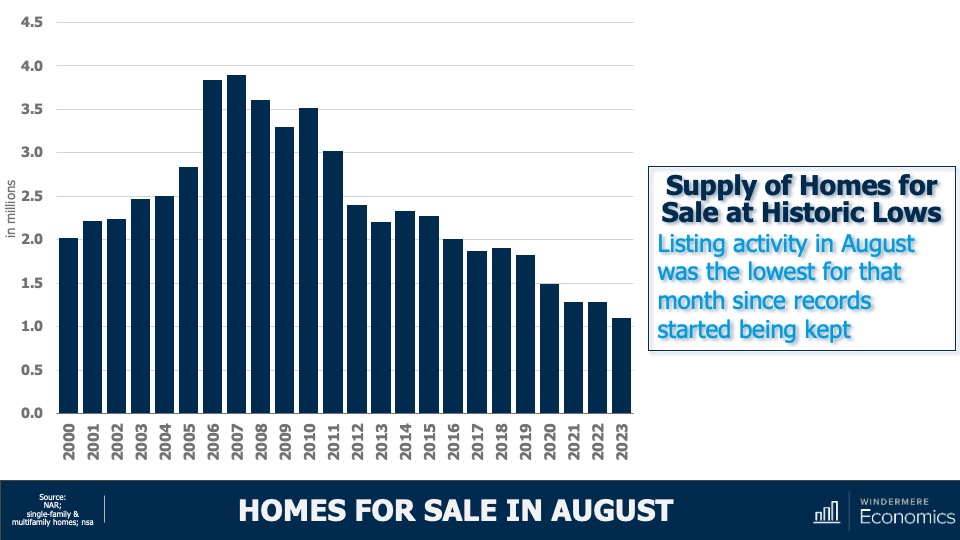
A bar graph showing homes for sale in August from 2000 to 2023. Supply topped out in 2006 and 2007 at around nearly 4 million, before declining steadily to 2023, where supply is just over 1 million.


And to give you a little different perspective, this chart shows you the total number of units for sale in the month of August going back more than 20 years and I think it gives a pretty good indication as to how tight the U.S. housing market really is.

Now, we’ve talked before about the reasons why supply is so limited, and the blame is almost totally attributable to mortgage rates with sellers remarkably reluctant to move because that would mean losing the historically low mortgage rate that they currently benefit from. And as the old saying goes, “you can’t buy what’s not for sale,” and this is certainly true in the housing market today.

U.S. Housing Market 2023: Sales Activity

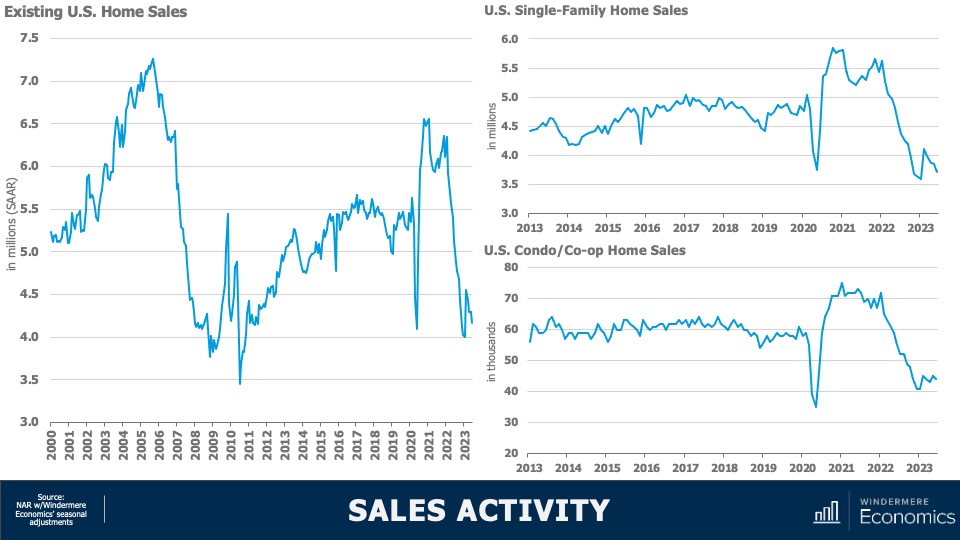
A triple line graph showing existing U.S. home sales from 2000 to 2023, U.S. single-family home sales from 2013 to 2023, and U.S. condo/co-op home sales from 2013 to 2023. All three graphs show a spike between 2020 and 2022 before declining sharply in 2023.


With such limited choice in the marketplace, it’s unsurprising to see home sales having plummeted following the pandemic induced surge we saw in 2021. At an annual sales rate of 4.04 million units, that is only 40,000 more than the low seen this January and we are now holding at levels we haven’t seen since 2010. Interestingly, single-family sales did see a little jump at the start of this year, but they have since pulled back—likely a function of rising financing costs, which were getting close to 7% in June.

But the condominium market, while certainly down significantly, appears to be somewhat more resilient. I find this interesting as we have not seen any palpable increase in listing activity for multifamily units.

Home Sale Prices Off All-Time High

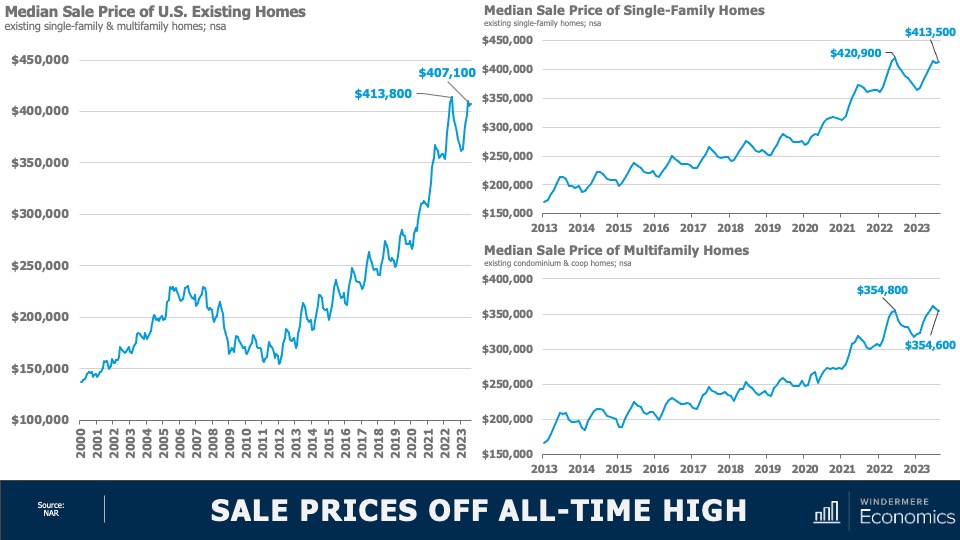
A triple line graph showing the median sale price of U.S. Existing Homes from 2000 to 2023, the median sale price of single-family homes from 2013 to 2023, Median sale price of multifamily homes 2013 to 2023. All three show a gradual increase from 2013 to 2022, a peak in 2022, with the 2023 numbers being just below that peak.


When prices started to fall in the summer of 2022, many expected to see them continue to plunge in a manner similar to that seen following 2007 collapse, but that has certainly not been the case. Sale prices have rebounded and remain remarkably resilient—especially given significantly higher financing costs.

  • Although we did see a small drop in home prices between June and July of this year, U.S. home prices are only 1.6% below their 2022 peak; they’re up 3.9% year over year; and up by 11.1% from the start of 2023.

Single-family home prices paint a similar picture with prices down by 1.8% from peak; but up 3.7% year over year, and up 11.2% from the start of the year. Interestingly, sale prices in the Northeast were actually 3.5% higher in August than their 2022 peak. And condominium prices are just 0.1% below the high seen in June of last year. Prices are now up 6.2% year over year and are 11.6% higher than we saw at the end of 2022.

Now, of course the data shown here is unlikely to reflect the recent surge in mortgage rates so it will be interesting to see what impact that has not just on sales but sale prices when the September and October data is published.

My intuition suggests that—even with mortgage rates where they are today—as long as they don’t move significantly higher, prices at the national level are unlikely to collapse. But I do see sales volumes pulling back further as listing activity remains very constrained.

Price Growth vs Payment Growth

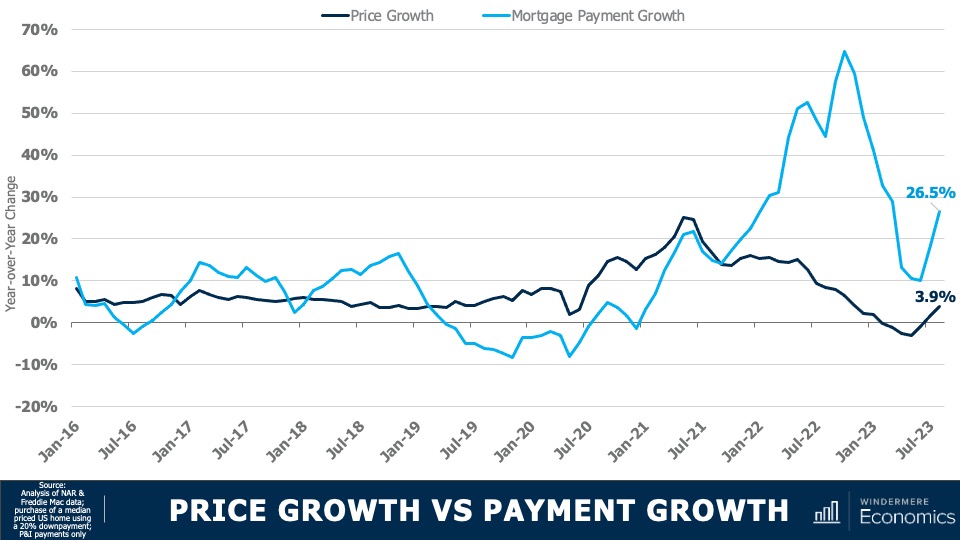
A double line graph showing price growth vs mortgage payment from Jan 2016 to July 2023. In 2023, mortgage payment growth sits at 26.5% while price growth is at 3.9%.


This chart shows a different way to look at the impact that mortgage rates are having on the market. The dark blue line shows year-over-year home price growth, and the light blue line shows the 12-month change in average mortgage payments.

Although we did see that annual growth in mortgage payments fall to just 10% in June of this year—the first time we have seen that since 2021—it has subsequently jumped back up. This means that a buyer of a median priced house in the U.S. is faced with payments that are 26 and a half percent higher than they were 12 months ago. At the same time, home price growth has stalled.

As I’ve mentioned in several past videos, I find it unlikely that inventory levels will increase significantly in 2023, and I also believe that supply will be constrained next year as well as rates remain at elevated levels.

As we know, it is this lack of inventory that has helped to support home prices; however, there is a breaking point. 10-year bond yields are holding at multi-year highs and do not appear to be thinking of pulling back at any time soon—especially given new bond issuances that the country is going bring to market in order to address our burgeoning debt levels.

And it’s because of this that I now expect to see rates remaining higher for longer, and the question then becomes how much tolerance will buyers have if mortgage rates hold where they are today or if they head closer to 8%.

Although I am not expecting this to happen, it is possible. And if it does, then sales will fall further and the underpinning of price stability will certainly be eroded. And there you have it. As always, I’d love to hear your thoughts on this subject so feel free to leave your comments below. Until next month, stay safe out there and I’ll see you soon. Bye now.

To see the latest housing data for your area, visit our quarterly Market Updates page.


About Matthew Gardner

As Chief Economist for Windermere Real Estate, Matthew Gardner is responsible for analyzing and interpreting economic data and its impact on the real estate market on both a local and national level. Matthew has over 30 years of professional experience both in the U.S. and U.K.

In addition to his day-to-day responsibilities, Matthew sits on the Washington State Governors Council of Economic Advisors; chairs the Board of Trustees at the Washington Center for Real Estate Research at the University of Washington; and is an Advisory Board Member at the Runstad Center for Real Estate Studies at the University of Washington where he also lectures in real estate economics.


❄️ Windermere Whidbey’s Coats for Kids Drive is BACK!


We are proud to announce our sponsorship for another year of Coats for Kids!

This Charity is being spearheaded by Paula Peters from our property management division in partnership with the Readiness to Learn Foundation. We are on a mission to ensure no child goes cold this winter on Whidbey Island.

📆 Date: Now through mid-November

Key Highlights:


🌟 Six Glorious Years: This marks our sixth annual Coats for Kids drive. Over the past years, we’ve donated an astounding 1,200+ pieces of cold-weather clothing, with a significant majority being essential coats and jackets!


📦 Donation Boxes: If you would like to HELP, please drop off NEW coats and boots at our offices in Freeland or Langley through mid November

Freeland Office
360/331-6636 5531
5531 Freeland Avenue

Langley Office
360/221-8898
223 Second Street


💌 Distance No Bar: Purchase items online and have items shipped to our offices! Heartwarming support pours in from all corners, including a recent kind donation from a continued supporter in Florida!


💵 Monetary Donations: If you’re considering a monetary contribution, please write checks payable to “Readiness to Learn”.


Our 2023 Goal:

🎯 100 Coats/Jackets! Alongside, we’ll happily accept rain boots, cozy hats, mittens, gloves, and warm socks.

📲 For our tech-savvy supporters, keep an eye out for our Amazon Wish List. After its success last year, it’s making a comeback!

🙏 When you donate, do let Paula know. Every contributor deserves a heartfelt acknowledgment!

🌈 Donations can range from toddler sizes to adult, and any color is welcome. Just a small reminder, please ensure all donated items are BRAND NEW WITH TAGS.


Spread the Word:

🔊 Let’s amplify our reach! Inform your clients, chat with your family, call up your friends, and let’s come together as a community for this noble cause.

Warm Hearts Make Warm Kids! Join us in this heartwarming endeavor and ensure every child on Whidbey Island experiences a cozy winter. Your contribution can make a world of difference! 🧡

Facebook Events Page

Contact us for more details!