Facebook
 X
X
 Pinterest
 Copy Link
Camping on Whidbey Island is less about finding the one “best” campground and more about choosing the right base for the kind of trip you want. North Whidbey puts you close to Deception Pass and an activity-rich state park setting. Central Whidbey offers coastal trails and quieter historic surroundings. South Whidbey has a practical near-town campground option for tent and RV travelers.
Use this guide to compare the main public campground choices, understand what to verify before leaving home, and avoid an easy mix-up: South Whidbey State Park is day-use only, not an overnight campground.
Image note: The visuals in this article are editorial guide images created to explain Whidbey camping planning. They are not documentary photos from a specific place, event, business, property, or moment.
Quick planning note: Campground availability, burn restrictions, route conditions, ferry service, and site details can change. Check the official campground page and live travel tools immediately before your trip.
Coming from the mainland? Start with the dedicated Whidbey ferry guide before you finalize your arrival plan.
Quick comparison: choose your Whidbey camping base
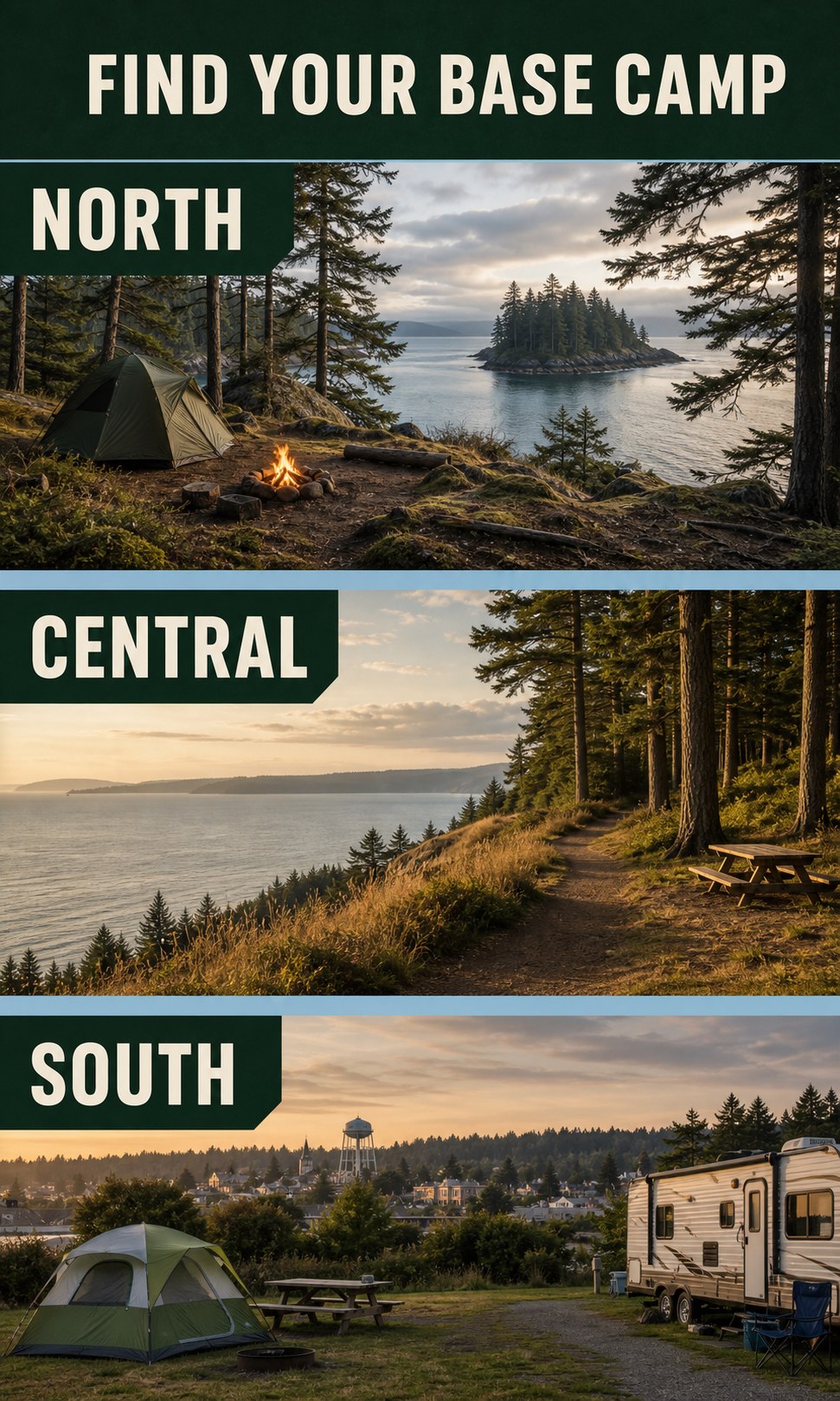
North Whidbey: Deception Pass State Park
Best for campers who want forest, water, trails, beach exploration, and a full state-park base camp. It is the most activity-rich option of the three, so checking current alerts and site details matters.
Central Whidbey: Fort Ebey State Park
Best for coastal views, wooded trails, military history, and an easy Central Whidbey base near Coupeville and Oak Harbor. It is a strong fit for a slower trip built around walking, beach time, and exploring nearby towns.
South Whidbey: Whidbey Island Fairgrounds Campground
Best for tent or RV campers who want a practical near-town base close to Langley, with published hookups, showers, and easy access to South Whidbey errands, meals, and evening plans.
Deception Pass State Park: for a full North Whidbey base camp
Deception Pass State Park is a natural choice when your camping trip centers on trails, shoreline, forest, freshwater, and saltwater access. The park lists camping, accessible campsites, restrooms, showers, drinking water, fire pits, and a trailer dump among its amenities.
It is also a place where current conditions matter. Before driving up, check the official park page for alerts, burn restrictions, trail or parking limitations, and the site information that applies to your tent, trailer, or RV. Do not assume a vehicle that fits one campground loop will fit every parking area or campsite.
Open Deception Pass State Park in Google Maps
Fort Ebey State Park: for coastal trails and Central Whidbey access
Fort Ebey State Park is a coastal camping park with wooded trails, beach access, open views, and the distinctive atmosphere of a former military site. The park describes 25 miles of wooded trails, along with camping, showers, drinking water, accessible campsites, and nearby beach exploration.
One useful local detail belongs in your planning conversation: the official park page notes that NAS Whidbey training flights may create aircraft noise above the campground at various times. That will not bother every visitor, but it is worth knowing before choosing a site for a quiet reset.
If you are building a Central Whidbey itinerary, pair your stay with the local context in Your Guide to Coupeville and the practical shoreline details in the Whidbey Island Beach Access Guide.
Open Fort Ebey State Park in Google Maps
Whidbey Island Fairgrounds Campground: for a South Whidbey, near-town stay
The Whidbey Island Fairgrounds Campground in Langley is currently identified by the Port of South Whidbey as the only public campground on South Whidbey. It is a practical choice when you want to camp without being far from town.
The campground lists 20 RV sites with power and/or water hookups, tent camping, private-shower bathrooms, a dump station, and online registration and payment. Its published 2026 rates are $25 per night for tent camping with a car, $40 for regular RV sites, and $50 for premium RV sites; always confirm rates, site availability, event-period conditions, and rules directly with the campground before booking.
For a South Whidbey stay, the location can make it easier to add a meal, harbor stroll, or village stop without turning the trip into a long drive. Explore the broader local context in the Guide to Langley.
Open Whidbey Island Fairgrounds Campground in Google Maps
What to reserve and verify before you leave
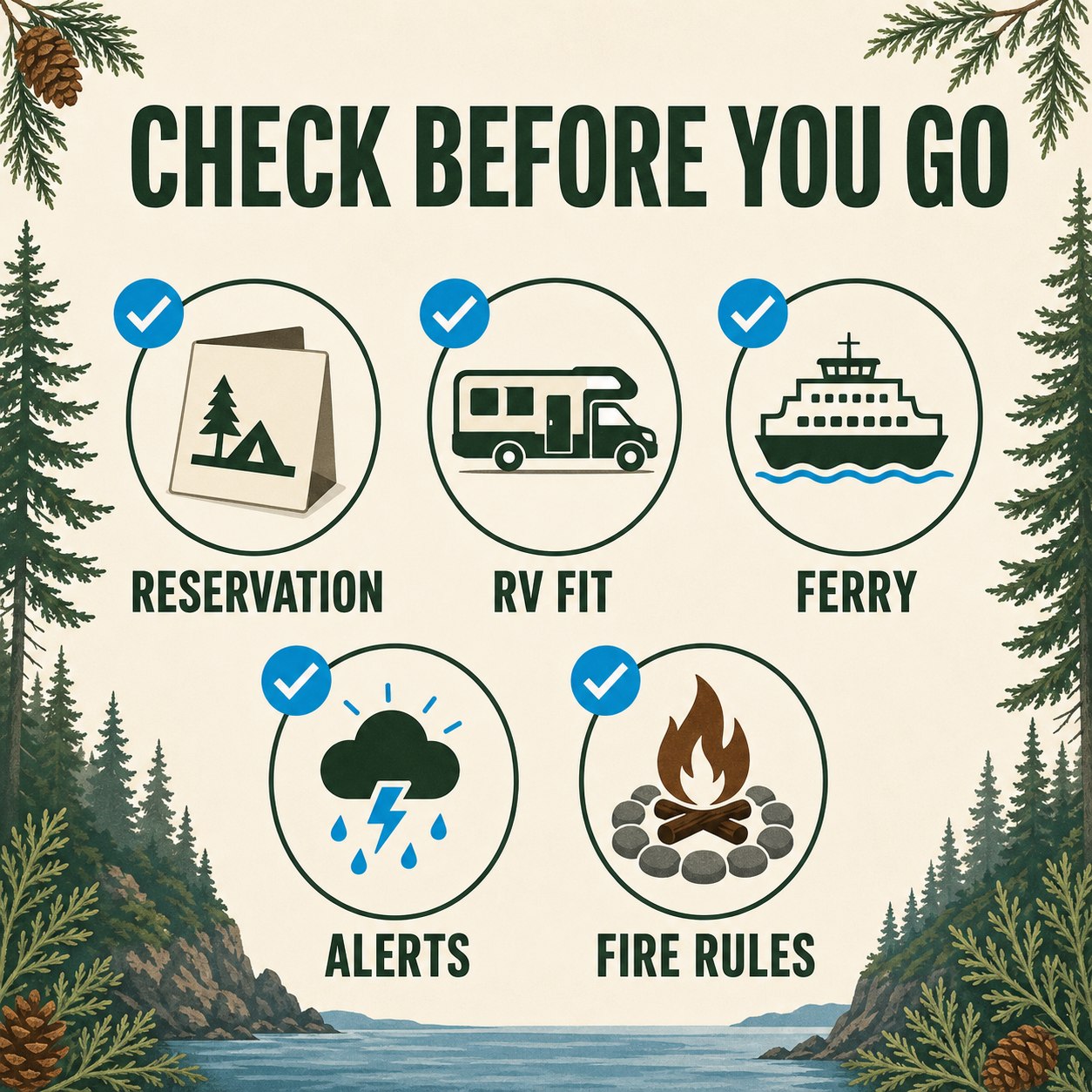
- Reservation and site fit: Know your dates, party size, tent count, vehicle length, trailer length, and whether you need hookups. Washington State Parks says reservations can be made up to nine months ahead, while same-day campsite reservations may be possible until 2 p.m. when space remains. Review State Parks reservation guidance.
- Alerts and fire rules: Check the official park page on travel day. Conditions, burn restrictions, water availability, trail access, and parking limits can change.
- Ferry or route plan: Use Washington State Ferries live tools for schedule and service updates. Vehicle reservations are available on the Port Townsend–Coupeville route; a ticket does not guarantee a particular sailing on every route.
- Passes: State Parks says overnight campers do not need a Discover Pass to park in the state park where they are staying. A pass may still be needed for day-use parking at other state recreation lands. Review Discover Pass details.
- Quiet-hours expectations: State park campers should plan for check-in and checkout rules, leash requirements, and quiet hours. These basics help everyone have a better stay. Review current State Parks camping rules.
A simple three-day Whidbey camping rhythm
Day 1: Arrive and settle in. Keep the first afternoon simple. Set up camp, take a nearby short walk, and learn the immediate layout before trying to fit in a major island outing.
Day 2: Choose one anchor adventure. Make one park, trail, beach, town, or water activity the center of the day. Whidbey feels better when there is time for detours, weather changes, and a slower meal.
Day 3: Leave room for the return trip. Check ferry status or your northbound route before packing up. A final short walk or nearby shoreline stop is usually a better finish than overloading the last morning.
Camping versus imagining a longer Whidbey stay
A camping trip is one of the best ways to notice the practical rhythms that a quick day trip can hide: travel distances, morning fog, evening quiet, park access, nearby services, ferry timing, and the pace that feels right for your household. If a weekend here starts to feel like more than a getaway, explore homes for sale on Whidbey Island when it is useful—not as a substitute for spending time in the places that fit your life.