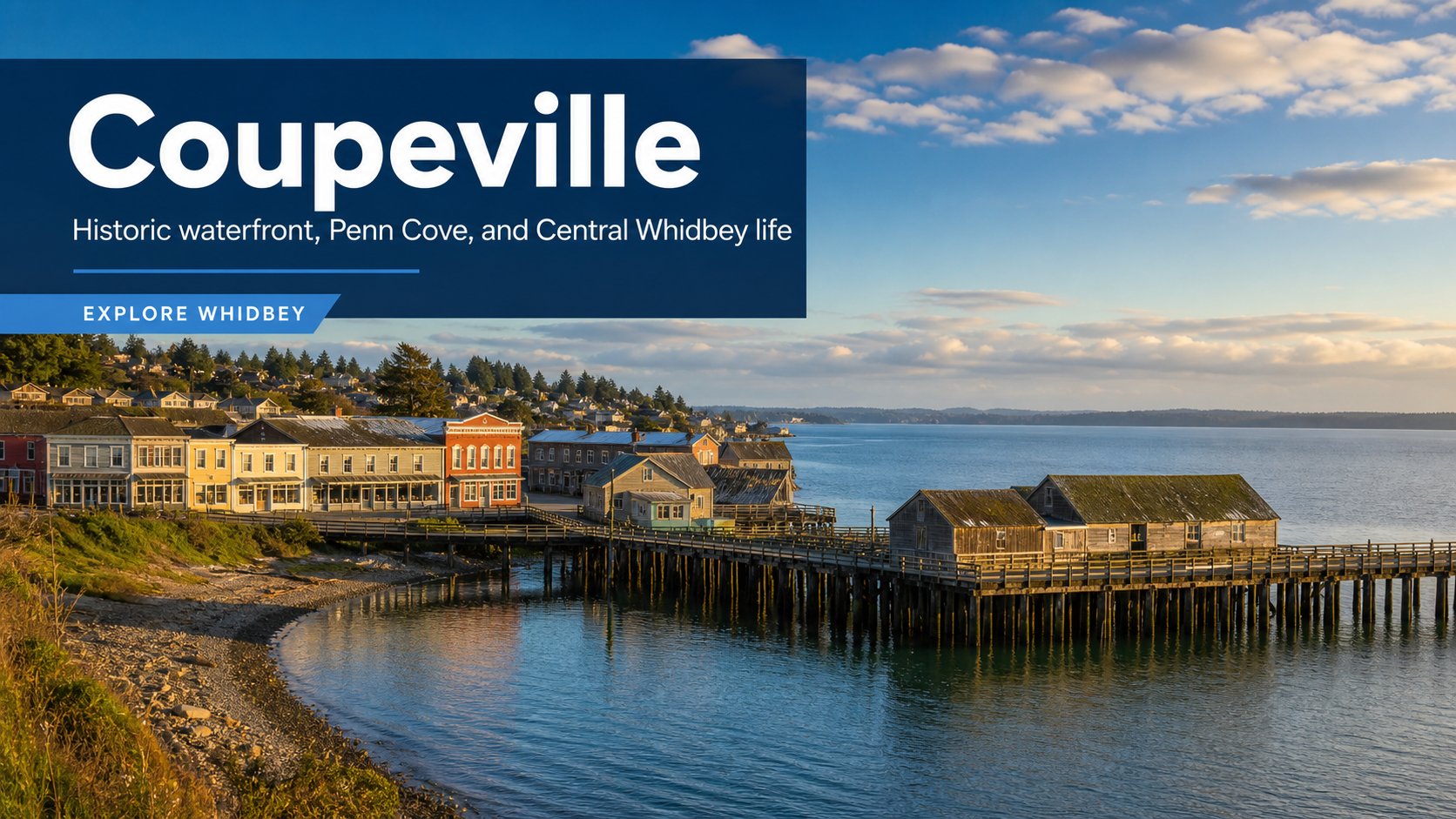
Coupeville is Central Whidbey’s historic waterfront heart: Penn Cove, Front Street, a working wharf, prairie landscapes, state parks, and one of the island’s most layered places to live.
Coupeville sits near the middle of Whidbey Island, where Penn Cove, historic Front Street, Ebey’s Landing National Historical Reserve, Fort Casey, Fort Ebey, farms, beaches, and quiet residential roads all come together. It feels smaller and more historic than Oak Harbor, more centrally placed than Clinton, and more connected to open prairie and preserved landscape than many island towns.
For visitors, Coupeville is an easy place to spend a day: walk the wharf, browse Front Street, stop at the museum, eat near the water, and head out toward the bluff trails or Fort Casey. For buyers, the question is more nuanced. Coupeville can offer walkability, water views, historic character, rural acreage, Reserve-edge settings, and Central Whidbey access, but each setting comes with its own site checks, preservation context, wind, drainage, shoreline, septic, and access considerations.
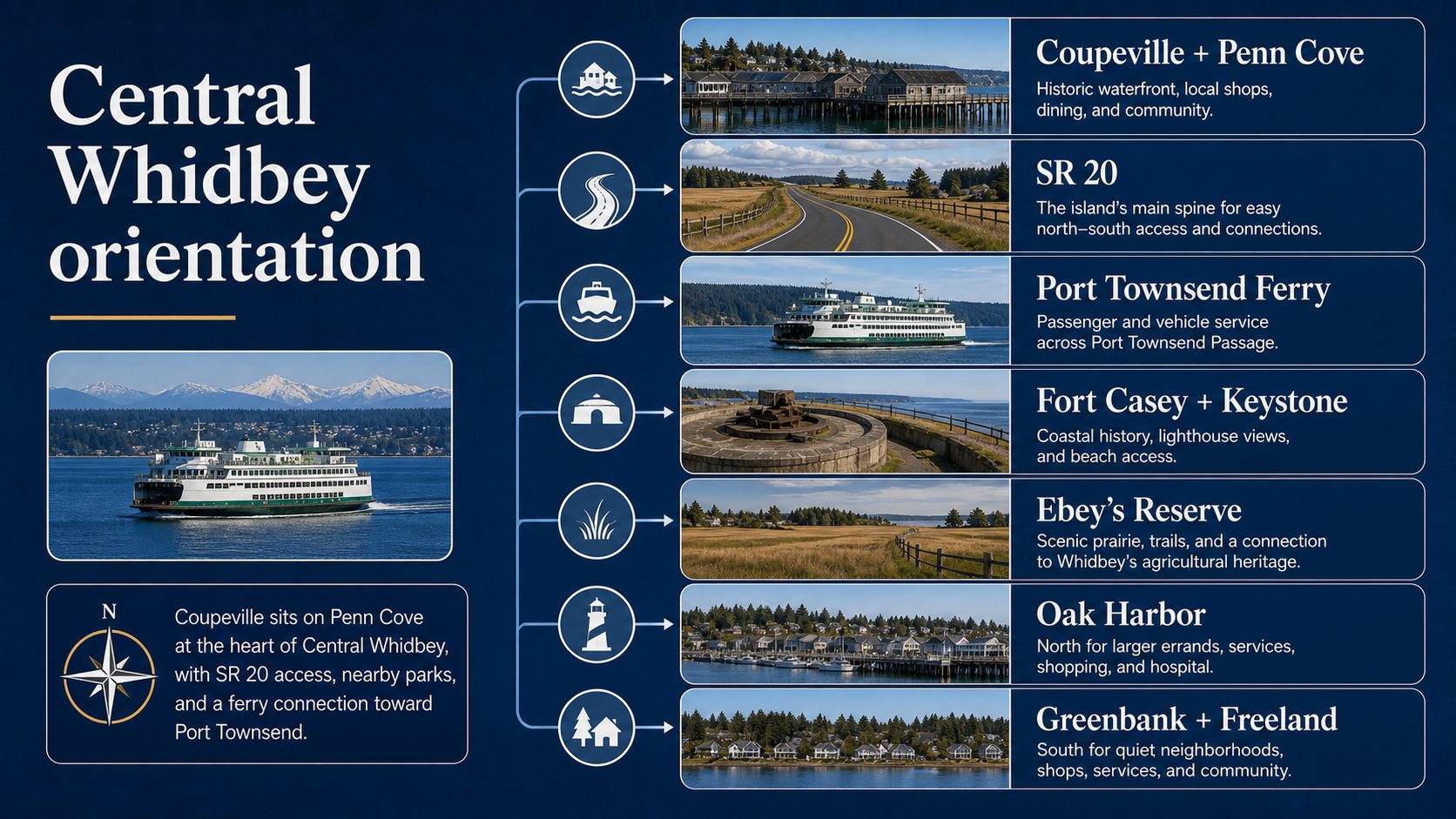
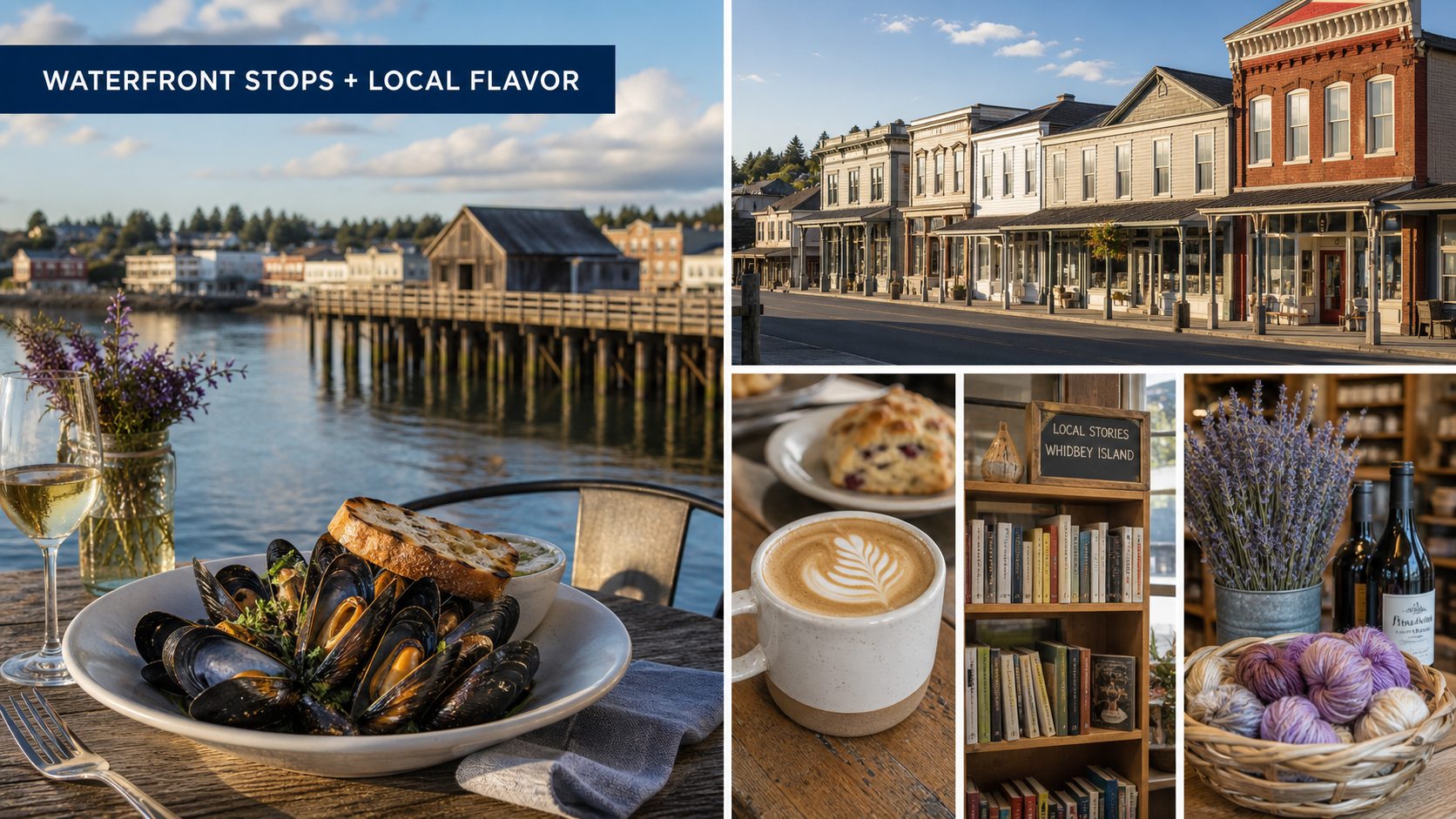
Image note: The images in this guide are editorial visuals created to represent Coupeville and Central Whidbey lifestyle. They do not document specific events, businesses, people, properties, or exact real-life moments.
Key Takeaways
- Coupeville is Central Whidbey’s historic waterfront town, with Penn Cove, Coupeville Wharf, Front Street, and one of the island’s most recognizable village settings.
- Outdoor access is unusually rich. Ebey’s Landing National Historical Reserve, Fort Casey, Fort Ebey, Admiralty Head Lighthouse, beaches, prairie, bluff trails, and forested trails are all part of the local lifestyle map.
- Daily life is small-town and practical, but not big-box convenient. Coupeville has local services, the county-seat role, and WhidbeyHealth nearby, while broader shopping usually means Oak Harbor, Freeland, or off-island trips.
- Homes vary dramatically by micro-location. Historic town, Penn Cove, Reserve-edge prairie, rural parcels, shoreline, bluff, ferry-side, and wooded settings can feel very different from each other.
- Buyers should slow down for site-specific review. Historic district context, Ebey’s Reserve, shoreline and bluff conditions, wells, septic, drainage, wind, aircraft noise, ferry planning, and private roads all matter.
Why Coupeville Belongs On Your Whidbey Shortlist
Coupeville is the kind of place people often describe by landmarks: the wharf, Penn Cove, Front Street, the museum, the prairie, the bluff trail, Fort Casey, the ferry at Keystone, the lighthouse, the farms, the old homes, the county buildings, and the way the light moves across the water. Those pieces are close enough to feel connected, but they do not all create the same lifestyle.
If you want a walkable historic waterfront village, focus near Front Street, Coveland, Alexander, Main, and the older in-town grid. If you want space and open sky, look toward prairie or rural Central Whidbey settings. If you want water, pay attention to Penn Cove, Admiralty Inlet, shoreline, bluff, wind, and drainage conditions. If you want easy daily errands, compare Coupeville with Oak Harbor and Freeland before deciding how much small-town scale you want.
Best Fit For
Buyers and visitors who want history, waterfront access, open landscapes, parks, trails, small-town scale, and a strong sense of place in the middle of Whidbey Island.
Lifestyle Feel
Historic, walkable, scenic, outdoorsy, locally rooted, and quieter than larger service hubs, with tourism and events adding seasonal energy.
Important Tradeoff
Coupeville’s charm comes with small-town limits. Big errands, some services, and broader dining or retail choices usually mean driving north, south, or off-island.
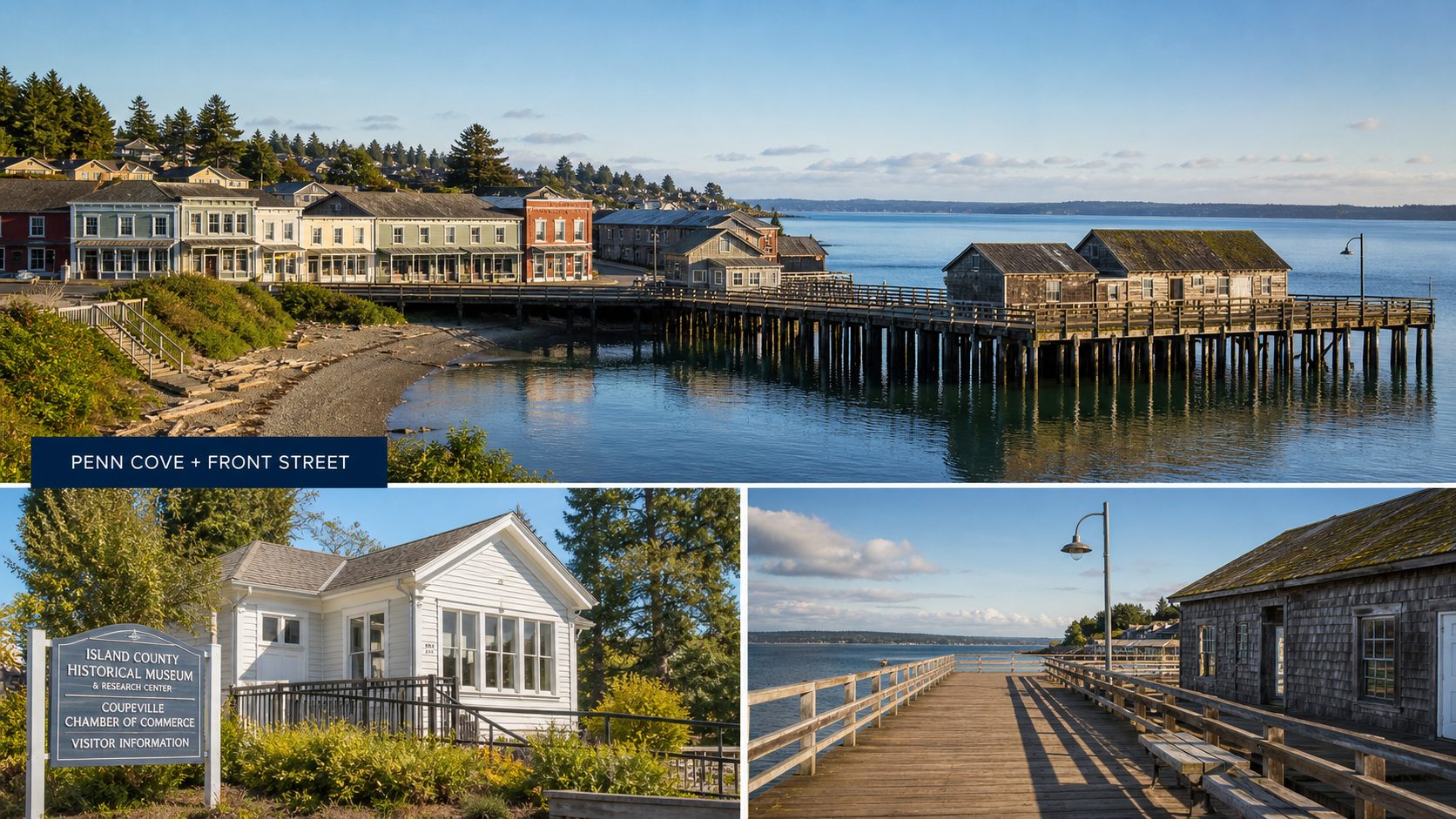
Penn Cove, The Wharf, And Historic Front Street
Penn Cove is Coupeville’s front porch. The water gives the town its visual identity, and Front Street gives it a walkable center. A simple Coupeville visit can begin near the library or Alexander Street parking area, move toward the Island County Historical Museum, continue along Front Street, and end with a walk onto Coupeville Wharf.
The wharf, also known historically as the Old Grain Wharf, is one of the town’s defining landmarks. It reaches into Penn Cove and gives visitors a place to look back at the village, watch the water, and understand why Coupeville grew around this protected shoreline. Around it, Front Street keeps the town compact: restaurants, shops, galleries, beach access, historic buildings, and water views are all close together.
Local wayfinding tip
For a first visit, keep it simple: park near the library or Alexander Street area, stop by the museum or Chamber resources, walk Front Street, step out onto the wharf, then decide whether the next move is a meal, a beach walk, Town Park, or a drive toward Ebey’s Landing and Fort Casey.
For current downtown businesses and events, use the Coupeville Historic Waterfront Association business directory and the Ebey’s Reserve downtown Coupeville guide.
Ebey’s Reserve, Trails, Fort Casey, And Fort Ebey
Coupeville’s outdoor identity is bigger than its downtown. The town sits within and beside Ebey’s Landing National Historical Reserve, a protected cultural landscape of farms, prairies, historic roads, shoreline, forest, and bluff. That context is one of the main reasons Coupeville feels different from other Whidbey communities.
Ebey’s Landing is the signature walk: open prairie, bluff-edge views, beach, wind, and a sense of Central Whidbey’s scale. Nearby, Fort Casey Historical State Park adds military history, Admiralty Head Lighthouse, batteries, beach access, and big Admiralty Inlet views. Fort Ebey State Park brings a west-side mix of forest, bluff, camping, and trail access.
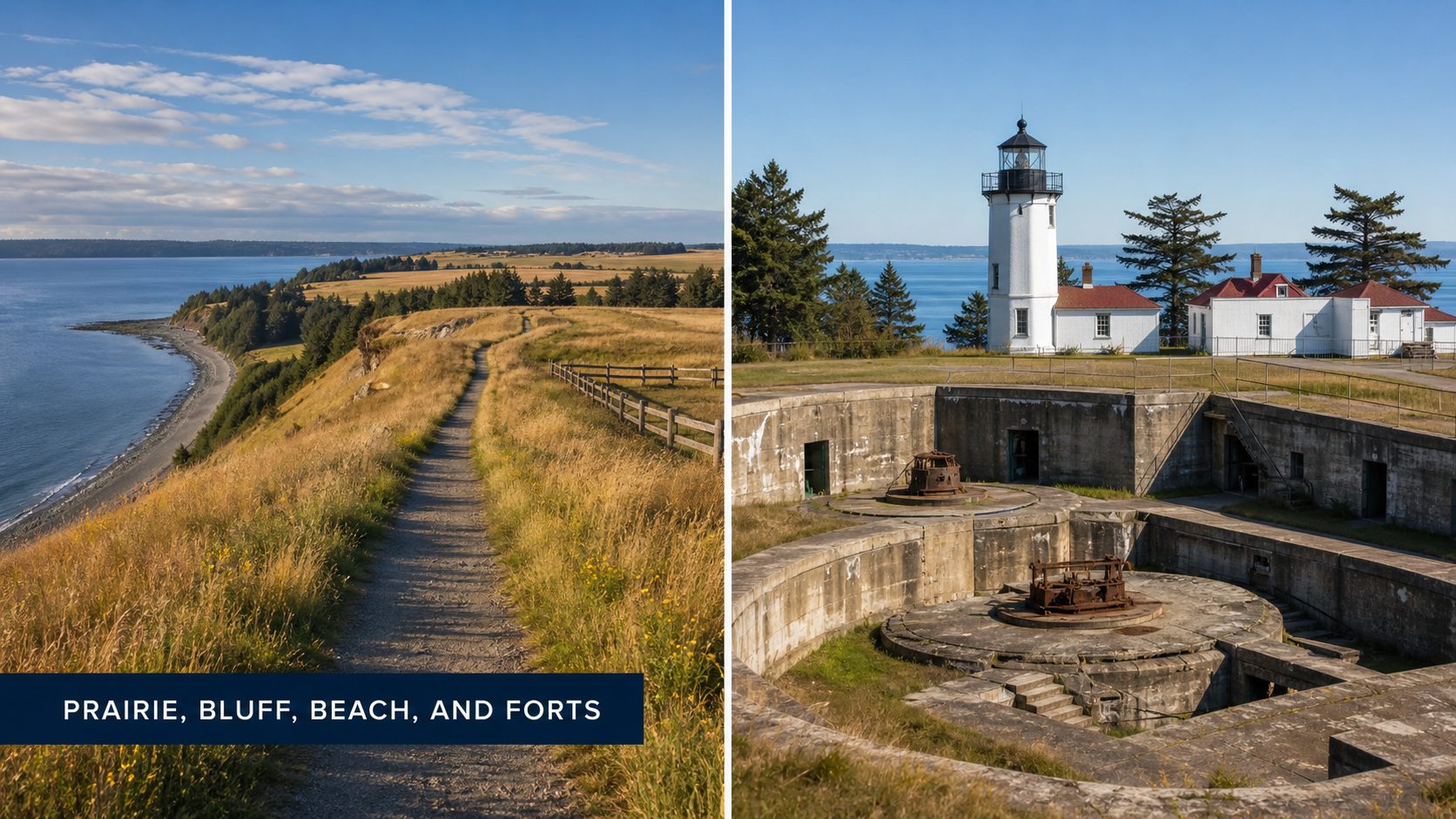
Ebey’s Landing
Prairie, bluff, beach, and wide-open views. Check trail conditions, weather, wind, and parking before heading out.
Fort Casey
Historic batteries, Admiralty Head Lighthouse, beach access, picnic space, and Port Townsend ferry proximity.
Fort Ebey
Forest trails, bluff views, camping, and a quieter west-side park experience near Coupeville.
Food, Coffee, Shops, And Local Favorites
Coupeville’s dining and shopping scene is compact, but it has a strong waterfront identity. Penn Cove mussels are part of the local story, and Front Street gives visitors a walkable mix of restaurants, coffee, bakery stops, books, galleries, gifts, wine, lavender, yarn, and small independent shops. Local names to know include Front Street Grill, Toby’s Tavern, Oystercatcher, Little Red Hen Bakery, and Beaver Tales Coffee.
Rather than treating Coupeville like a large dining district, think of it as a town where the experience is the combination: water views, a short walk, a local meal, a shop or gallery, and time on the wharf. For everyday groceries and local produce, Prairie Center Market, North Central Whidbey Farmers Market, and nearby farm stands help round out the local routine. Business hours can be seasonal or change with staffing, so check current listings before a special trip.
Local stops to explore
Waterfront dining and Penn Cove views.
Classic Coupeville tavern stop on Front Street.
Seasonal dining near downtown Coupeville.
Bakery stop near the downtown core.
Coffee and casual Front Street rhythm.
Local grocery and everyday Coupeville errands.
For shops and browsing, look at Kingfisher Bookstore, Penn Cove Gallery, Lavender Wind, Vail Wine Shop, Sea Bre’s Yarn, and the broader Coupeville Historic Waterfront Association directory.
Nearby Penn Cove anchors such as Captain Whidbey add another layer to the Coupeville lifestyle map.
Arts, History, Learning, And Family-Friendly Stops
Coupeville’s cultural depth is one of its advantages. The Island County Historical Museum anchors downtown with local history and orientation. The Alexander Blockhouse, historic buildings, Reserve stories, and nearby Admiralty Head Lighthouse help connect the town to a much larger Central Whidbey landscape.
Art and learning are part of the mix too. The Pacific Northwest Art School brings workshops and visiting artists to Coupeville, while Price Sculpture Forest offers an outdoor art walk east of town. These stops make Coupeville more than a pretty waterfront; they give residents and visitors reasons to keep returning.

Annual Events And Community Rhythms
Coupeville has a town calendar with deep roots. The best-known event is Penn Cove Musselfest, which celebrates the town’s mussel identity and waterfront community. The Coupeville Arts & Crafts Festival, North Central Whidbey Farmers Market, Memorial Day Parade, waterfront programming, holiday shopping, and smaller downtown events all add seasonal energy.
For residents, those events are part of the tradeoff and the appeal. They bring people, music, food, civic tradition, and activity into a small town. They can also affect traffic, parking, quiet, and restaurant availability. If you are considering a home close to Front Street or the waterfront, visit during both a quiet weekday and a busy event weekend if you can.

Coupeville’s signature Penn Cove food event.
A long-running summer arts tradition downtown.
Farmers market presence serving Coupeville and Oak Harbor.
Planning note
Use official event pages and local calendars close to the date you plan to visit. Annual event names tend to endure, but dates, routes, vendors, and schedules can change from year to year.
Living In Coupeville
Living in Coupeville means living with Central Whidbey’s balance: historic village, county-seat services, open land, parks, water, and small-town limits. Island County government activity gives the town a practical weekday layer. WhidbeyHealth is nearby. Prairie Center Market helps with everyday groceries, while Front Street adds dining, coffee, shops, galleries, and local services. SR 20 connects Coupeville north toward Oak Harbor and Deception Pass, south toward Greenbank, Freeland, Langley, and Clinton, and west toward the Port Townsend-Coupeville ferry at Keystone.
The daily-life question is not whether Coupeville is beautiful. It is whether its scale fits you. Some people love being close to Penn Cove, the Reserve, and the slower pace. Others need more frequent grocery, retail, dining, childcare, commute, or medical-service options than Coupeville itself provides. Many residents naturally use Oak Harbor, Freeland, and other Whidbey communities as part of their routine.
Compared With Oak Harbor
Coupeville is smaller, more historic, and more scenic village-oriented. Oak Harbor offers more everyday services, retail, and city-scale convenience.
Compared With Clinton
Coupeville is less ferry-commute focused and more Central Whidbey, Penn Cove, Reserve, and park oriented.
Compared With Langley or Freeland
Coupeville has a stronger historic waterfront and Reserve identity, while South Whidbey communities may offer different arts, services, ferry, and village patterns.
Coupeville Homes, Neighborhoods, And Settings
Coupeville real estate is best understood by setting, not just by address. A historic in-town home near Front Street lives very differently from a Penn Cove view home, a Reserve-edge prairie property, a rural Central Whidbey parcel, a Crockett Lake or Keystone-area setting, or a wooded west Penn Cove property near Captain Whidbey.
The most important step is to match the setting to your actual day-to-day life. Do you want to walk to coffee and the wharf? Do you want open land and sky? Do you want water views? Do you want easier access north to Oak Harbor or south to Freeland and Clinton? Do you need quiet, or are seasonal events and visitor traffic part of the fun?
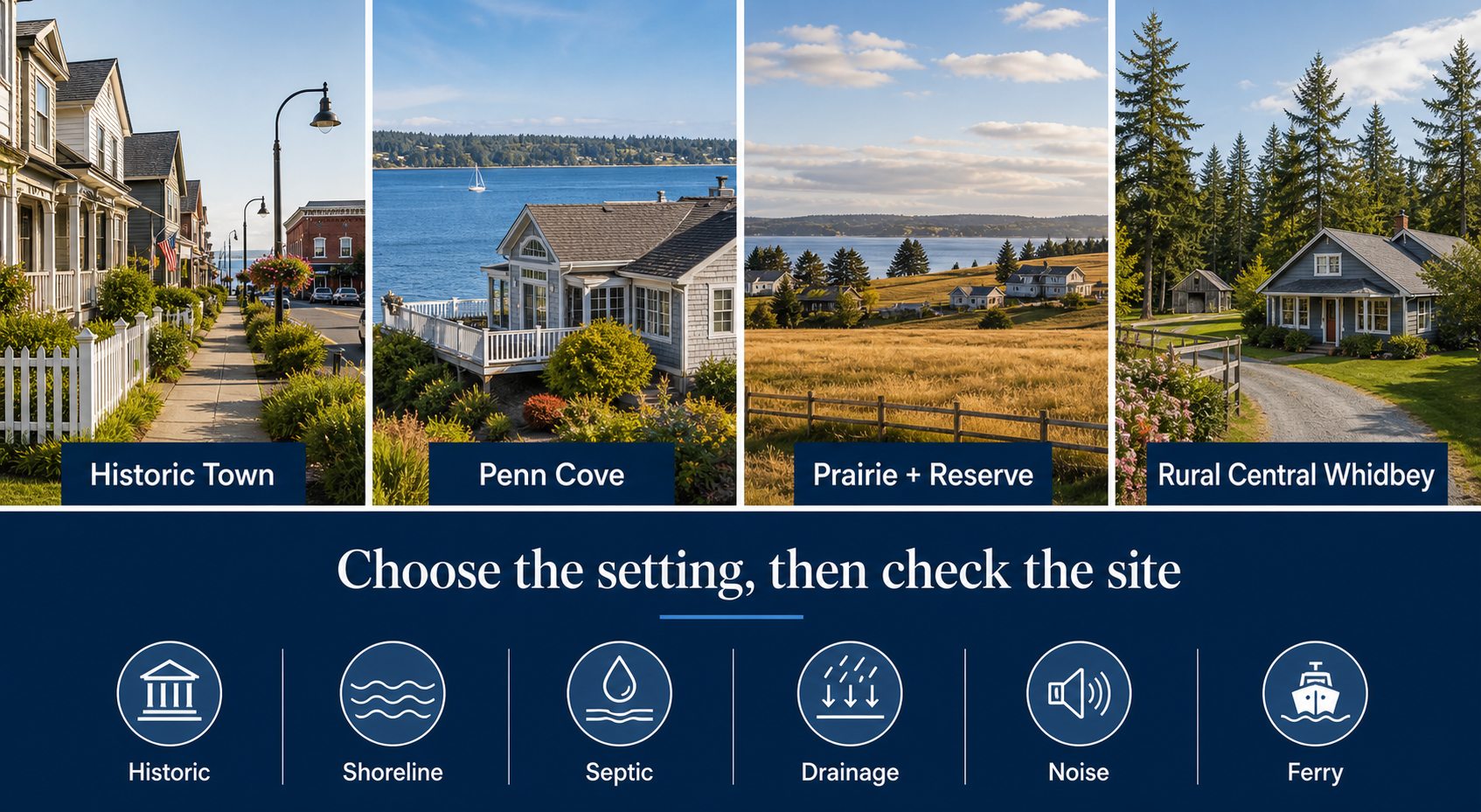
Historic Town
Walkability, character, older homes, proximity to Front Street, museum, library, wharf, and events.
Penn Cove And Water Views
Scenic appeal, salt air, wind, drainage, shoreline or bluff questions, and careful review of the site itself.
Prairie And Reserve Edge
Open landscapes, agricultural context, preservation expectations, views, wind, and Reserve-related awareness.
Rural Central Whidbey
More privacy and land, with wells, septic, private roads, drainage, trees, access, and maintenance to evaluate.
What To Know Before You Buy In Coupeville
Coupeville rewards careful due diligence. The settings are beautiful, but the details are not interchangeable. A property near the historic district, within or near Ebey’s Reserve, along a bluff, beside the shoreline, on a rural road, or near the ferry corridor may require a different review process than a standard suburban purchase.
Buyer checks worth doing early
- Historic and Reserve context: understand whether preservation, design, view, or land-use expectations may affect exterior changes or property plans.
- Waterfront, bluff, and shoreline review: evaluate erosion, bank stability, drainage, setbacks, shoreline rules, salt air, and insurance considerations.
- Well, septic, and utilities: many rural Whidbey properties rely on systems that deserve inspection, records review, and maintenance planning.
- Wind, drainage, and exposure: prairie, bluff, and water-adjacent sites can feel different in winter than they do on a calm summer afternoon.
- Aircraft noise and disclosure: Central and North Whidbey buyers should review location-specific aircraft-noise information and seller disclosures.
- Ferry and route planning: the Port Townsend-Coupeville ferry is a benefit for Olympic Peninsula access, but schedules, reservations, weather, and sailing changes matter.
For a broader island-wide checklist, see Windermere Whidbey’s guide to buying a home on Whidbey Island.
Explore Nearby Whidbey Communities
Coupeville sits in the middle of the island, so nearby communities matter. Oak Harbor is the closest larger service hub to the north. Greenbank and Freeland help connect Coupeville to Central and South Whidbey. Langley and Clinton add South Whidbey village, ferry, arts, and shoreline context.
North Whidbey’s larger service and waterfront hub.
Greenbank
Quiet Central Whidbey context south of Coupeville.
Freeland
South Whidbey services, shopping, and shoreline access.
Langley
Village, arts, dining, and Saratoga Passage views.
Clinton
South Whidbey ferry gateway and rural shoreline settings.
Explore Whidbey Island
Return to the main Explore Whidbey hub.
Thinking About A Move To Coupeville?
Use this guide as a starting point, then compare actual locations carefully. In Coupeville, a few minutes can change the feel from historic town to Penn Cove view to prairie to rural parcel to ferry-side or fort-side living.
When you are ready, connect with Windermere Whidbey for local guidance on Coupeville homes, Central Whidbey settings, and the site-specific questions that matter before you buy.
FAQ: Coupeville On Whidbey Island
What is Coupeville known for?
Coupeville is known for its historic waterfront on Penn Cove, Coupeville Wharf, Front Street, Ebey’s Landing National Historical Reserve, Fort Casey, Admiralty Head Lighthouse, Penn Cove mussels, and Central Whidbey scenery.
Is Coupeville walkable?
Downtown Coupeville is walkable around Front Street, the wharf, the museum, shops, restaurants, and nearby parking areas. Outlying homes, parks, trails, and rural settings usually require driving.
Is Coupeville a good place to live?
Coupeville can be a strong fit for people who want historic character, water access, small-town scale, outdoor recreation, and Central Whidbey scenery. It may be less ideal for buyers who want large-scale retail, broad nightlife, or very quick access to mainland services.
What are the best things to do in Coupeville?
Popular Coupeville activities include walking Front Street, visiting Coupeville Wharf, exploring the Island County Historical Museum, hiking Ebey’s Landing, visiting Fort Casey and Admiralty Head Lighthouse, browsing local shops, and attending seasonal events such as Penn Cove Musselfest.
What should buyers know before buying near Penn Cove or Ebey’s Reserve?
Buyers should review shoreline or bluff conditions, drainage, septic, wells, wind exposure, historic or Reserve context, view and land-use expectations, insurance, and any location-specific disclosures before making decisions.
How does Coupeville compare with Oak Harbor or South Whidbey?
Coupeville is smaller and more historic than Oak Harbor, with less large-scale retail but more village waterfront character. Compared with South Whidbey, Coupeville is more central, more tied to Penn Cove and Ebey’s Reserve, and less focused on the Clinton ferry commute.
Does Coupeville have ferry access?
Yes. The Port Townsend-Coupeville ferry operates from the Keystone terminal near Fort Casey, west of downtown Coupeville. It is useful for trips toward Port Townsend and the Olympic Peninsula, but travelers should check Washington State Ferries schedules, reservations, and service alerts.
Written by Si Fisher.