EventsThings to do on WhidbeyWhidbey Island Lifestyle July 1, 2026

July 2026 Whidbey Island Events Guide: Fireworks, Concerts, Fair, Gardens & LittleBIGFest

July is one of those months when Whidbey Island feels wonderfully full. Fireworks kick things off, outdoor concerts settle into the parks, Bayview turns into a dance floor, gardens hit their summer stride, and the Whidbey Island Fair brings the whole island together before the month is done.

Use this guide as a starting point for July 2026 plans, then check the linked organizers before you go. Event details can change with weather, ferry timing, ticket availability, and venue updates.

Quick July Highlights

  • Holiday weekend: Freeland Freedom Fest & Fireworks, Oak Harbor Independence Day events, the Chum Run, art walks, and live music.
  • Free summer music: South Whidbey Tuesday Concerts in the Park, Bayview Corner Street Dances, and Coupeville’s Summer Concert Series.
  • Big community anchor: The Whidbey Island Fair returns July 23-26 at the fairgrounds in Langley.
  • Arts and theatre: WICA events, Whidbey Island Music Festival, and Island Shakespeare Festival’s summer season.
  • Looking ahead: Meerkerk’s Bluegrass Festival and LittleBIGFest are August events, but July is the right time to plan for them.
Whidbey Island waterfront fireworks scene for Fourth of July weekend events.

Start with the Holiday Weekend

The first weekend of July is packed from Oak Harbor to Freeland and Langley. If you are crossing by ferry, give yourself extra time, especially around July 3-5.

Freeland Freedom Fest & Fireworks

Friday, July 3. Festival activities begin in the afternoon, with fireworks after dark at Freeland Park.

Event details | Map

Oak Harbor Independence Day

July 3-5. Oak Harbor’s waterfront celebration includes carnival fun, community events, parade activity, and fireworks around Windjammer Park.

Event details | Map

Chum Run 5K

Friday, July 3. The Chum Run starts holiday weekend in Oak Harbor with a 5K and family-friendly Fry Run.

Event details | Map

Also watch for July 4 weekend art and music in Langley, including the Whidbey Art Gallery Art Walk, Troy Chapman & The Groovetones at WICA, and TAMA Festival music at The Top Restaurant & Lounge.

Outdoor Whidbey Island summer concert with park audience, musicians, trees, and water view.

Free Summer Concerts and Street Dances

If July has a soundtrack, much of it is free and outdoors. South Whidbey, Bayview, and Coupeville all have reliable summer music options this month.

South Whidbey Tuesday Concerts in the Park

The South Whidbey Parks and Recreation series runs Tuesdays from 6-7:30 PM at South Whidbey Community Park.

  • July 7: Nathaniel Talbot Trio.
  • July 14: Emily McVicker.
  • July 21: The Sunset Grooves.
  • July 28: No concert listed.

Series details

Bayview Corner Street Dances

Goosefoot’s Bayview Corner Street Dances are free, family-friendly, and held from 6-8 PM at the Bayview Cash Store.

  • July 8: Rubatano Center Marimba.
  • July 22: ROSSaCONN.

Series details

Coupeville Summer Concert Series

On Sunday, July 19, from 2-4 PM, Ike and the Old Man play the Coupeville Summer Concert Series at Coupeville Town Park Pavilion. See event details.

Whidbey Island Fair scene with ferris wheel, fair booths, livestock barn, ribbons, and families.

Fairs, Festivals, and Big July Weekends

Whidbey Island Fair: July 23-26

The Whidbey Island Fair returns to the Whidbey Island Fairgrounds and Events Center in Langley from Thursday, July 23, through Sunday, July 26. Expect rides, food vendors, exhibits, livestock, crafts, entertainment, and the kind of hometown fair energy that belongs on a summer calendar.

The fair parade is listed for Saturday, July 25. Check the fair’s official site before you go for tickets, gate hours, entertainment, parking, and parade-route updates.

Whidbey Island guitar festival scene with guitars, outdoor stage, sunset, tents, and summer crowd.

Whidbey Island Guitar Festival: July 26

Presented by the LittleBIGFest team, the Whidbey Island Guitar Festival lands on Sunday, July 26, at Royal Alvin Hall in Freeland.

The posted lineup includes Troy Chapman + Honza Kourimsky, Keith Bowers, Andre Feriante, Tyler Richart, Elisabeth Brown, Charlie Solbrig, and Nick Mardon. See the lineup.

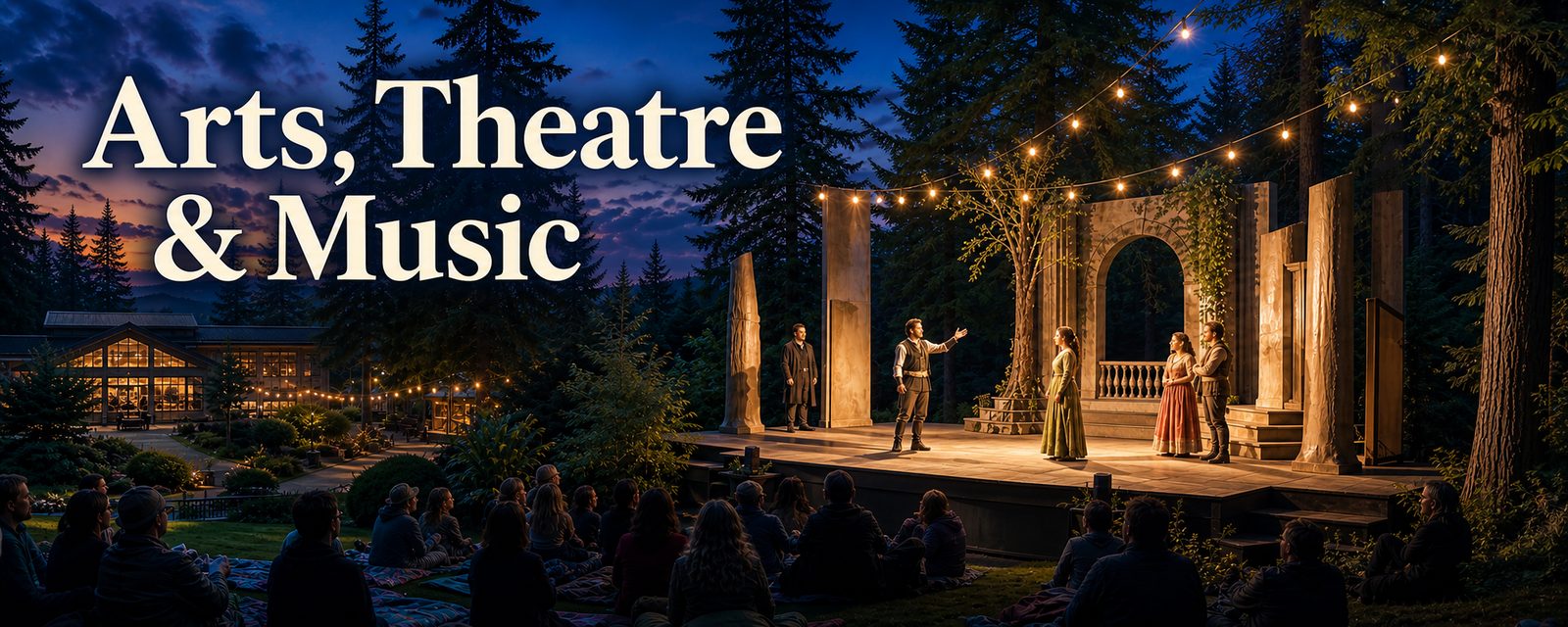
Outdoor theatre performance under trees on Whidbey Island with audience and stage lights.

Arts, Theatre, and Live Music

July is also a strong month for indoor stages, outdoor theatre, gallery nights, and local music rooms.

Island Shakespeare Festival

Island Shakespeare Festival’s 2026 summer season runs July 17-Sept. 6 with Macbeth and Robin Hood of Sherwood Forest.

Season details | Map

WICA July Events

Watch WICA for Troy Chapman & The Groovetones, Nearly Dan, Vinyl Cabaret, Treasure Island, and Different Mistakes during July.

WICA calendar | Map

Whidbey Island Music Festival

Heavenly Harmonies is listed for July 10 at Nordic Hall and July 11 at St. Augustine’s in-the-Woods.

Festival events

Whidbey Island farmers market table with berries, bread, flowers, cheese, wine glasses, and sunny market tents.

More July Music, Food, and Markets to Watch

  • Dancing Fish Vineyards: July listings include Ranger & the Re-Arrangers, Monday Bites, The Hipocrats, Fishstock, Wild Horses, and The EVM Quintet. See the Dancing Fish calendar or open the map.
  • The Top Restaurant & Lounge: July music highlights include TAMA Festival music July 3-5, Kristi O’Donnell Quartet July 12, Joe Cook Blues Band July 18, Ribbons and Bows July 26, and Mayme O’Toole July 31. Verify directly with the venue before final plans.
  • Salish Moon: July dates include The Top, WICA Under the Tent, Thirsty Crab, and Double Bluff Brewery.
Whidbey Island garden path with rhododendrons, hydrangeas, evergreens, walkers, and water view.

Gardens, Walks, Markets, and Summer Outside

Meerkerk Garden Tours and Forest Walks

Meerkerk Gardens lists guided forest walks on July 5 and July 19, with summer garden tours on July 11 and July 25.

Tour details | Map

Whidbey Island Garden Tour

The 30th anniversary Whidbey Island Garden Tour is listed for Saturday, July 18, with private gardens and proceeds supporting local causes.

Event listing | Tour website

Farmers Markets

Look for July markets in Oak Harbor, Bayview, Coupeville/Central Whidbey, and South Whidbey. Schedules vary by market and day.

Island calendar | Whidbey Island Grown events

Cozy Whidbey community library table with books, calendar, craft supplies, yarn, and island water view.

More July Community Calendar Picks

Local July calendars also include library programs, author talks, civic forums, food-and-wine events, and community gatherings. Here are a few more picks that may be useful for a broad July roundup.

Date Event Where Notes
July 2 Mocktails & Masterpieces Langley Library Check Sno-Isle before you go.
July 3 Poetry Open Mic Night Commons Cafe & Books Local community arts pick.
July 7 and 14 Island County Candidate Forums Clinton Community Hall Local civic forum.
July 9 Freedom to Read Panel Clinton Community Hall Community conversation.
July 10 Blind Date with a Book The Barnyard, Freeland Library and books event.
July 11 Kick It at the Library Langley Library Sno-Isle listing.
July 14 Welcome to Medicare Freeland Library Community learning event.
July 15 Connecting Through Crafts Freeland Library Library community event.
July 16 Kicking Gas dinner, panel, and book talk Clinton Community Hall Sustainability and community event.
July 18 Jewelry Job Escape Room Langley Library Sno-Isle listing; verify session times.
July 19 Kick It: Soccer Watch Party Freeland Library Family and youth event.

Planning More Than a Summer Visit?

Events are a good way to understand Whidbey’s different communities. A concert in Langley, a fair weekend at the fairgrounds, a garden walk in Greenbank, or a market morning in Oak Harbor can tell you a lot about the daily rhythm of island life.

Meet a local Windermere Whidbey agent | See our active listings | Search Whidbey properties

Bluegrass musicians playing in a garden gazebo at Meerkerk-style gardens with flowers and picnic audience.

Looking Ahead: August Events to Book in July

Two of the events people often ask about are technically August events, but they belong on your July radar because tickets, lodging, ferry planning, and weekend schedules can move quickly.

Meerkerk Bluegrass Festival

Saturday, August 8, noon-4 PM. Meerkerk Gardens hosts bluegrass at the gazebo with Ricky Gene Powell and the Boys of Greenwood Glen and Salish Moon.

Festival details | Map

LittleBIGFest

August 14-16. LittleBIGFest returns to Langley for three days of live music, vendors, food, and family-friendly festival energy.

Festival details | Map

A Few Practical July Tips

  • Check the organizer before leaving. Outdoor concerts, garden tours, and waterfront events can shift with weather or staffing.
  • Plan around ferry pressure. Holiday weekends, fair weekend, and major concert days can make normal travel windows feel slower.
  • Buy tickets early when possible. WICA shows, Whidbey Island Guitar Festival, Meerkerk Bluegrass Festival, and select garden events may not be last-minute friendly.
  • Use the map links. Many Whidbey venues are close in spirit but not always close by road, especially when you are crossing the island north to south.

July Whidbey Events FAQ

What are the biggest July 2026 events on Whidbey Island?

Major July highlights include Freeland Freedom Fest & Fireworks on July 3, Oak Harbor Independence Day weekend events, South Whidbey Tuesday Concerts in the Park, Bayview Corner Street Dances, the Whidbey Island Fair from July 23-26, and the Whidbey Island Guitar Festival on July 26.

Are there free outdoor concerts on Whidbey Island in July?

Yes. South Whidbey Tuesday Concerts in the Park are listed for July 7, July 14, and July 21 at South Whidbey Community Park. Bayview Corner Street Dances are listed for July 8 and July 22 at Bayview Cash Store, and Coupeville’s Summer Concert Series has a July 19 concert at Coupeville Town Park Pavilion.

When is the Whidbey Island Fair in 2026?

The Whidbey Island Fair is scheduled for Thursday, July 23, through Sunday, July 26, 2026, at the Whidbey Island Fairgrounds and Events Center in Langley. Check the official fair website before you go for tickets, hours, entertainment, parking, and parade updates.

Is LittleBIGFest a July event?

LittleBIGFest itself is scheduled for August 14-16, 2026, but it is worth planning for in July. The LittleBIGFest team also presents the Whidbey Island Guitar Festival on Sunday, July 26, at Royal Alvin Hall in Freeland.

When is the Meerkerk Bluegrass Festival?

The Meerkerk Bluegrass Festival is scheduled for Saturday, August 8, 2026, from noon to 4 PM at Meerkerk Gardens in Greenbank. Because tickets and summer plans can move quickly, it is a good event to put on your July planning list. Check Meerkerk’s festival page for ticket and event details.

Should I check event details before going?

Yes. Whidbey summer events can change because of weather, venue updates, ticket availability, staffing, or ferry-related travel timing. Use the linked organizer pages as the final source before you leave.

Written by Si Fisher.

Things to do on WhidbeyWhidbey Island Lifestyle June 23, 2026

Whidbey Island Bioluminescence Kayak Guide

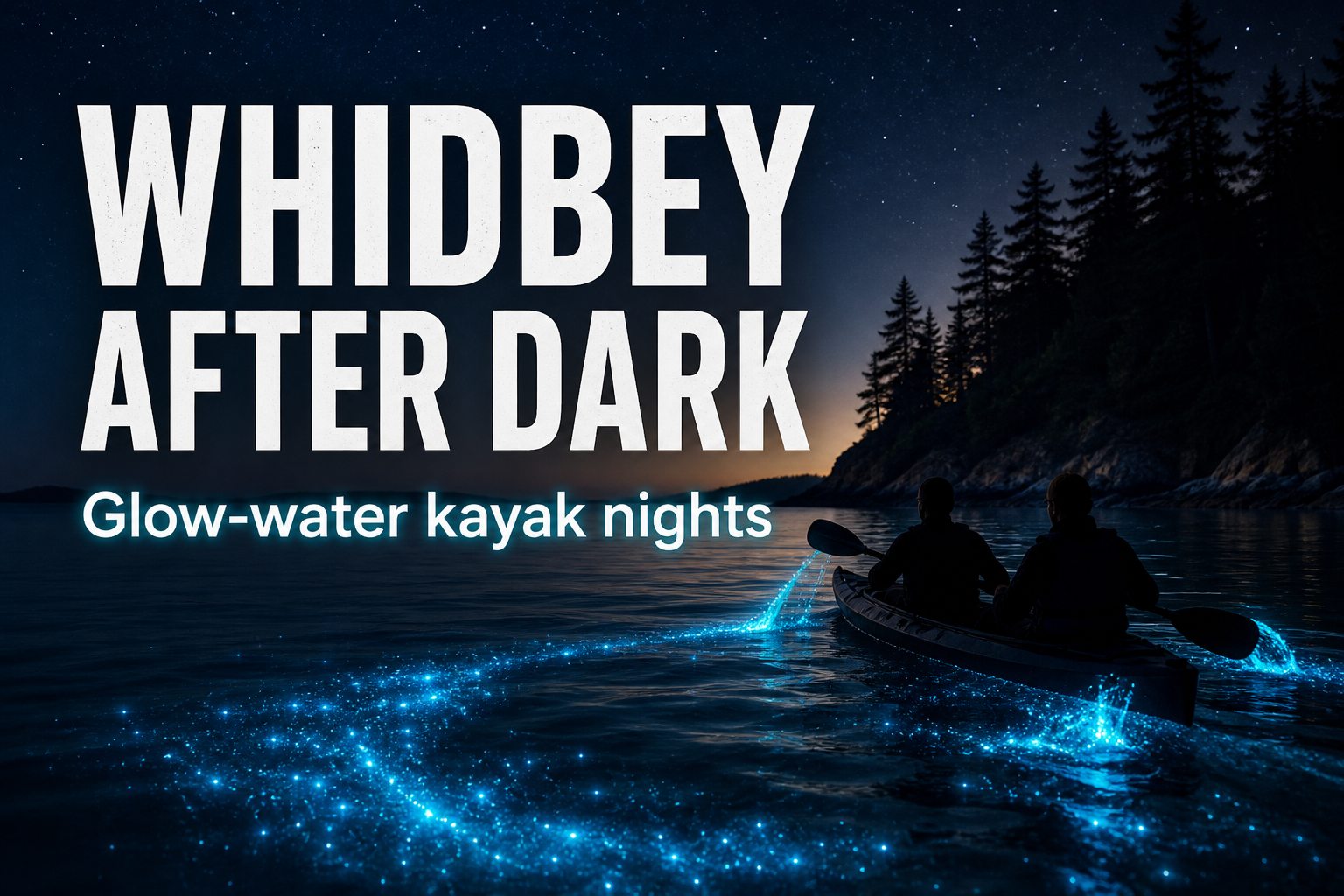
Editorial Whidbey Island bioluminescence kayak guide hero with glowing paddle trails and Whidbey after dark overlay text

Image note: The visuals in this article are editorial guide images created to explain Whidbey bioluminescence kayaking. They are not documentary photos from a specific tour, date, launch, business, or on-water moment.

If Whidbey had a night mode, this would be it. Dark water. Quiet paddles. Salt air. And, if the timing is right, blue-green sparkles lighting up around your kayak like Puget Sound decided to show off.

Bioluminescence kayaking is not about racing across the water or checking off another scenic viewpoint. You are not going out to cover distance. You are going out to watch the water answer back, which is objectively a better party trick than anything your phone can do.

Around dark summer moon cycles, tiny marine organisms in Puget Sound can glow when the water is disturbed. A paddle stroke, a hand in the water, or the wake beside a kayak can create quick blue-green flashes. It is not a guaranteed theme-park light show, and no responsible guide can promise exactly how bright it will be on a given night. That uncertainty is part of the magic.

Quick Takeaways

  • Best for: curious locals, summer visitors, older kids/teens, and anyone who wants a memorable night on the water.
  • Best local resource: Whidbey Island Kayaking.
  • Good to know: 2026 listings describe the experience as 2 hours, ages 10+, tandem kayaks, and no previous experience needed.
  • Not ideal for: people who want a hard paddle workout, guaranteed bright conditions, or an early bedtime.
  • Before you go: check dates, price, weather, start time, cancellation rules, and what to bring.

The Quick Answer

If you are looking for a Whidbey Island bioluminescence kayak experience, start with Whidbey Island Kayaking. Their current bioluminescence page describes a guided nighttime kayak experience on Puget Sound, offered only a few times during summer when dark skies around new moon periods give the best viewing chance.

Why a guided paddle matters:

This is for people who want the glow-water night without personally solving tides, currents, launch logistics, gear, darkness, safety, and “wait, where exactly do we park?” all at once.

Helpful links:
Whidbey Island Kayaking bioluminescence page
Whidbey Island Kayaking main site
Whidbey/Camano tourism event listing
Whidbey Island Kayaking on Whidbey/Camano tourism
South Whidbey Harbor at Langley
Whidbey Island Kayaking on Google Maps

What Bioluminescence Kayaking Actually Is

Bioluminescence is light produced by living organisms. In Puget Sound, the glow people hope to see on night paddles is often caused by tiny marine organisms that flash when the water is disturbed. The effect can look like sparkles, streaks, or small bursts of blue-green light around a paddle, hand, or moving kayak.

Set your expectations this way:

This is not neon water glowing evenly from shore to shore. It is more subtle and more intimate: dark water, quiet paddling, stars if the sky cooperates, and little flashes that appear when the water moves.
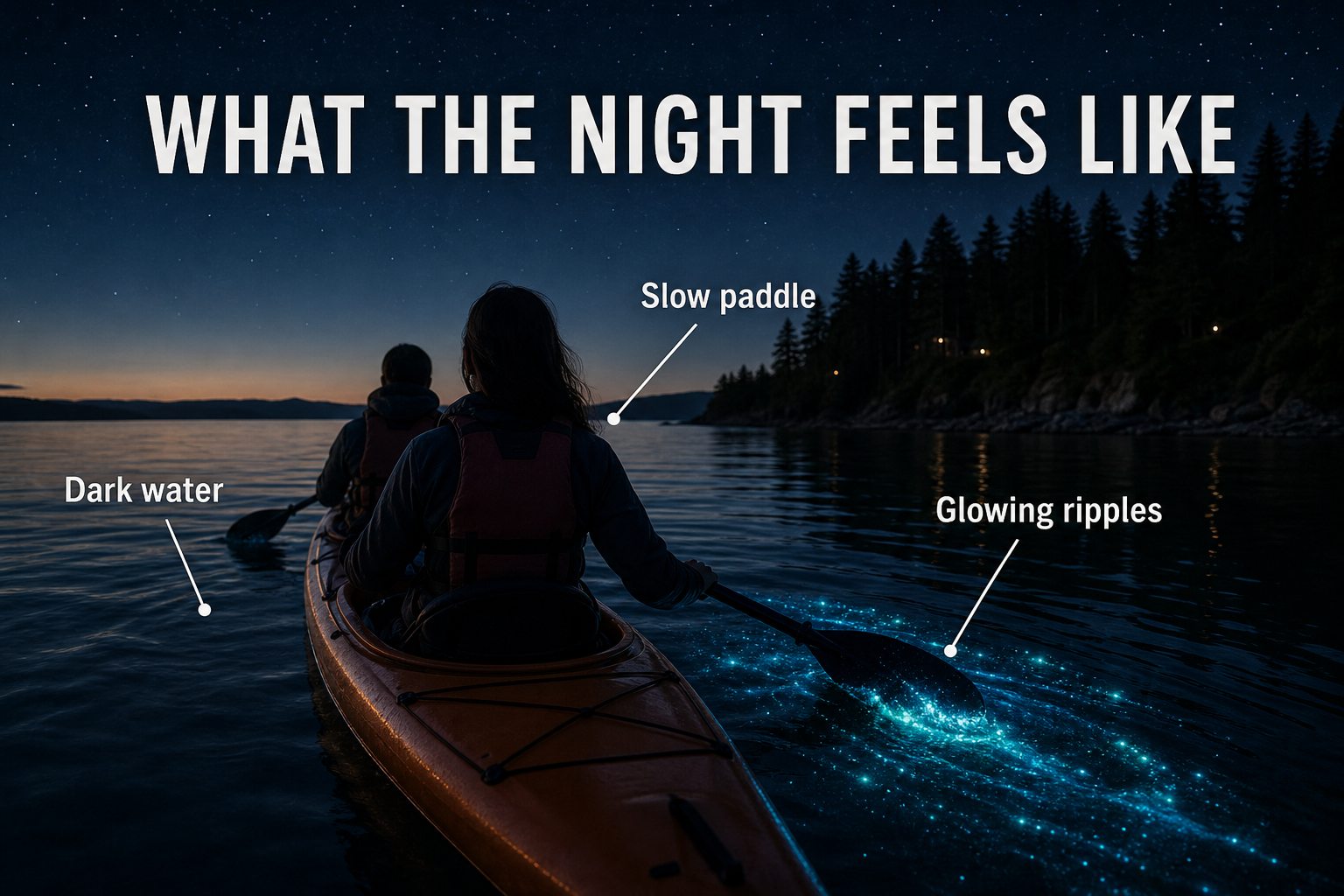
Whidbey Island bioluminescence kayak night explainer showing slow paddle, dark water, and glowing ripples

When The 2026 Whidbey Bioluminescence Dates Are Listed

The Whidbey/Camano tourism listing currently shows 2026 bioluminescence dates grouped around dark summer nights:

  • June: 12, 13, 14, and 15 at 10:00 p.m.
  • July: 9, 10, 11, 12, 13, 14, and 15 at 10:00 p.m.
  • August: 8, 9, 10, 11, 14, 15, and 16 at 9:30 p.m.
  • September: 4, 5, 6, 11, and 12 at 9:00 p.m.

The same listing describes the experience as 2 hours, ages 10+, no previous experience needed, tandem kayaks, and shared tours, with pricing currently listed at $120 per paddler plus taxes and fees. Because tour pricing, availability, and details can change, use those numbers as a current planning reference and check Whidbey Island Kayaking’s booking page before making plans.

Featured Local Resource: Whidbey Island Kayaking

Whidbey Island Kayaking also offers daytime tours, private adventures, retreats, classes, and rentals from April through October. So if a nighttime paddle is not the right fit, or if your group would rather see the shoreline in full daylight, their main site is still a useful place to start.

That local guide piece matters. Whidbey water is beautiful, but tides, wind, currents, cold water, darkness, launch logistics, and changing conditions are not things to casually improvise. For first-timers and limited-experience paddlers, a guided outing is the calmer, smarter way to enjoy the water.

Editorial Whidbey waterfront listings banner with shoreline, calm water, driftwood, coastal home silhouettes, and due diligence cue

If a night on the water has you thinking beyond a single paddle, look at current Whidbey waterfront listings with a practical eye toward access, exposure, shoreline rules, and everyday maintenance.

What To Expect On The Water

Expect the pace to be slower than a normal sightseeing paddle. Whidbey Island Kayaking describes the bioluminescence experience as more of a float than a distance paddle, because there can be plenty to see close to shore in intertidal waters.

The night usually includes:

  • Setup, safety, gear, and getting comfortable in tandem kayaks.
  • A quieter paddle pace so your eyes can adjust to the dark.
  • Watching for glow where paddles, hands, or kayaks disturb the water.
  • A reminder that some nights are brighter than others because nature is delightfully unconcerned with our schedule.

Cloud cover, moonlight, plankton concentration, wind, and water conditions can all affect the experience. This is one reason the article should not promise “guaranteed glow.” The better promise is a guided Whidbey summer night on the water with a real chance to see one of Puget Sound’s strangest and loveliest natural effects.

What To Bring And What To Skip

For a night paddle, comfort is about layers, timing, and being ready to listen to your guide. Check the tour’s current instructions before you go, but a sensible planning list includes:

  • Warm layers, even if the day was hot.
  • Shoes or sandals that can get damp.
  • A headlamp if the tour requires or recommends it.
  • A small water bottle.
  • A phone secured in a waterproof pouch if you bring it.
  • A realistic plan for late-night driving afterward.

One more practical note: save the celebratory drink for after the paddle. Being on the water after dark is much more fun when everyone is steady, alert, and able to follow guide instructions. Your kayak will appreciate your life choices.

Whidbey bioluminescence kayak booking checklist with dark skies, warm layers, date check, and price confirmation reminders

Who This Is Best For

A Whidbey bioluminescence paddle is a good fit if you like quiet experiences, natural phenomena, small-group outings, and being outside after dark. It can work for beginners because the listed experience uses tandem kayaks and does not require previous experience, but beginners should still be honest about comfort level.

This is probably your paddle if you like:

  • Quiet nights and slower experiences.
  • Being close to the water.
  • Natural phenomena that do not perform on command.
  • A guided outing where someone else handles the hard logistics.

Maybe choose a daytime paddle instead if you want:

  • A workout.
  • A guaranteed bright visual show.
  • An early bedtime.
  • A trip with kids younger than the listed age minimum.
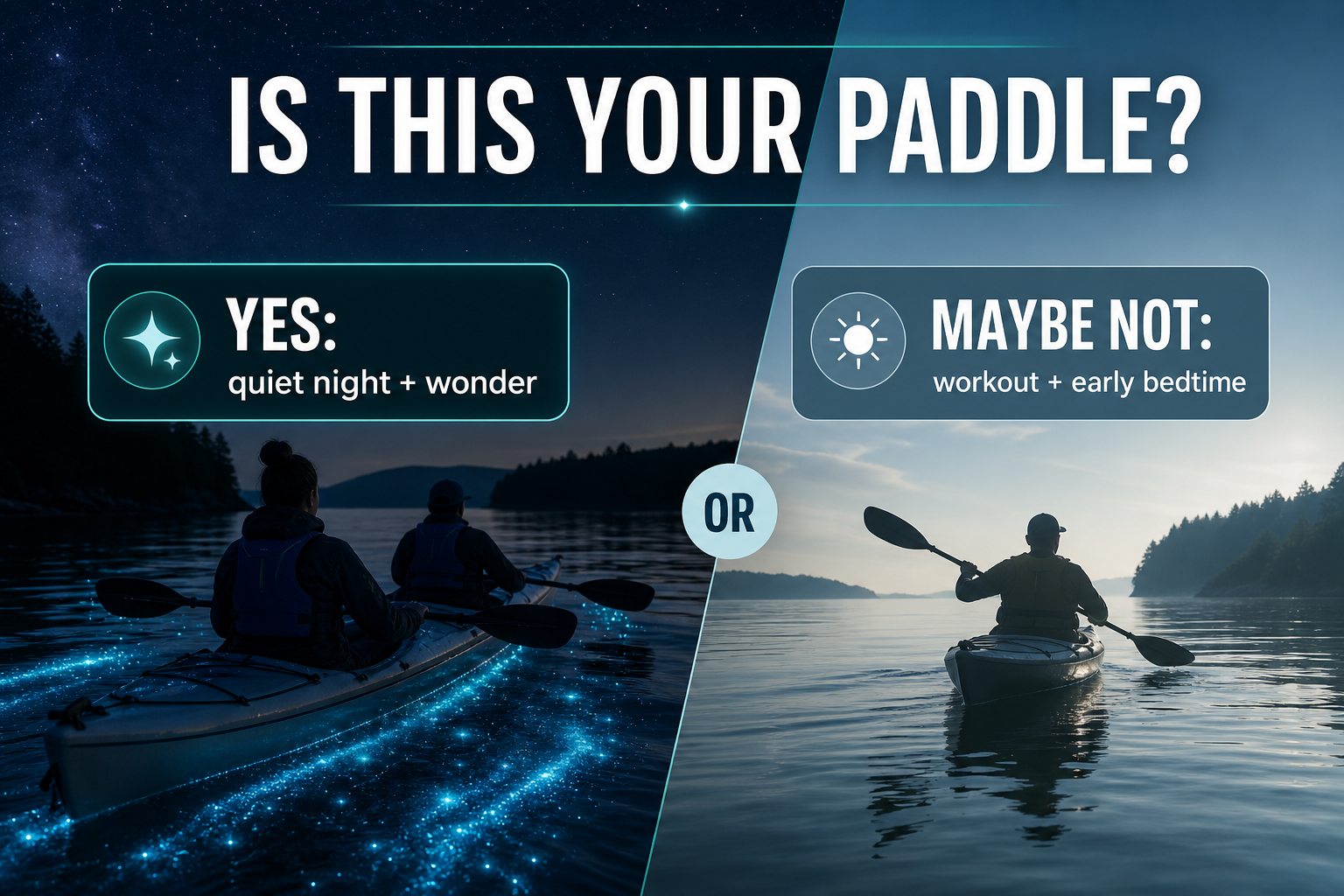
Whidbey bioluminescence kayak decision guide comparing quiet night wonder with daytime workout preferences

Pair It With A Langley Evening

Because Whidbey Island Kayaking is closely tied to Langley and South Whidbey Harbor, this works best as a Langley evening rather than a rushed drive-by activity. Have dinner early, walk the village, leave extra time for parking and waterfront wayfinding, and keep the post-paddle drive simple.

Local tip: Do not schedule your evening like you are teleporting from dinner table to kayak seat. Langley is charming, but it is still a real place with parking, waterfront paths, and clocks that insist on moving forward.

Useful local links:
South Whidbey Harbor at Langley
South Whidbey Harbor on Visit Langley
Windermere Whidbey Langley guide
South Whidbey Harbor on Google Maps

Editorial Langley listings banner with village storefront feeling, garden color, artful South Whidbey streets, and water-view atmosphere

If a harbor walk, dinner in town, and a quiet paddle after dark sounds suspiciously close to your ideal version of island life, browse active Langley listings.

A Few Planning Notes Before You Book

Check the official booking page, not a saved screenshot or old article, before you commit. Confirm the date, start time, meeting location, current price, weather/cancellation rules, age minimum, what to bring, and whether you are booking a shared or private tour.

Especially if you are coming from off-island:

Check ferry timing before you build the evening plan. A 9:00 or 10:00 p.m. start can make for a late night after the tour ends, especially if you still need to drive back to Clinton and catch a ferry.

Related local reads:
Langley guide
Clinton guide
Whidbey Island beach access guide
South Whidbey summer music guide

Why This Is A Very Whidbey Kind Of Summer Night

Bioluminescence kayaking works because it asks you to slow down. You have to wait for dark. You have to accept that nature decides how bright the show will be. You have to notice small movement in black water instead of chasing a big attraction.

That is part of why it belongs on Whidbey. The island’s best experiences often are not the loudest ones. Sometimes they are a quiet harbor, a patient guide, a paddle stroke, and a few seconds of light where you did not expect it.

FAQs About Whidbey Island Bioluminescence Kayaking

Can you see bioluminescence on Whidbey Island?

Yes, Whidbey Island Kayaking offers summer bioluminescence kayak experiences timed around darker new-moon periods when viewing conditions may be better. Conditions vary, so the glow should be treated as a natural phenomenon, not a guaranteed light show.

Do you need kayaking experience for a Whidbey bioluminescence tour?

The current Whidbey/Camano tourism listing describes the experience as beginner-friendly, with no previous experience needed and tandem kayaks. Still, anyone booking should be comfortable being on the water at night and should follow the guide’s instructions.

When are Whidbey bioluminescence kayak tours in 2026?

The current tourism listing shows selected June, July, August, and September 2026 dates, generally grouped around darker summer nights. Check Whidbey Island Kayaking’s booking page for the latest availability, price, and start time before making plans.

Where do Whidbey bioluminescence kayak tours leave from?

Whidbey Island Kayaking is closely tied to Langley and South Whidbey Harbor. Check your booking confirmation for the exact meeting location, because tour logistics can depend on weather, water conditions, and the specific experience booked.

What should you bring for a night kayak tour?

Bring warm layers, footwear that can get damp, and any required items listed by the operator, such as a headlamp. Avoid heavy alcohol before the tour so you can stay steady, alert, and able to follow guide instructions. Also plan for late-night transportation, ferry timing if needed, and a careful drive after the tour.

Written by Si Fisher.

Things to do on WhidbeyWhidbey Island LifestyleWhidbey Island Resources June 17, 2026

Whidbey Island Gardens Guide: Meerkerk, Lavender, Greenbank Farm & Quiet Stops

Editorial Whidbey Island garden guide hero with bloom walk, lavender, and quiet trail imagery

Image note: The visuals in this article are editorial guide images created to explain Whidbey garden-day planning. They are not documentary photos from a specific garden, farm, park, property, event, or access point.

Not every beautiful Whidbey day has to be a beach day. Some of the island’s best slow-day outings happen away from the shoreline: rhododendron paths in Greenbank, lavender fields near Coupeville, farm trails with water views, reflective ponds, prairie restoration sites, and quiet art-in-the-woods walks.

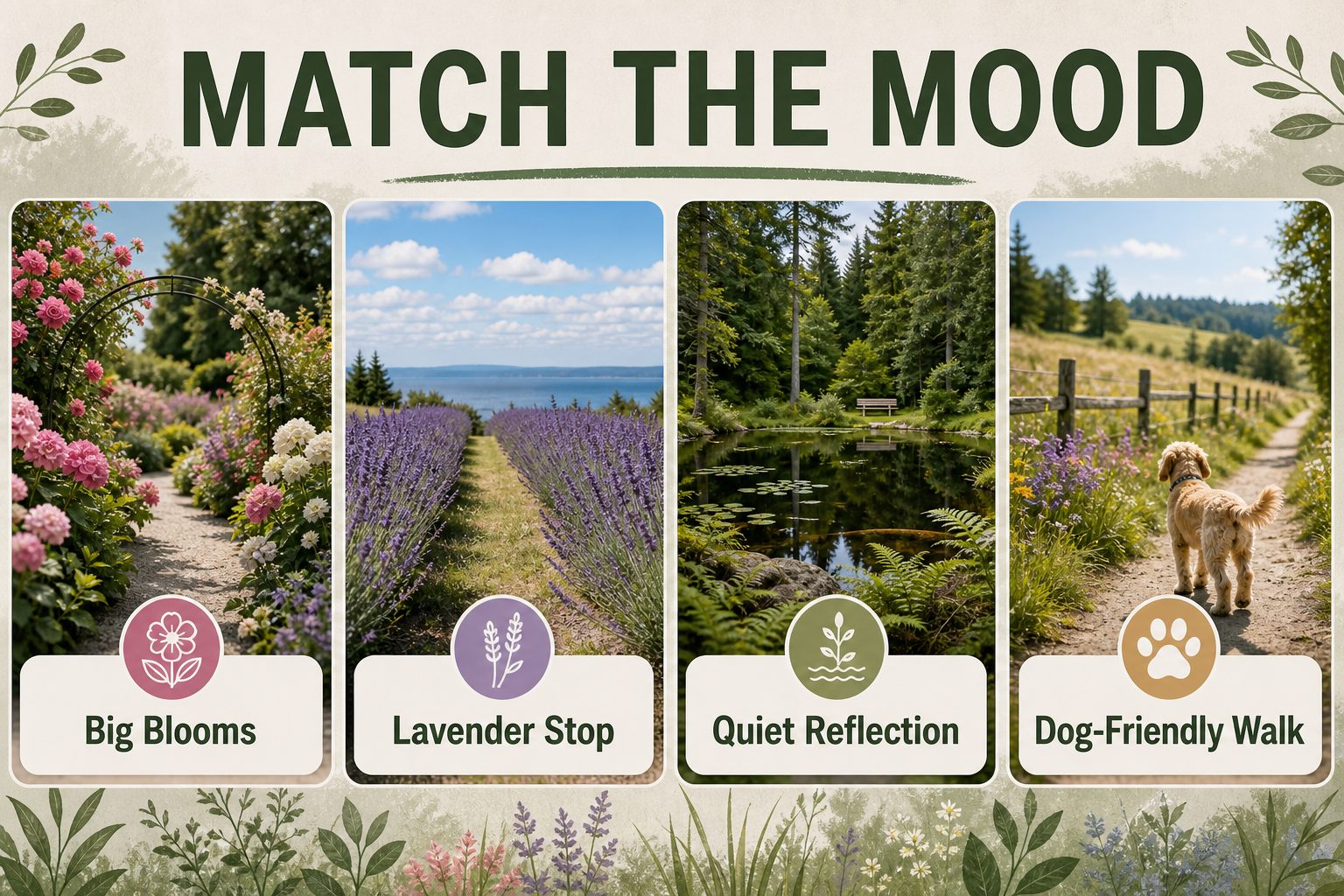
The useful question is not “which garden is best?” It is “what kind of Whidbey day are you trying to have?”

Quick Picks

  • Best classic garden: Meerkerk Gardens
  • Best easy mid-island pairing: Greenbank Farm
  • Best seasonal lavender field: Western Sun Lavender
  • Best in-town lavender stop: Lavender Wind
  • Best quiet reflective walk: Earth Sanctuary
  • Best art-and-nature add-on: Price Sculpture Forest
  • Best native prairie/ecology add-on: Pacific Rim Institute

How To Choose A Whidbey Garden Day

Start with the kind of outing you want. Some Whidbey garden stops are about blooms and paths. Others are better for lavender season, quiet walking, bird habitat, art, food, or pairing with a nearby town.

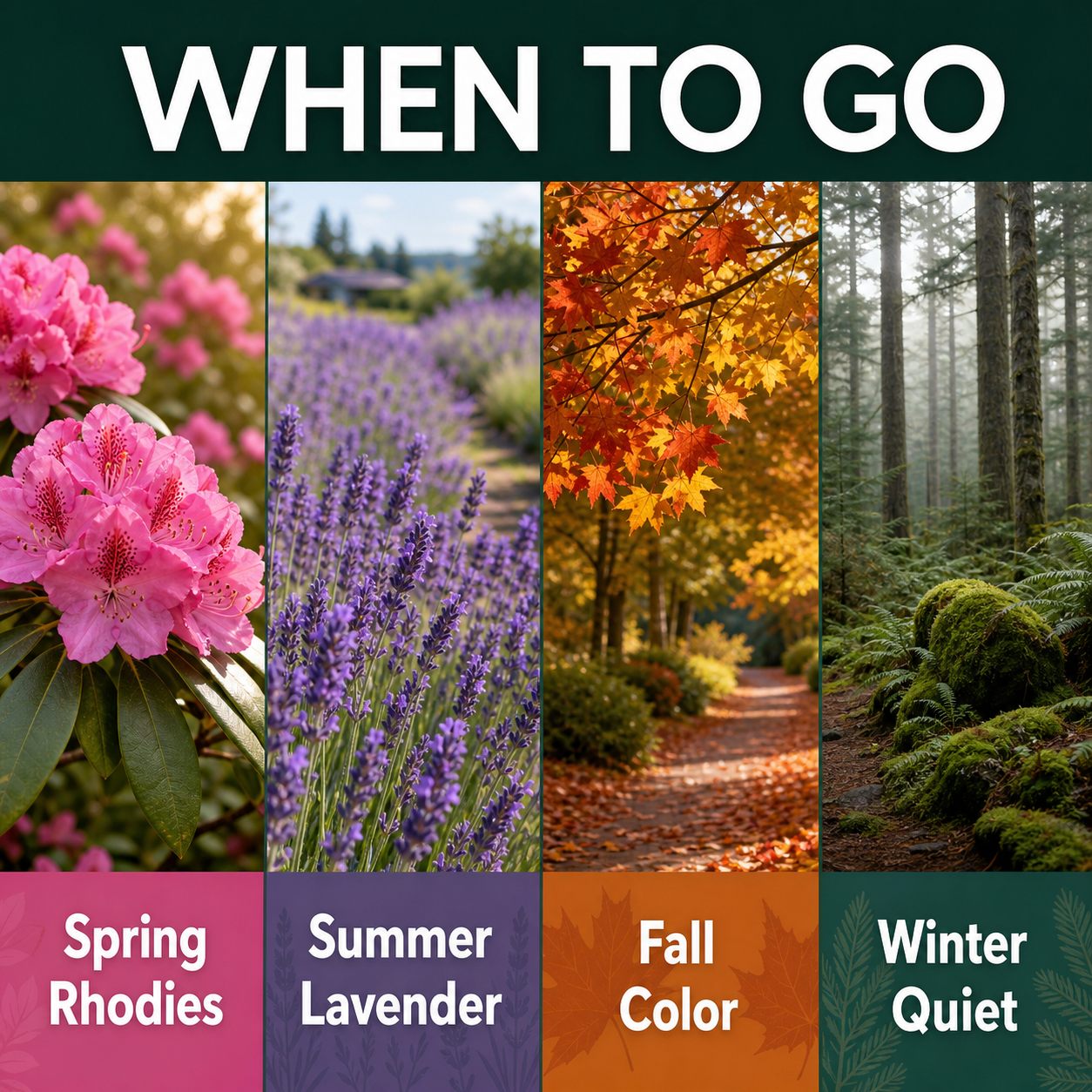
Whidbey Island garden season guide with spring rhodies, summer lavender, fall color, and winter quiet

Use this guide to sort by:

  • Season and bloom timing
  • Walking surface and outing length
  • Dog rules
  • Admission, payment, or reservation details
  • Nearby town pairings
  • Whether the day should feel social, scenic, quiet, or reflective

Meerkerk Gardens

Meerkerk Gardens is the island’s clearest answer when someone asks for a true garden walk. The official visitor page describes a woodland garden in Greenbank with 10 acres of display gardens and 43 acres of woodland nature trails. It is especially known for rhododendrons, but the better local way to think about Meerkerk is as a four-season garden-and-forest outing.

Use Meerkerk when the goal is blooms, paths, shade, a peaceful pace, and a place that feels intentionally gardened rather than simply scenic.

Helpful links:
Meerkerk Gardens visitor page
Meerkerk Gardens FAQ
Meerkerk Gardens on Google Maps

Greenbank Farm

Greenbank Farm is more flexible than a single-purpose garden stop. The Port of Coupeville describes a working farm setting with fields, water views, forests, wetlands, shops, food, wine, art, trails, birding, and master gardens. That makes it useful for groups because people can walk, browse, eat, sit, look at art, or wander at different speeds.

Use Greenbank Farm when the group wants an easy mid-island stop with multiple ways to enjoy the same place.

Helpful links:
Greenbank Farm from the Port of Coupeville
Greenbank Farm tourism page
Greenbank Farm on Google Maps
Windermere Whidbey Greenbank guide

Editorial Greenbank listings banner with quiet roads, farm views, evergreens, and island lifestyle imagery

If Greenbank’s quieter middle-island rhythm feels like the right fit, browse current Greenbank listings.

Western Sun Lavender And Lavender Wind

Lavender deserves its own category because the island has both field-based and in-town lavender experiences.

Western Sun Lavender is the seasonal field visit near Coupeville. Its official page describes U-cut and U-pick lavender and other flowers, lavender bundles, buds, essential oil, farm tour reservations, a labyrinth walk, and Olympic Mountain views. The page currently points readers to the mid-June 2026 purple season, with summer hours and reservations.

Lavender Wind is the Coupeville boutique, bakery, and cafe side of the lavender experience. It is better framed as an in-town stop for lavender products, baked goods, and lunch rather than a field walk.

Helpful links:
Western Sun Lavender
Western Sun Lavender on Google Maps
Lavender Wind
Lavender Wind on Google Maps
Windermere Whidbey Coupeville guide

Editorial Coupeville listings banner with Penn Cove, prairie landscape, historic village cues, and calm Central Whidbey light

For a Central Whidbey life close to prairie views, Penn Cove, lavender season, and Front Street, see active Coupeville listings.

Earth Sanctuary

Earth Sanctuary is not a casual flower-garden stop. It is a quieter, more reflective nature reserve with forests, ponds, sculpture and sacred-site elements, bird habitat, a labyrinth, and about two miles of paths. Its plan-your-visit page lists daylight-hours access year-round, a per-person fee, and no dogs.

Use Earth Sanctuary when the point of the outing is quiet, birds, slow walking, and reflection.

Helpful links:
Earth Sanctuary plan your visit page
Earth Sanctuary main page
Earth Sanctuary on Google Maps
Windermere Whidbey Freeland guide

Whidbey Island garden outing decision guide with big blooms, lavender, quiet reflection, and dog-friendly walk options

Editorial Freeland listings banner with Holmes Harbor light, services, quiet roads, and South Whidbey homes

If a quieter Freeland-area rhythm appeals to you after a reflective nature day, look through current Freeland listings.

Optional Quiet Add-Ons

Price Sculpture Forest can be a good art-and-nature add-on, especially for readers who like a walk with discoveries along the way.

Helpful links:
Price Sculpture Forest visitor page
Price Sculpture Forest on Google Maps

Pacific Rim Institute is a better fit for readers interested in native prairie restoration, ecology, birds, and conservation-minded land stewardship. Use it as an ecology add-on, not as a manicured garden.

Helpful links:
Pacific Rim Institute
Pacific Rim Institute on Google Maps

Simple Whidbey Garden-Day Pairings

Greenbank garden day: Meerkerk Gardens plus Greenbank Farm. Best when you want blooms, forest paths, a farm setting, food/shop options, and a relaxed mid-island route.

Coupeville lavender and prairie day: Western Sun Lavender, Lavender Wind, and Pacific Rim Institute. Best in summer lavender season, with Coupeville as the town pairing.

Freeland quiet nature day: Earth Sanctuary plus a slower Freeland stop. Best for reflective walks and less crowded outdoor time.

Visitor-friendly South Whidbey day: Pair a garden or quiet nature stop with Langley or Freeland if the day is also about lunch, shops, or showing guests the island.

Related local guides:
Langley guide
Freeland guide
Whidbey Island farmers markets and farm stands guide
Whidbey Island beach access guide

Editorial Langley listings banner with village storefront feeling, garden color, artful South Whidbey streets, and water-view atmosphere

If your ideal garden day ends with galleries, dinner, and a South Whidbey village walk, browse active Langley listings.

Before You Go

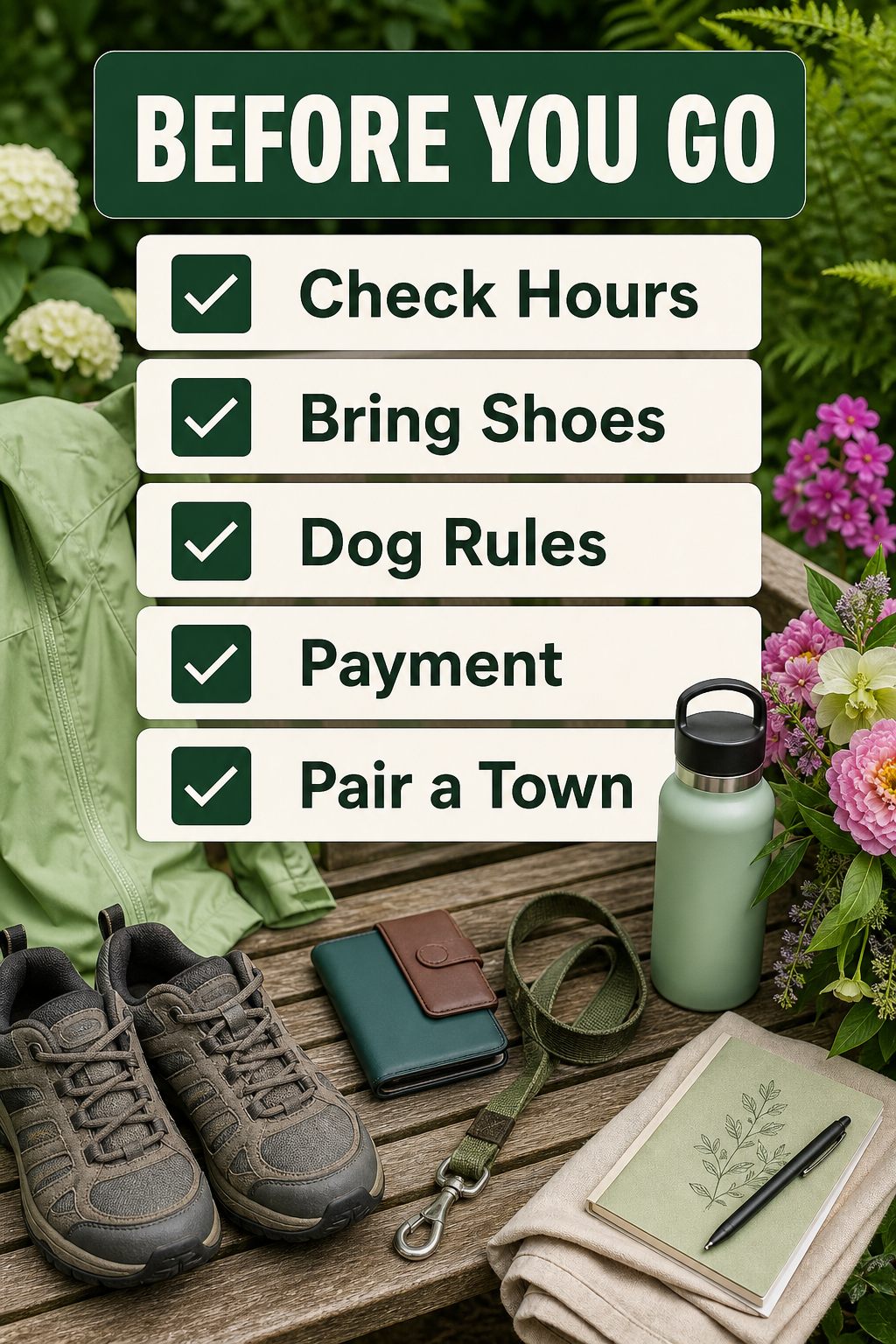
Check the official page before you leave. Garden hours, admission, dog rules, reservations, and seasonal access can change.

Whidbey Island garden day checklist with hours, shoes, dog rules, payment, and town pairing reminders

  • Check current hours and seasonal closures.
  • Bring shoes that can handle gravel, forest paths, grass, or damp spots.
  • Confirm dog rules before promising a dog-friendly day.
  • Expect some places to use self-pay, cash/check, QR payment, reservation systems, or posted payment instructions.
  • Pair the stop with a nearby town instead of trying to race the whole island.

What These Places Tell You About Whidbey Life

Beach days are part of Whidbey, but they are not the whole island. Garden days show a different texture: slower roads, rural pockets, community farms, restoration work, small businesses, seasonal rhythms, and the difference between visiting a beautiful place and understanding how people actually live here.

For anyone thinking seriously about Whidbey, that local texture matters as much as the view.

Editorial Whidbey listings banner with shoreline, rural road, garden edge, water light, and welcoming island home silhouettes

Still comparing which part of the island feels right? scan all active Whidbey listings.

For the practical side of island living, read what to know before buying a home on Whidbey Island.

FAQs About Whidbey Island Garden Days

What is the best garden to visit on Whidbey Island?

Meerkerk Gardens is the best fit for a classic garden outing, especially if you want display gardens, rhododendrons, woodland trails, and a peaceful Greenbank setting.

When is lavender season on Whidbey Island?

Lavender is a summer experience. Western Sun Lavender’s site currently points readers to the mid-June 2026 purple season, but visitors should confirm current hours and reservation details before going.

Are dogs allowed at Whidbey Island gardens?

It depends on the location. Meerkerk Gardens says dogs on leash are welcome, while Earth Sanctuary says no dogs. Check each official page before planning a dog-friendly outing.

What is an easy garden stop to pair with lunch or shopping?

Greenbank Farm is one of the easiest options because it combines trails, fields, gardens, food, shops, art, and a central island location.

Is Earth Sanctuary a garden?

Earth Sanctuary is better described as a nature reserve and reflective outdoor site than a traditional flower garden. It is a good fit for quiet walking, birds, ponds, forest, and contemplative spaces.

Written by Si Fisher.

PlacesThings to do on WhidbeyWhidbey Island Lifestyle June 8, 2026

Whidbey Island Beach Access Guide: Public Beaches, Dog Rules & Tide Tips

A good Whidbey beach day starts before you step onto the sand. The right public access point depends on what you want to do: walk the dog, picnic with kids, follow a bluff trail, beachcomb at low tide, watch the sunset, or simply find a quiet stretch of shoreline where the rules are clear.

Whidbey Island has public beaches, county parks, state parks, road-end access points, private shoreline, tidelands, shellfish rules, leash boundaries, parking limits, and tide conditions that can change the whole feel of a visit. This guide is meant to help you choose wisely, check the right sources, and enjoy the shoreline respectfully.

Quick Takeaways

  • Double Bluff is the best-known South Whidbey beach for long sandy walks and off-leash dog access, but dogs must be leashed from the parking lot until the marked off-leash boundary.
  • Fort Casey, Fort Ebey, and Joseph Whidbey are state parks, so plan around Discover Pass requirements and current park rules.
  • Ebey’s Landing is a bluff-and-beach outing, not a casual flat beach stroll for every visitor.
  • Shellfish harvesting is never a guess. Check current DOH, Island County, and WDFW information before harvesting.
  • Not every shoreline is public. Public access points and private beach areas can sit close together on Whidbey.

Match the Beach to the Day

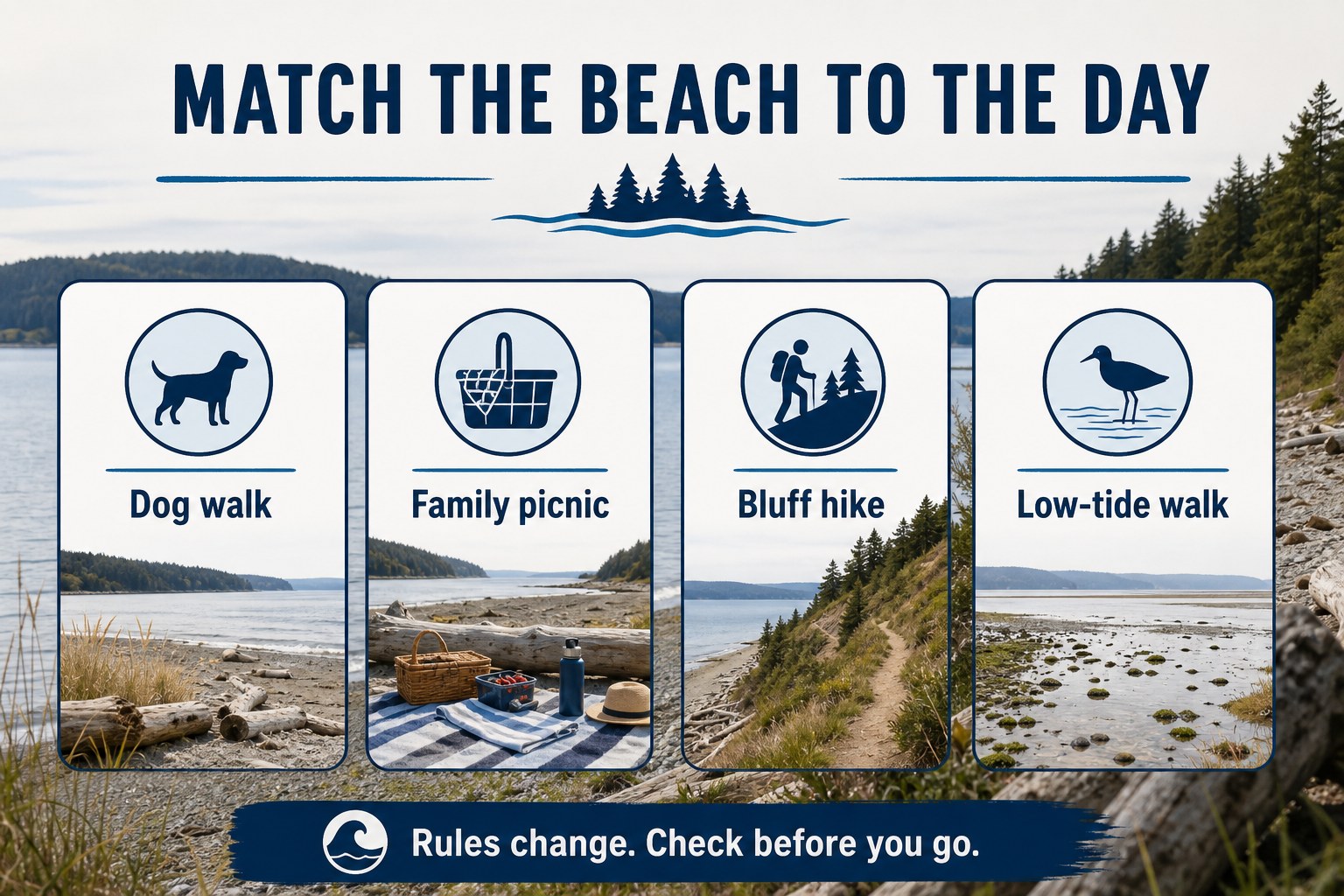
Instead of asking for the single best beach on Whidbey, start with the day you want. A beach that is perfect for a low-tide walk may be less convenient for a picnic. A dramatic bluff trail may not be the right fit for a stroller. A dog-friendly beach may have specific boundaries that matter as soon as you leave the parking lot.

Match the beach to the day graphic showing dog walk, family picnic, bluff hike, and low-tide walk options

Dog Walk

Start with Double Bluff, then verify the current leash boundary and county rules before assuming your dog can be off leash.

Family Picnic

Look for restrooms, picnic tables, playgrounds, and simpler parking. Freeland Park and Maxwelton Park are practical South Whidbey examples.

Bluff Hike

Ebey’s Landing and Fort Ebey are better for walkers who want views, trail time, and a more active outing.

Low-Tide Walk

Check the tide first. Some Whidbey beaches open up dramatically at low tide and feel much tighter when the water is high.

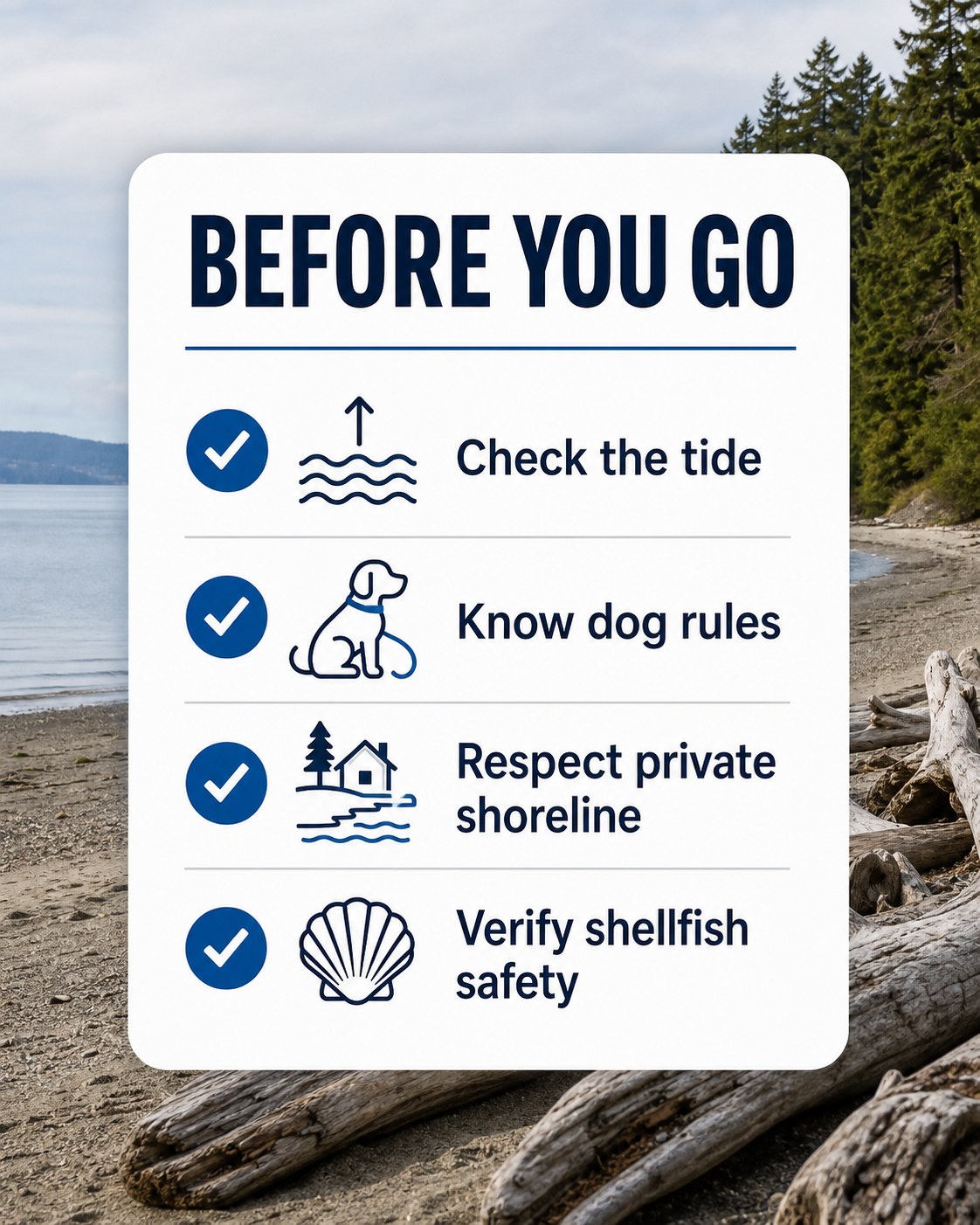
Before You Go: Four Checks That Save the Day

Whidbey beach access is not complicated, but it is local. The details matter: tide timing, dog rules, shellfish closures, parking, passes, and where public access ends. A few minutes of checking can prevent a frustrating trip.

Before You Go checklist for Whidbey beaches with tide, dog rules, private shoreline, and shellfish safety reminders

1. Check the tide

NOAA keeps current online tide predictions, and that is a better source than memory or a stale screenshot. Low tide can make a beach feel spacious and walkable; high tide can narrow the usable shoreline, cover tide flats, or make driftwood areas harder to navigate. Use the NOAA tide tables before planning a long beach walk or low-tide outing.

2. Know dog rules

Dog rules vary by location. At Double Bluff, FETCH notes that the off-leash area begins about 500 feet from the parking lot, with dogs required to stay leashed until the marked boundary. State parks generally require dogs to be on leash. Check the specific park or access point before turning a beach walk into a dog outing.

3. Respect private shoreline

Public access and private shoreline can sit close together on Whidbey. Island Beach Access describes public/private shoreline boundaries as a common point of confusion for walkers and boaters. Use signed access points, stay aware of boundaries, and avoid assuming that every beach-looking stretch is open to public use.

4. Verify shellfish safety

If harvesting shellfish is part of the plan, check both safety closures and harvest rules immediately before you go. The Washington State Department of Health shellfish closure tools, Island County shellfish advisories, and WDFW beach information should all be treated as live planning sources, not background reading.

South Whidbey: Sandy Walks, Family Parks, and Dog-Friendly Planning

South Whidbey has some of the island’s most approachable beach-day choices, especially if you are coming through Clinton, staying near Freeland, or building a day around local food, farms, and small-town stops. For trip pairing, the Whidbey farmers markets and farm stands guide can help you turn a beach walk into a picnic day.

Double Bluff

For many people, Double Bluff is the South Whidbey beach that comes to mind first. Island County describes it as a popular beach with an off-leash area, iconic views, and a wide shallow beach. It is a strong fit for long walks, big-sky views, and dog owners who understand the boundary rules.

The important detail: off leash does not mean off leash from the parking lot. FETCH notes that dogs must be leashed until the off-leash area begins, and that the boundary is marked near the beach. That makes Double Bluff excellent for dog people who plan well, but less ideal for anyone expecting instant off-leash freedom the second the car door opens.

Links: Island County park info | Double Bluff dog rules | WDFW shellfish beach profile | Double Bluff on Google Maps

Freeland Park

Freeland Park is more practical than dramatic, which is exactly why it belongs in a beach access guide. Island County lists amenities including a boat ramp and dock for non-commercial use, picnic areas, restrooms, playground, walking trails, and clamming when in season. For families or multi-generation groups, amenities can matter more than scenery.

Links: Island County park info | Freeland Park on Google Maps

Maxwelton Park

Maxwelton Park is another useful South Whidbey option, especially for people who want beach access with park infrastructure. Island County lists beach access, restrooms, picnic shelters, a playground, ballfield facilities, and views toward the shipping lanes, Olympic Mountains, and Kitsap Peninsula. It is a better fit for a planned gathering than a remote shoreline wander.

Links: Island County park info | Maxwelton Beach on Google Maps

If you are comparing South Whidbey communities as part of a move, the Clinton guide and Freeland guide can help connect beach access with everyday life, ferry timing, services, and neighborhood feel.

Central Whidbey: Bluffs, History, and Westside Views

Central Whidbey beach access often feels more layered: historic landscapes, bluff trails, state park rules, west-facing water, and changing weather. This is the part of the island where a beach day can become a hike, a history stop, or a sunset plan.

Ebey’s Landing

Ebey’s Landing is one of Whidbey’s signature bluff-and-beach experiences. The National Park Service describes the Bluff Loop Trail as a moderate beach-and-bluff walk with a few steep sections, marine ecosystems, views across the strait, and Perego’s Lake. It is not the simplest beach for every visitor, but it is one of the strongest choices when the goal is landscape, movement, and a sense of place.

Links: NPS Ebey’s Landing trail info | Ebey’s Landing on Google Maps

Fort Casey

Fort Casey Historical State Park combines beach exploration with military batteries, Admiralty Head Lighthouse, picnic areas, fishing, boating, and wide Admiralty Inlet views. Washington State Parks lists dogs as allowed on leash and shows standard state park fees, including Discover Pass requirements. It is a strong Central Whidbey choice when the group wants more than shoreline alone.

Links: Fort Casey State Park info | Fort Casey on Google Maps

For more Central Whidbey context, use the Coupeville guide, especially if you want to pair Fort Casey, Ebey’s Landing, Penn Cove, and Front Street into one slower day.

North Whidbey: State Parks, Sunsets, and Bigger Water

North Whidbey beach access often feels more open and wind-shaped. It can also be more state-park-oriented, which means passes, leash rules, seasonal hours, and official park alerts matter.

Fort Ebey

Fort Ebey State Park is a coastal camping park with a historic military fort, wooded trails, bluff views, and beach exploration. Washington State Parks lists 25 miles of wooded trails and notes that visitors can explore the beach, surf, picnic, and take in views of the Olympic Mountains, Vancouver Island, and the Strait of Juan de Fuca. Dogs are allowed on leash, and a Discover Pass is part of the normal parking picture.

Links: Fort Ebey State Park info | Fort Ebey on Google Maps

Joseph Whidbey State Park

Joseph Whidbey State Park is a day-use park on the west shore of Whidbey Island. State Parks describes it as a place for sunsets, moderate trail hiking, picnicking, and beach time with kids. It is seasonal, with summer hours listed as 8 a.m. to dusk and winter closure from November 1 through March 31, so check the park page before using it as a shoulder-season destination.

Links: Joseph Whidbey State Park info | Joseph Whidbey on Google Maps

For broader North Whidbey planning, the Oak Harbor guide is a good companion, especially if you are comparing parks, everyday services, Navy-area realities, and access north through Deception Pass.

Public Access, Private Shoreline, and Owning Near the Water

Beach access is not only a visitor question. It also matters when people are thinking about buying, selling, or owning near the water on Whidbey. Two homes can both feel close to the shoreline while offering very different realities: private tidelands, community beach access, public road-end access nearby, bluff conditions, erosion considerations, septic and well systems, or rules that affect how the shoreline can be used.

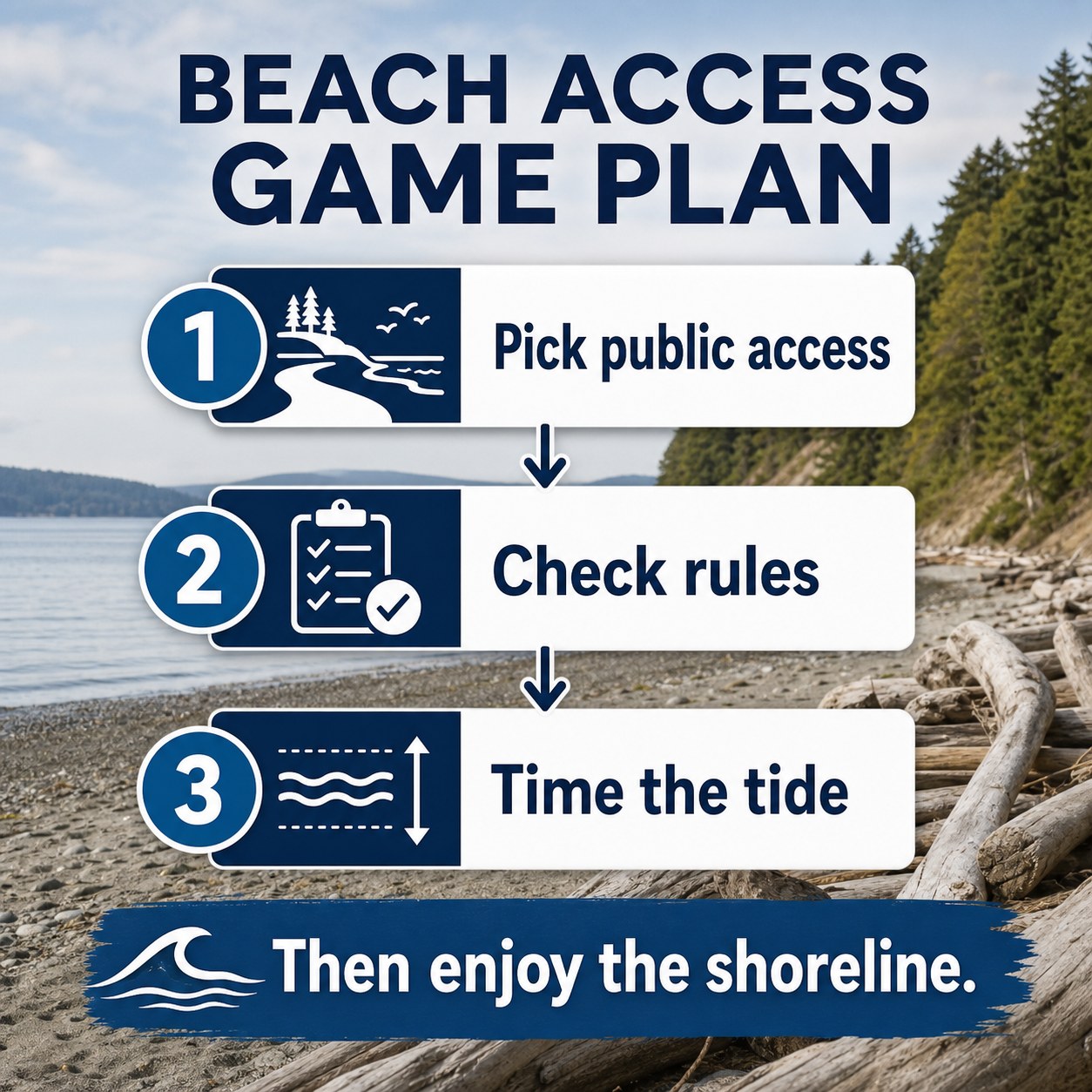
Beach Access Game Plan graphic with steps to pick public access, check rules, and time the tide

That is why local due diligence matters. If a listing mentions beach access, waterfront, tidelands, community beach, boat launch, or shoreline amenities, ask what those words mean in practice. Is access deeded, shared, public, private, seasonal, tide-dependent, or governed by a community association? Is the trail or stairway maintained? Are there bluff, drainage, erosion, septic, or insurance considerations?

For a broader ownership lens, read What to Know Before Buying a Home on Whidbey Island. Beach access is one part of the same larger pattern: island properties reward careful questions.

Thinking About a Home Near the Water?

A Whidbey shoreline setting can be beautiful, but the details matter: access, bluff conditions, septic, wells, roads, insurance, association rules, and long-term maintenance. Local guidance helps turn a pretty view into a clear decision.

Browse Whidbey Island homes

Frequently Asked Questions

What is the best public beach on Whidbey Island?

It depends on the day. Double Bluff is a strong choice for sandy walks and dog planning, Ebey’s Landing is excellent for a bluff-and-beach hike, Fort Casey and Fort Ebey pair shoreline with state park scenery, and Freeland or Maxwelton can be more practical for picnics and family park amenities.

Are dogs allowed on Whidbey beaches?

Dogs are allowed at many Whidbey beach areas, but rules vary. Double Bluff has a marked off-leash area, while Washington State Parks generally require dogs to be on leash. Always check the current rule for the specific access point before you go.

Do I need a Discover Pass for Whidbey beaches?

You need a Discover Pass when parking at Washington State Parks and certain state-managed recreation lands. Fort Casey, Fort Ebey, Joseph Whidbey, South Whidbey State Park, and Deception Pass are state park examples where pass planning matters.

Should I check tides before going to a Whidbey beach?

Yes. Tide timing can change how much beach is usable, especially for long walks, tide flats, driftwood areas, and shellfish-related outings. NOAA tide predictions are the best starting point.

Can I harvest shellfish on Whidbey beaches?

Only when the beach, species, season, license requirements, and health status allow it. Check Washington State Department of Health, Island County, and WDFW resources immediately before harvesting. Conditions and closures can change quickly.

Image note: The visuals in this article are editorial guide images created to explain Whidbey beach access planning. They are not documentary photos from a specific park, beach, event, property, or access point.

Written by Si Fisher