Events • Things to do on Whidbey • Whidbey Island Lifestyle • October 13, 2026

Whidbey Island Pumpkin Patches 2026: Corn Mazes & Fall Farm Fun

Somewhere on Whidbey, your future jack-o’-lantern is waiting. It might be perfectly round, wonderfully lopsided or so ambitious you’ll need help getting it into the car. Choosing it is half the fun.

Pull on your boots and make a fall day of it: ride a trolley, meet farm animals or tackle a corn maze before finding your porch’s newest resident. Here’s where to go on Whidbey, plus two nearby adventures if your pumpkin quest takes you over the bridge or across the ferry.

Whidbey pumpkin patches at a glance

  • Scenic Isle Farm: October trolley outings Friday–Sunday, 10 am–5 pm; pumpkin stand open daily in October.
  • Case Farm: pumpkin patch and animals on display; the October 11 owner update lists daily closing at 7 pm. Confirm the opening time.
  • K & R Farms: the 2026 tourism listing advertises a corn maze and pumpkins daily, 11 am–6 pm, through November 1. Reconfirm that final day.
  • Budget separately: activity admission and the pumpkins you take home may have different charges.

Compare Whidbey pumpkin outings

On-island options and their visiting schedules
Stop Experience Schedule and costs
Scenic Isle, Coupeville Field outing with trolley; weekday pumpkin stand Activities Fri–Sun, 10–5 in October; stand daily. Confirm current charges.
Case Farm, Oak Harbor Pumpkin patch, stand and animals on display Daily until 7 pm per October 11 update. Confirm opening time, final day and prices.
K & R, North Whidbey Corn maze and pumpkin selection Listed daily 11–6 through Nov. 1; reconfirm final day. Listed admission $5/person or $15/family; confirm inclusions and pumpkin prices.
Hanson’s, Langley Carving and decorative pumpkin shopping Mon–Sat 8–5; Sun 8–4 per October 10 announcement. Check stock and prices.
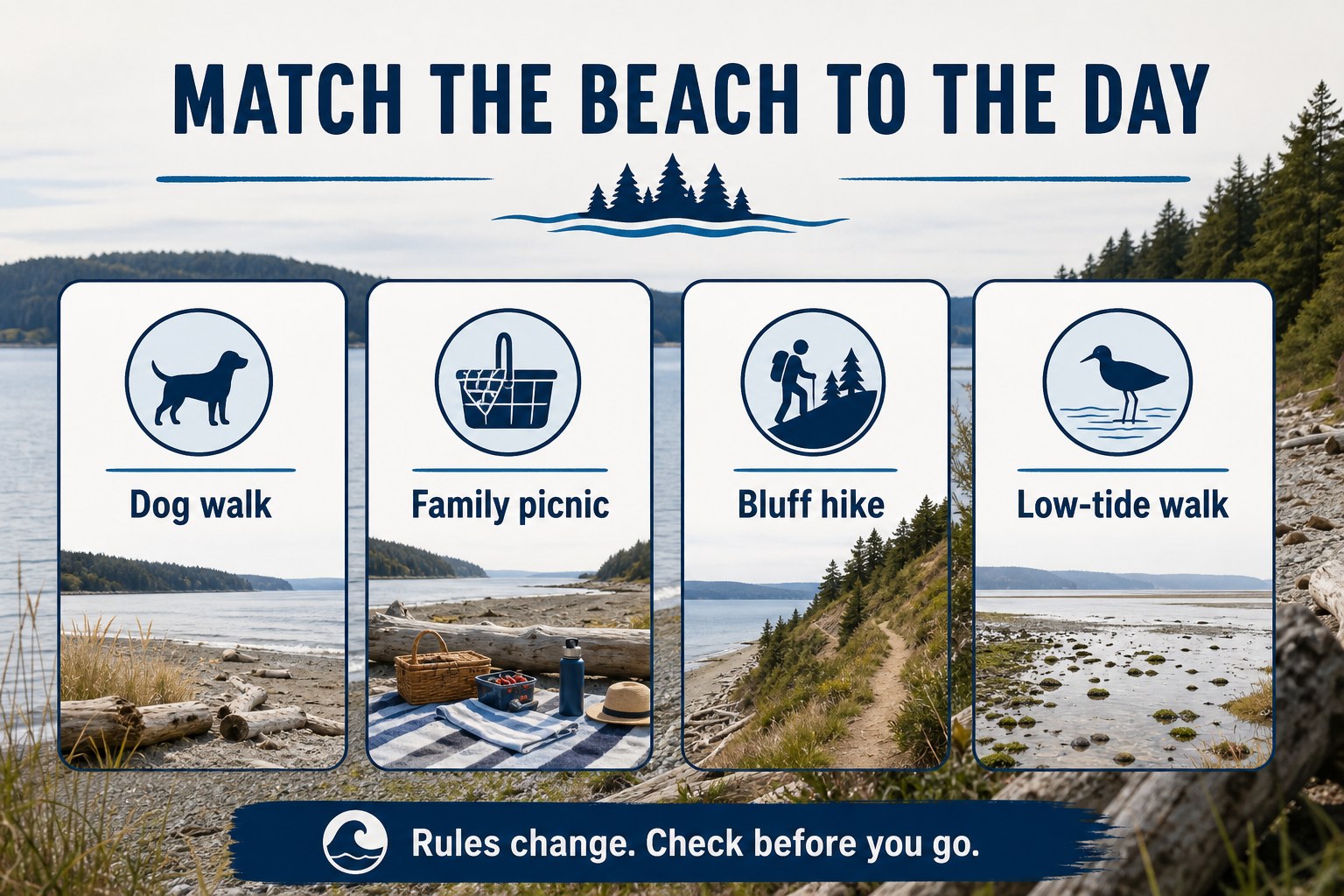
Illustrated comparison of a pumpkin patch, corn maze, and farm stand, labeled Field visit, Activity outing, and Quick pumpkin stop.

Scenic Isle Farm: trolley rides on Ebey’s Prairie

If you remember Sherman’s Pioneer Farm, Scenic Isle is the familiar pumpkin stop at 46 South Ebey Road, Coupeville. Its 2026 October outings run Friday–Sunday, 10 am–5 pm, with trolley rides, games, a straw tower and an Enchanted Barn.

The pumpkin stand is open daily in October. For a weekday visit, plan around the stand; check before expecting the weekend activities. Bring sturdy shoes and wind layers. The farm welcomes well-behaved dogs on short leashes. Confirm pumpkin prices and any activity charges before visiting.

Official pumpkin-season details · Farm contact information · Google Maps

Case Farm: a pumpkin patch near Oak Harbor

Case Farm’s October 11, 2026 announcement confirms the pumpkin patch is open, with animals on display and farm-stand sales. The owner lists daily closing at 7 pm, but the reviewed update does not specify an opening time or season end date.

Find the farm at 98 Case Road, Oak Harbor. Check current prices, opening time and field access before heading over. Older descriptions of mazes or other attractions should not be treated as this year’s promises.

Phone: 360-675-1803. Official farm website · Current farm announcements · Google Maps

The Farm Stand at K & R Farms: pumpkins and a corn maze

For a Whidbey corn-maze outing, K & R’s 2026 tourism listing pairs the maze with pumpkins and seasonal photo spots. It advertises daily hours of 11 am–6 pm through November 1, with admission listed at $5 per person or $15 per family.

Ask what admission includes and how pumpkins are priced; the listing does not define the family rate or say a pumpkin is included. The farm’s general website describes a season ending in October, so reconfirm a November 1 visit. Sunflowers appear in the seasonal listing, but blooms depend on conditions.

The stand also lists ice cream, produce and local honey. Find it at 36699 State Route 20, Oak Harbor.

Phone: 360-675-1888. Official farm-stand website · 2026 corn-maze listing · Google Maps

A South Whidbey pumpkin-shopping stop: Hanson’s Garden Center

For carving pumpkins and porch decorations, Hanson’s Garden Center in Langley is another option. Its October 10, 2026 Drews List announcement advertised carving pumpkins, decorative pumpkins and gourds, fall mums, wreaths and Halloween decorations.

The announcement lists Monday–Saturday, 8 am–5 pm, and Sunday, 8 am–4 pm. Check current stock before making a special trip. This is a garden-center shopping stop; the announcement does not advertise a U-pick field, maze or farm rides.

Address: 5844 Kramer Road, Langley. Phone: 360-321-1008. Find Hanson’s on Google Maps

Looking for Whidbey Farm & Market?

You may remember this Monroe Landing Road farm from earlier pumpkin guides. Its 2026 pumpkin-patch and corn-maze details remain unconfirmed as of October 13. Check directly before traveling; older hours and ticket prices may no longer apply. Lack of a current confirmation does not establish permanent closure.

Official account · Tourism contact page · Google Maps

Nearby pumpkin patches off island

Whidbey’s farms can make a full fall outing on their own. For a larger mainland adventure, choose the route that fits your starting point and leave time for the return journey.

South-end ferry route: Swans Trail Farms, Snohomish

Take the Clinton–Mukilteo ferry with your vehicle, then continue to 7301 Rivershore Road, Snohomish. Build the trip around current ferry service and your activity ticket time; the sailing is only one part of the journey.

Swans Trail’s 2026 season pairs a 50-acre U-pick pumpkin patch with its Harvest Festival, running September 12–October 31. The festival page lists daily daytime hours of 10 am–6 pm, with later hours on selected evenings. Entry to the pumpkin patch is free; pumpkins are purchased separately and individually priced by size.

The ticketed festival area includes a Washington State corn maze, animal barn, wagon hayrides and children’s activities. Check the day’s attraction schedule because some offerings have limited weekday availability. The evening Great Harvest Glow requires its own ticket. U-pick apples are already closed for the 2026 season.

Published festival admission for ages 2–64 is $16.95 Monday–Friday or $24.95 Saturday–Sunday, plus tax and fees. Buy activity tickets online before leaving: October weekends can sell out, and sold-out time slots have no additional gate tickets. Pets are not permitted; trained service animals are allowed.

Official festival details and tickets · Pumpkin-patch details · Google Maps

North-end bridge route: Schuh Farms, Mount Vernon

Cross Deception Pass Bridge and continue toward Mount Vernon to 15565 State Route 536. Schuh Farms lists U-pick and pre-picked pumpkins, a corn maze and October weekend rides.

The currently published fall page lists the corn maze daily, 10 am–5 pm, with tickets available in the main store. Tractor-train, barrel and hayride activities run October weekends, 10 am–5 pm, weather permitting. The store has a separate daily schedule of 9 am–6 pm, with pumpkins, squash and baked goods.

The fall page does not specify a year or publish numeric activity prices, so confirm the current schedule and charges before traveling. The store’s longer hours do not mean rides or the maze stay open until 6 pm.

Phone: 360-424-6982. Official fall activities · Google Maps

Before you go

Choose the experience first: field time, a maze and rides, or a quick pumpkin purchase. Then check the schedule for that activity, rather than relying only on the farm’s opening hours.

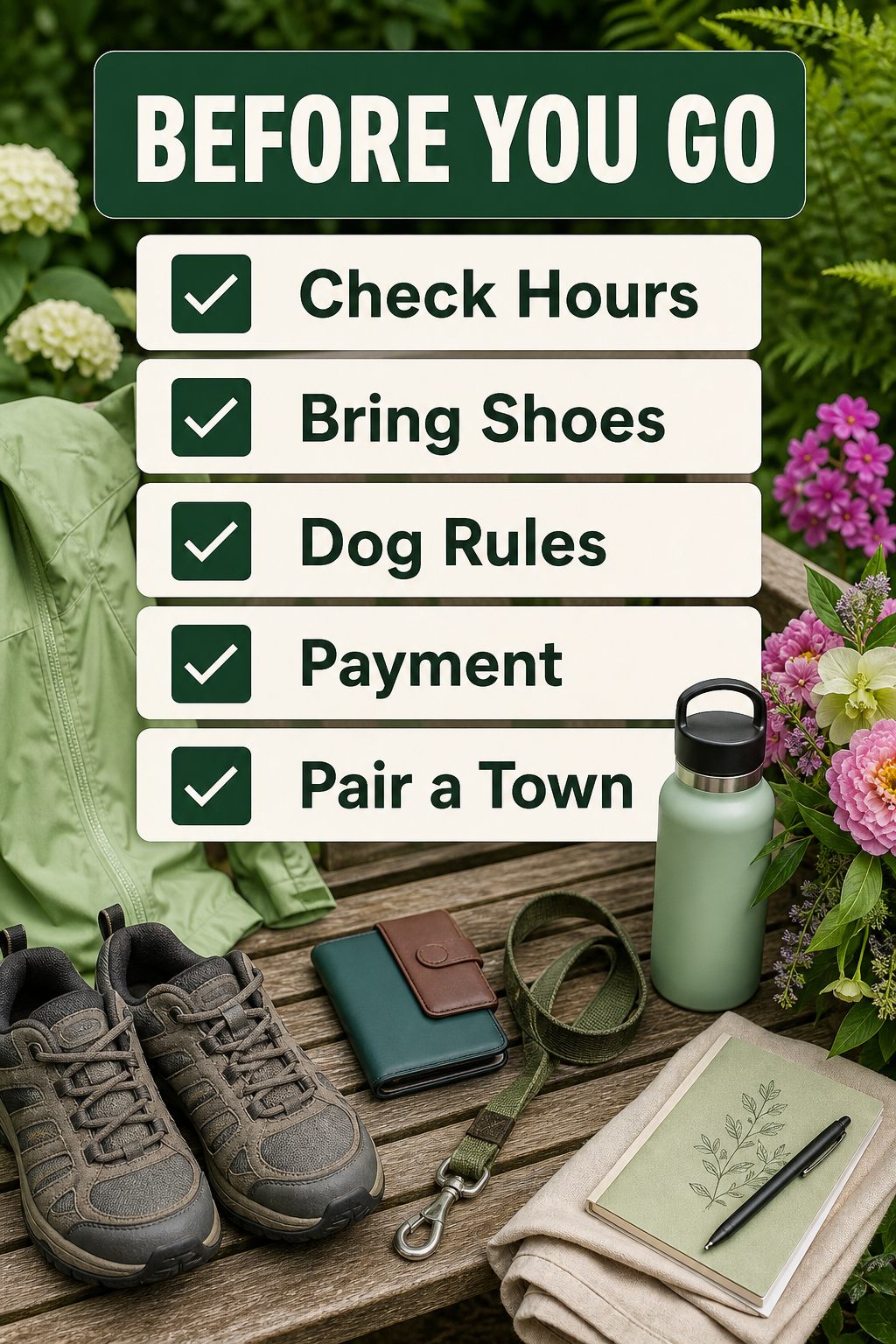
Illustrated pumpkin-visit checklist: check farm hours, wear boots, bring layers, and plan pumpkin costs.
  • Check today’s notice: confirm hours, activity availability, weather changes and whether advance tickets are needed.
  • Wear boots and bring layers: field paths and parking areas can get muddy, and open fields can feel windy.
  • Plan the full cost: pumpkins, activity admission, extras and ferry travel may be separate. Check payment methods.
  • Ask about access: with small children, check toilets, walking distances and ride conditions. Ask about the specific route if using a stroller or wheelchair.
  • Check dog rules: permissions differ by farm; Scenic Isle’s policy does not apply to every stop.
  • Respect the working farm: supervise children, stay in visitor areas and follow staff instructions around animals, crops and equipment.

For a ferry trip, use the Whidbey Ferry Guide to plan the crossing and check current service.

Make room for another local stop

Plan something near Scenic Isle with our Coupeville guide, or explore North Whidbey with our Oak Harbor guide. For more local food stops, see the farmers markets and farm stands guide.

For pumpkin races, Halloween celebrations and other dated activities, check the October 2026 events guide.

Pumpkin-patch FAQs

Where can I find pumpkin patches on Whidbey in 2026?

Scenic Isle in Coupeville and Case Farm near Oak Harbor have current patch confirmations. K & R in North Whidbey has a 2026 corn-maze and pumpkin listing. Check each farm’s current notice for your visiting day.

What pumpkin patches are near Whidbey Island?

Swans Trail Farms in Snohomish is an option via the Clinton–Mukilteo ferry; Schuh Farms in Mount Vernon is an option via Deception Pass Bridge. Both require additional mainland driving. Check hours, tickets and the return journey before leaving.

Is there a corn maze on Whidbey Island?

Yes. The 2026 K & R tourism listing advertises a corn maze. Check each farm’s current attractions rather than relying on an older guide.

Is Scenic Isle the former Sherman pumpkin farm?

Yes. Scenic Isle is the pumpkin stop at 46 South Ebey Road formerly known as Sherman’s Pioneer Farm.

Can I visit during the week?

Scenic Isle’s stand is open daily in October, while trolley activities run Friday–Sunday. Case Farm lists daily closing at 7 pm; confirm its opening time. K & R’s seasonal listing advertises daily hours.

Are pumpkin patches free?

Charges vary. Nearby Swans Trail has free pumpkin-patch entry, with pumpkins purchased separately and separate tickets for festival attractions. K & R advertises activity admission. Confirm charges at the other farms.

Can I bring my dog?

Scenic Isle permits well-behaved dogs on short leashes. Swans Trail does not permit pets, while trained service animals are allowed. Check each destination’s current policy before bringing a dog.

Does every pumpkin stop offer U-pick?

Not every pumpkin stop offers U-pick. A stand selling pumpkins and a field you may enter are different experiences. Confirm picking and field-access rules directly.

How late does the season run?

Scenic Isle advertises October pumpkin season. K & R’s tourism listing extends to November 1; reconfirm that final day. Case Farm’s reviewed announcement does not state a final date. Swans Trail’s Harvest Festival runs through October 31.

A local tradition, one farm visit at a time

Choose the experience, check the day and leave enough time to enjoy it. A seasonal farm visit is one small way to get to know everyday Whidbey life.

Considering a home here? Explore current Whidbey homes and discover which communities fit the way you want to spend your days.

2026 season details checked October 13. Hours, activities and availability can change; check the farm’s latest notice before leaving.

Image note: The visuals in this article are editorial guide images created to explain pumpkin-outing planning. They are not documentary photos from a specific place, event, business or moment.

Written by Si Fisher

Things to do on Whidbey • Whidbey Island Lifestyle • August 25, 2026

Whidbey Island Storm Season Guide: Power Outages, Wind, High Tides, and Ferry Disruptions

Image note: The visuals in this article are editorial guide images created to explain Whidbey Island storm and power-outage planning. They are not documentary photos from a specific place, event, business, property, or moment.

On Whidbey Island, a storm can become more than a bad-weather day. A power outage may also stop a private well pump, interrupt heat and communications, spoil food, complicate medical-device use, close roads, and disrupt one or both ferry routes. The useful question is not simply “Do I own an emergency kit?” It is “What should I check next, for this home, on this part of the island?”

This guide puts the core live tools together first, then walks through a practical sequence for the 48 hours before a windstorm, the final 12 hours, the outage itself, and the return of power. Conditions and official instructions can change quickly, so use the live panel as a starting point—not as a replacement for Island County, the National Weather Service, Washington State Ferries, or Puget Sound Energy.

[whidbey_storm_status]

The quick answer

Check these four things first

  1. Weather: Read the active NWS alerts for Island County, including timing and the actions in the alert.
  2. Power: Use the official PSE outage map and report your outage if needed.
  3. Travel: Check Washington State Ferries for Mukilteo–Clinton and Port Townsend–Coupeville service alerts.
  4. Water: If shoreline property or a low coastal route is involved, compare the nearest NOAA tide prediction with local weather and official flood guidance.

Prepare in stages, not all at once

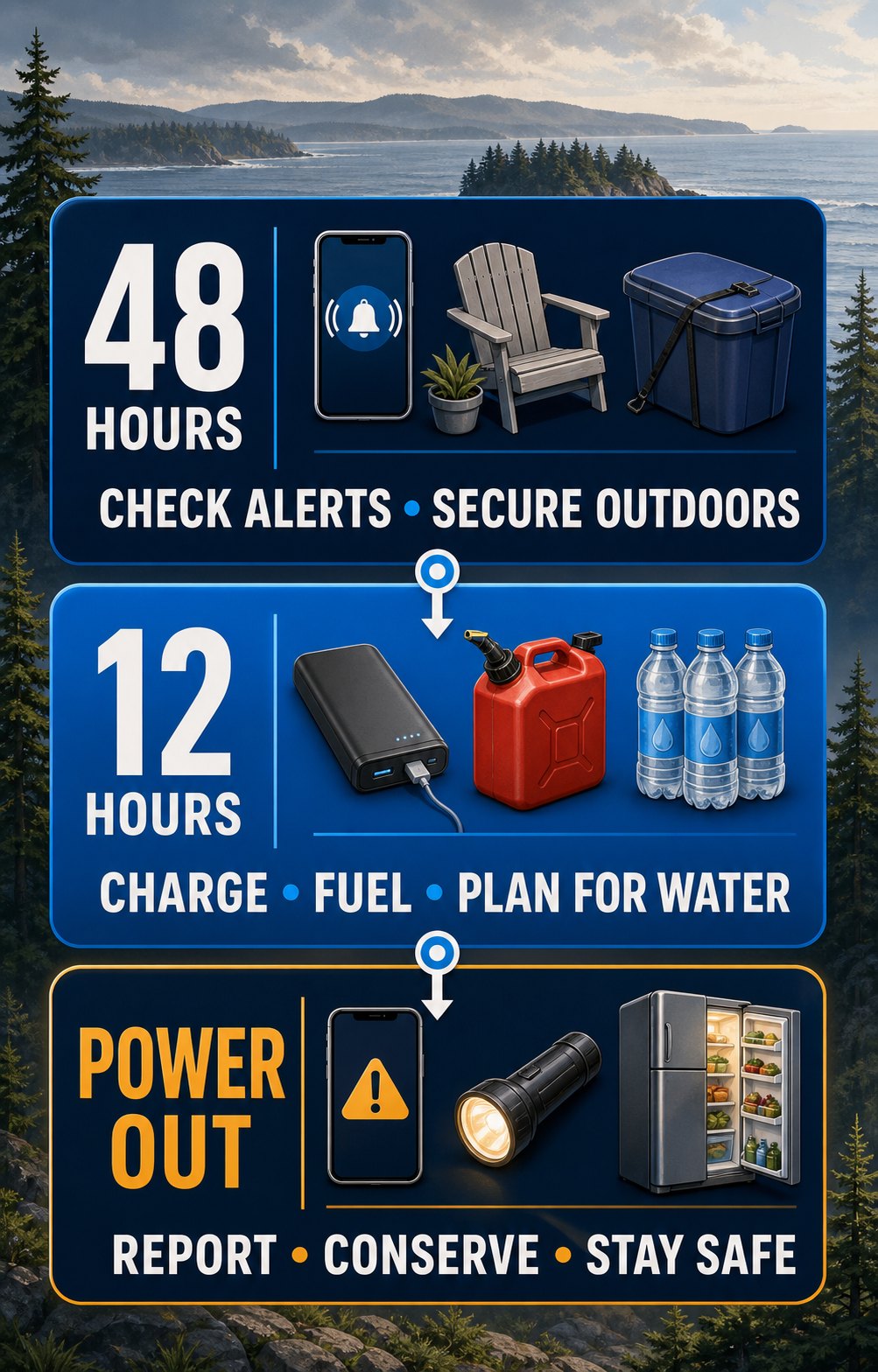
A useful storm plan changes as confidence in the forecast grows. Forty-eight hours out is the time to solve household problems. Twelve hours out is the time to finish charging, check live conditions, and avoid unnecessary travel. Once power is out, the priority shifts to electrical safety, heat, water, food, and reliable information.

Whidbey storm preparation timeline showing what to do 48 hours before, 12 hours before, and when the power goes out
A staged plan keeps the final hours focused on current conditions instead of errands.

Whidbey homeowners

Own a home on Whidbey?

Curious to know what it is worth in today’s market? Request a complimentary home valuation from a local Windermere Whidbey professional.

About 48 hours before

Solve the household problems

  • Sign up for Island County myAlerts if you have not already.
  • Secure outdoor furniture, cans, tools, and decorations before winds rise.
  • Charge battery banks and test flashlights, CO alarms, and backup equipment.
  • Fuel the vehicle; stations, card readers, and pumps may be affected by outages.
  • Make a specific plan for well water, refrigerated medication, pets, mobility needs, and electrically powered medical equipment.

About 12 hours before

Shift to live conditions

  • Read the full NWS alert, not only the headline, and note the expected timing.
  • Recheck ferry alerts, road conditions, and any tidal restrictions before traveling.
  • Fill clean water containers if your well pump will stop without power.
  • Freeze water or gel packs and group freezer items together.
  • Bring loose items, devices, medication, pet supplies, and lighting into the part of the home where you expect to stay.

Do this now, not during the storm

Learn the manual parts of your home

Know how to release the electric garage door, where the electrical panel and water shutoffs are, which heat sources work without utility power, and how your well or pressure tank behaves during an outage. Label instructions so another household member can use them. If a system is unfamiliar, arrange professional guidance before severe weather—not while it is failing.

When the power goes out on Whidbey

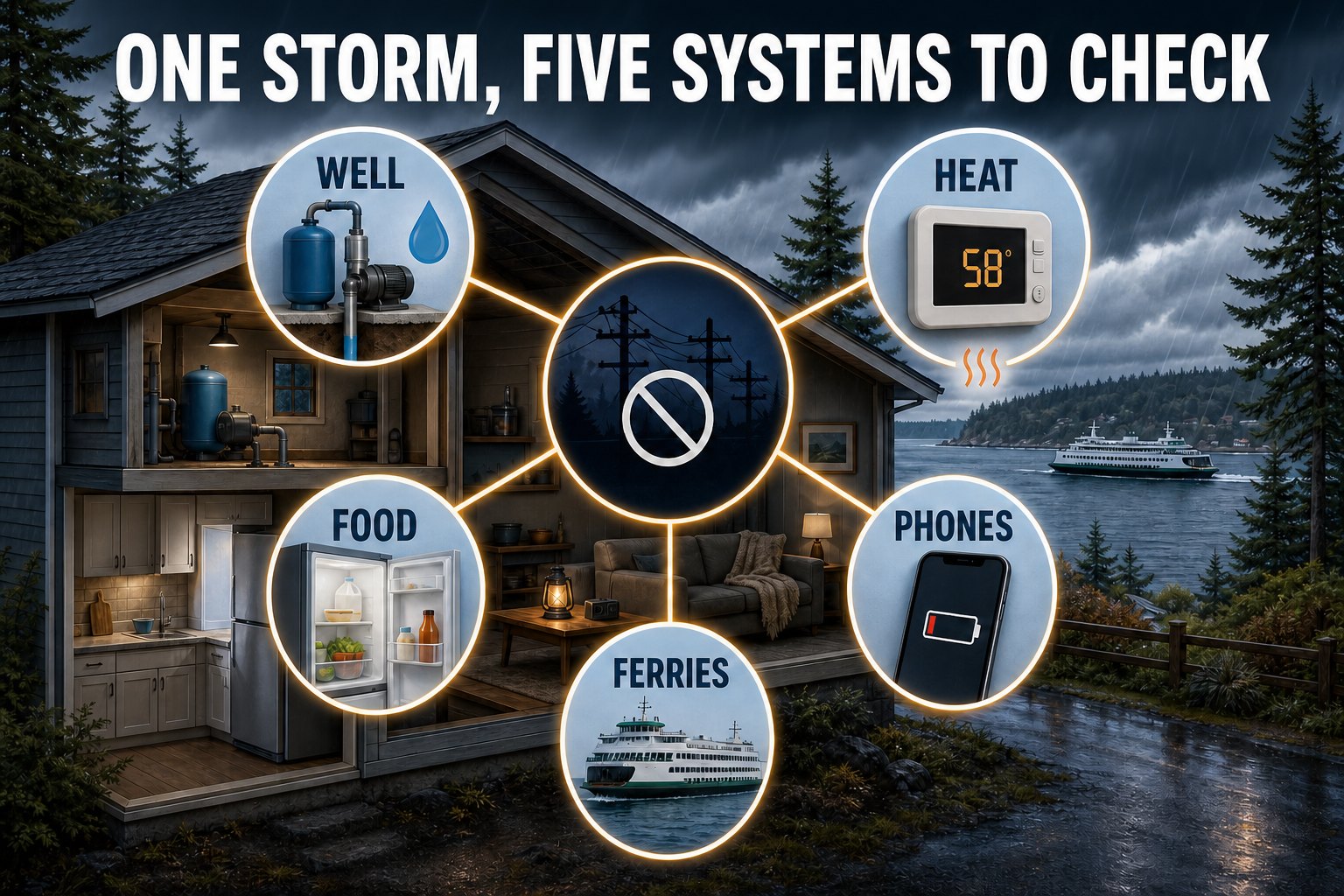
First determine whether the problem appears limited to your home. Check the electrical panel only if it is safe and dry. If the neighborhood is dark or you see utility damage, use PSE’s official outage tools. Island County notes that outages can disrupt communications, water, transportation, stores, fuel access, food storage, and medical devices—several systems that island households may rely on at the same time.

Whidbey storm systems diagram connecting one storm to well water, heat, food, phones, and ferry checks
One storm can create several separate decisions; check each system instead of assuming one status applies to all.

First 15 minutes

Use this order

  1. Look and listen for immediate danger. Stay indoors and away from windows if winds are high. Do not investigate falling trees or damaged lines.
  2. Report and verify. Use the PSE outage page, then conserve phone battery rather than repeatedly refreshing it.
  3. Protect the home. Turn off or unplug sensitive electronics and heat-producing appliances. Leave one light on so you know when service returns.
  4. Protect water. If you use a private well, conserve stored and pressure-tank water until you understand what is available.
  5. Protect cold food. Keep refrigerator and freezer doors shut and write down the outage start time.

Downed line: stay at least 35 feet away

PSE says to assume every downed utility wire is energized, stay at least 35 feet away, and call 911 or the utility. Do not drive over a line or attempt to rescue a person or pet near it. If a line falls on your vehicle, stay inside unless fire or another immediate hazard forces evacuation; follow emergency instructions.

Food safety has a clock

The FDA says an unopened refrigerator keeps food cold for about four hours. A full freezer holds temperature for about 48 hours, or about 24 hours when half full, if the door stays closed. When power returns, use appliance and food temperatures—not smell or appearance alone—to make decisions. The FDA advises discarding refrigerated perishables that have been above 40°F for four hours or more. Read the FDA’s current outage food-safety guidance for the full decision process.

Where to find food, warmth, charging, and community help

During a prolonged Whidbey Island outage, churches, nonprofits, community centers, neighbors, and generator-powered businesses sometimes provide hot meals, coffee, warmth, Wi-Fi, or device charging. The important catch is that storm-specific help is usually activated case by case. A place that helped during one outage may be closed, without power, or serving a different population during the next one.

Confirm before you leave

Check that the location is open, that the specific service you need is available, and that your route is safe. Never drive around barricades or approach floodwater, unstable trees, or downed lines to reach a resource. Call 911 for an immediate threat to life or safety; 211 is an information and referral service, not emergency dispatch.

During an active emergency

Start with Island County

Check Island County Alerts & Warnings for activated facilities, public instructions, road information, and Communication Hub updates. The county has identified public libraries as possible hub locations, but says operational details are still being developed.

Sign up for Island County myAlerts before storm season so time-sensitive notices can reach you directly.

Food, shelter, and essential needs

Ask Washington 211 what is open now

Washington 211 connects residents with current meal, pantry, shelter, warming, utility-assistance, and other community resources.

Call: 211 or 1-877-211-9274
Text: 211WAOD to 898211
Online: Search the resource directory

Standing Whidbey meal and daytime-support resources

The following are standing community programs rather than guaranteed storm shelters. Hours and services were checked on August 25, 2026, but outages, holidays, staffing, and program changes can affect availability. Call or check the linked page before traveling.

Area Resource Standing service Verify and locate
North Whidbey SPiN Café
1241 SW Barlow Street, Oak Harbor
360-682-5949
Open daily 6:30 a.m.–5 p.m.; offers meals, daytime respite, and connections to community resources. Confirm the current meal schedule. Official website
Google Maps
North Whidbey St. Augustine Catholic Church
185 N Oak Harbor Street, Oak Harbor
360-675-2303
Agape hot meal Monday evenings; Island County currently lists service from 4:30–6 p.m. Official ministry page
Google Maps
Central Whidbey Coupeville United Methodist Church
608 N Main Street, Coupeville
360-678-4256
Island Senior Resources senior lunch Wednesdays from 11:45 a.m.–12:30 p.m. Official website
Google Maps
South Whidbey Island Church of Whidbey
503 Cascade Avenue, Langley
360-221-6980
Free hot meals Tuesdays and Thursdays from 11:30 a.m.–1 p.m.; no eligibility restriction is currently listed. Current program listing
Google Maps
South Whidbey St. Anthony’s Soup Kitchen at St. Hubert
804 3rd Street, Langley
360-221-5303
Island County currently lists Wednesday lunch from 11 a.m.–1 p.m. County meal directory
Google Maps

For food banks and additional programs—including North Whidbey Help House, Good Cheer Food Bank, Gifts from the Heart, Queen-Bee Pantry, Whidbey Island Nourishes, and senior meal services—use the Island County food-bank and meal-program directory.

Watch for verified storm pop-ups

Whidbey businesses and neighbors sometimes create temporary gathering places when a long outage develops. During the December 2025 outage, Pickles Deli operated with generator power, heat, Wi-Fi, coffee, food, and a community meal fund. In December 2024, Bearly Awake Coffee Co. served residents from a generator-powered setup at Windjammer Park. These are examples of Whidbey’s community response—not standing promises for the next storm. Look for current, dated announcements and verify them before leaving home.

Generator safety: outside means fully outside

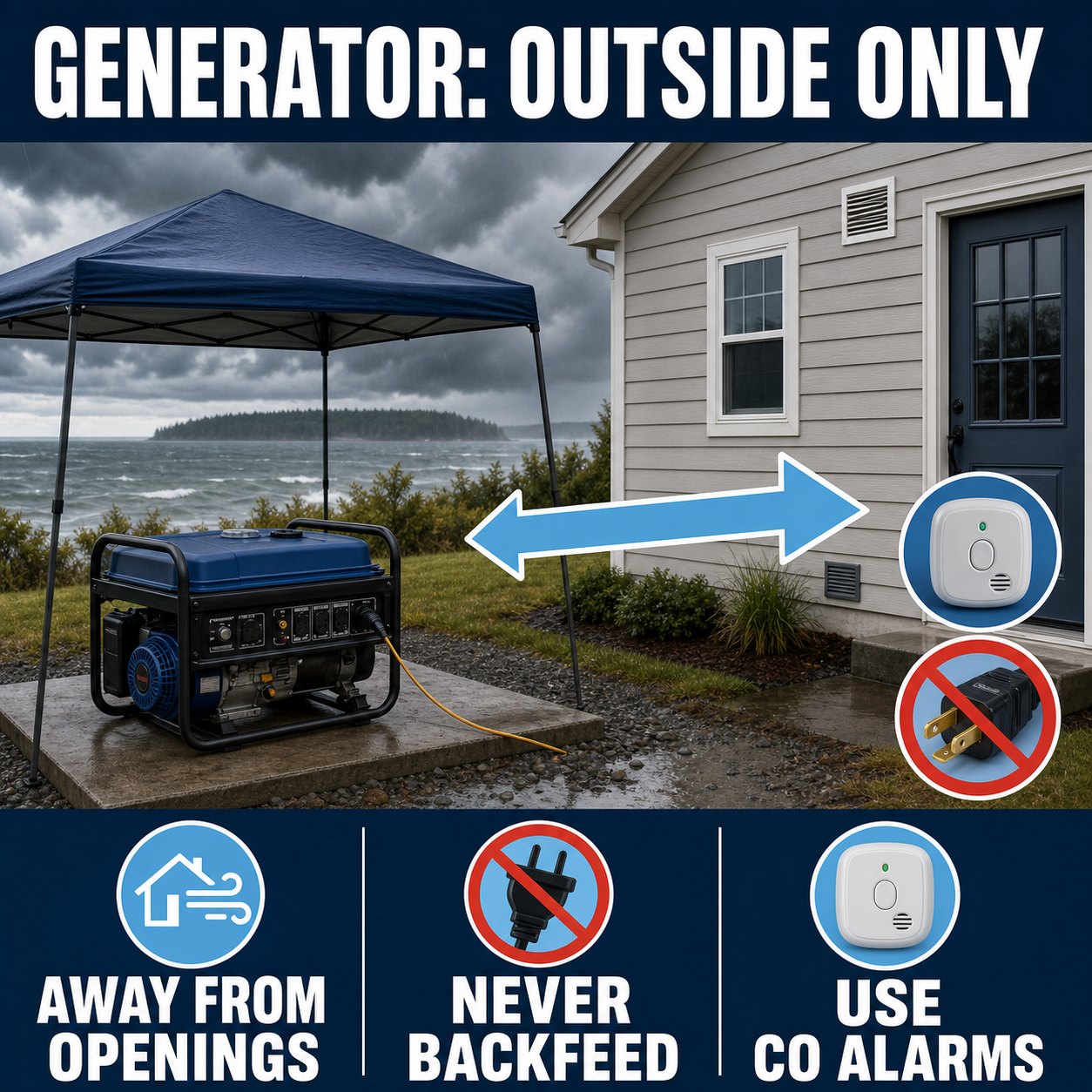
Portable generator safety infographic showing outdoor placement away from openings, no backfeeding, and carbon monoxide alarms

A garage with its door open is not a safe generator location. Neither is a porch, carport, breezeway, crawlspace, or partly enclosed shed. Operate a portable generator fully outdoors and away from doors, windows, and vents, following the manufacturer’s directions. PSE advises keeping the unit on a dry surface under an open canopy-like cover in wet weather and at least 10 feet from combustible surfaces.

  • Use working carbon-monoxide alarms. Test them before storm season and replace batteries or units according to their instructions.
  • Do not backfeed. Never plug a generator into a wall outlet or directly into home wiring. Backfeeding can energize utility lines and kill a lineworker.
  • Use the correct connection. Plug appliances directly into the generator or use a properly rated, intact outdoor cord. A permanent connection requires a correctly installed transfer switch and qualified professional.
  • Keep it dry and cool. Do not operate in standing water or touch it with wet hands. Shut it down and let it cool before refueling.
  • Do not improvise placement. The PSE generator-safety page and the manufacturer’s instructions should govern the setup.

A high tide is not the whole flood forecast

Island County describes king tides as higher-than-usual tides that can produce local flooding even without rain. But a tide table is only one input. Wind direction, wave action, and atmospheric pressure can push observed water above or below the astronomical prediction. That is why the live panel labels the next predicted high tide without declaring it a flood event.

TIDEPredicted astronomical water level
+ WINDDirection, duration, and waves
+ PRESSUREWeather-driven water-level effects

If official guidance warns of coastal flooding, move vehicles and portable items before water reaches the route or property, identify higher ground, and do not walk or drive through floodwater. For public shoreline planning and legal access reminders, see the Whidbey Island Beach Access Guide.

Check both ferry routes—and the road between you and them

Whidbey’s two ferry connections are different systems: Mukilteo–Clinton at the south end and Port Townsend–Coupeville on Central Whidbey. Wind, vessel availability, terminal conditions, and tidal restrictions can affect travel plans. A reservation, screenshot, or schedule checked earlier in the day is not a live status report.

After power returns

Restoration is a transition, not an all-clear. Give the electrical system a moment, then reconnect appliances in stages rather than switching everything on at once. Check food and refrigerated medication using the appropriate official guidance. Look for leaks, damaged branches, blocked access, and signs of electrical trouble—but never approach a line or unstable tree to inspect it.

The 20-minute reset

  • Record how long the outage lasted and any official restoration details.
  • Check refrigerator, freezer, and medication temperatures before discarding packaging or resetting thermometers.
  • Refill water, batteries, fuel, shelf-stable food, and pet supplies that were used.
  • Recharge every power bank and backup light.
  • Write down the one thing that made the outage harder; solve that issue before the next forecast.

A homeowner’s Whidbey storm-readiness inventory

Storm readiness is property-specific. Two homes on the same road may have different water sources, heat systems, tree exposure, shoreline elevation, cell coverage, driveway access, and backup-power options. Whether you already live here or are evaluating a home, verify the systems rather than relying on a general impression that a property is “storm ready.”

System Question to answer before a storm Evidence to locate
Water Will the well pump or treatment system work without utility power? Well records, pump controls, pressure-tank details, stored-water plan
Heat Which heat source can operate safely during an outage? Equipment manuals, fuel plan, service history, working CO alarms
Backup power What loads are supported, and how is power connected safely? Generator rating, transfer-switch documentation, electrician records
Access Can trees, drainage, snow, or shoreline flooding block the route? Road maintenance, easements, alternate routes, tree assessment
Communications What works when power, internet, or one cell carrier fails? Battery backup, radio, alert sign-ups, neighbor plan

For a broader look at wells, septic systems, ferries, insurance questions, and everyday island logistics, continue with What to Know Before Buying a Home on Whidbey Island.

Frequently asked questions

Where do I check a Whidbey Island power outage?

Use Puget Sound Energy’s official outage map and report-outage page. The live panel near the top of this guide links to both. For a downed line or immediate danger, stay away and call 911 or PSE at 1-888-225-5773.

Why is the PSE outage map not embedded on this page?

PSE’s website security settings do not allow the outage map to be framed on another domain. This guide links directly to the official live map rather than copying, scraping, or presenting a broken iframe.

How long will food stay cold during a power outage?

The FDA says an unopened refrigerator keeps food cold for about four hours. A full freezer holds temperature for about 48 hours, or about 24 hours if half full. When power returns, use temperatures and current FDA guidance to decide what is safe.

What happens to a private well when the power goes out?

Most electric well pumps stop. A pressure tank may provide a limited amount of water, but the amount and behavior depend on the system. Know your equipment, store drinking water before forecast high winds, and conserve water during the outage.

Can I run a portable generator in a garage with the door open?

No. A garage is still an enclosed or partly enclosed space where deadly carbon monoxide can accumulate and enter the home. Operate the generator fully outdoors, away from doors, windows, and vents, following PSE and manufacturer instructions.

Which Whidbey ferry routes should I check during a storm?

Check both Mukilteo–Clinton and Port Townsend–Coupeville if either could affect your trip or backup route. Also check the road between your location and the terminal, because a ferry may be operating while local access is disrupted.

Does a high predicted tide guarantee flooding?

No. A tide prediction describes the astronomical tide at a station. Wind, waves, atmospheric pressure, local drainage, and shoreline shape can change actual conditions. Follow official coastal-flood guidance rather than using one tide height as a universal threshold.

Where can I find hot meals or community help during a Whidbey outage?

Check Island County Alerts & Warnings for facilities activated during the incident, and call 211 for current meal, shelter, warming, and utility-assistance resources. Island County also maintains a directory of standing Whidbey meal and food-bank programs. Because outages can close or change services, confirm the location and your route before traveling.

How often does the live storm panel update?

The panel requests refreshed information every five minutes and shows the last-check time. Source agencies may update on different schedules, and network or provider outages can delay data. Open the linked official source before making a safety or travel decision.


Editorial Whidbey listings banner with shoreline, rural road, garden edge, water light, and welcoming island home silhouettes

Whidbey real estate

Look beyond the view to the systems behind the home

Water source, heat, tree exposure, road access, shoreline conditions, cell coverage, and backup power vary property by property. Explore current listings, then verify the systems that matter during island weather.

Browse active Whidbey Island listings →

Official planning sources

Official guidance, source links, image URLs, and live-feed behavior were last verified August 25, 2026. Weather, outages, tide observations, ferry service, roads, and agency instructions can change without notice. Always follow current official directions.

Written by Si Fisher

Things to do on Whidbey • Whidbey Island Lifestyle • August 18, 2026

Whidbey Island Fall Birding Guide: Shorebirds, Wetlands, and Where to Watch

Image note: The visuals in this article are editorial guide images created to explain fall birding on Whidbey Island. They are not documentary photos from a specific place, event, business, property, or moment.

By late August, Whidbey Island may still feel like summer—but along its lagoons, wetlands, and tidal flats, fall migration is already changing the view. Southbound shorebirds pause to feed and rest, waterfowl begin gathering, and patient observers can watch flocks reshape themselves as the tide advances.

A productive outing is not about memorizing a long species list or racing between every reported bird. It starts with three choices: pick the right habitat, check the tide, and give the birds enough space to keep feeding. This beginner-friendly guide focuses on three useful Whidbey birding zones—Crockett Lake and Keystone Spit, Deer Lagoon, and Dugualla Bay Preserve—and a simple method you can reuse throughout the season.

The quick answer

  • Start at Crockett Lake for the broadest beginner-friendly mix of lake, spit, tidal water, and open sightlines.
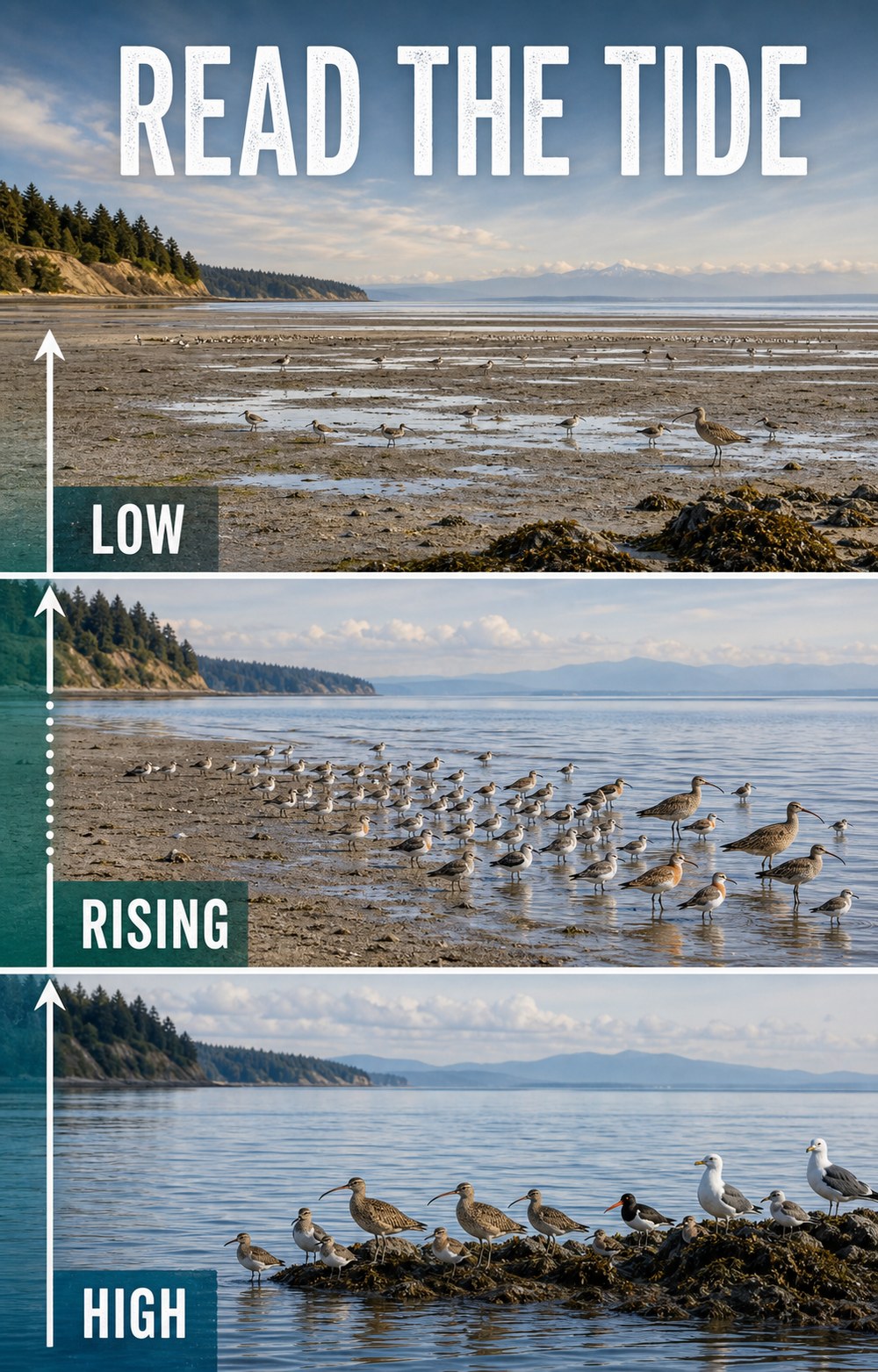
  • Try a rising tide. Low tide exposes feeding habitat but may scatter birds far away; a rising tide often moves them toward the remaining mud edge.
  • Bring binoculars. A spotting scope helps across wide flats, but it is not required for a first outing.
  • Scan before identifying. Notice size, bill shape, leg length, feeding motion, and flock behavior before opening an app.
  • Protect the birds’ energy. Keep your distance, leash dogs where they are permitted, skip recorded calls, and stay on legal public access.

Field checklist

Before you go

A five-minute check can prevent a wasted drive and a disrupted flock.


  • Check the official access page

  • Look up the nearest NOAA tide

  • Bring binoculars and a weather layer

  • Choose one habitat, not all three

  • Leave recorded bird calls off

  • Have a backup if parking is full

Why Whidbey works for fall migration

Whidbey sits along the Pacific Flyway, a broad migration corridor connecting northern breeding grounds with wintering areas farther south. The island’s value comes from variety packed into a relatively narrow landscape: protected lagoons, freshwater and brackish wetlands, saltwater bays, exposed mudflats, spits, beaches, and forest edges.

For a migrating bird, these places are not scenic rest stops in the human sense. They are places to replace energy. Tidal mud can hold tiny invertebrates and other food; shallow water offers different feeding depths; nearby marshes and uplands provide cover and resting space. That is why the best birding strategy is habitat-first rather than species-first.

The Whidbey Camano Land Trust’s fall shorebird guide highlights Deer Lagoon and Crockett Lake among the region’s productive tidal areas. Current reports can help refine expectations, but migration remains dynamic: weather, tide, food, disturbance, and the birds themselves all affect what appears.

Four field terms in plain language

Mudflat
Tidal ground exposed as water recedes. It can look empty from a distance while holding food for many birds.
Shorebird
A broad birding term for sandpipers, plovers, and related birds that commonly feed along mud, sand, or shallow water. It does not mean every bird seen near shore.
Roost
A place where birds rest safely, including the higher edges they may gather on when feeding flats are covered.
Playback
A recording of a bird’s song or call played from a phone or speaker to make a wild bird respond or come closer.

Read the tide before choosing a viewing window

There is no single perfect tide for every species or location. Still, tide stage gives you a useful starting point:

  • Low tide: More feeding ground is exposed, but birds can spread across a large flat and remain distant.
  • Rising tide: Water gradually covers the outer mud, often concentrating feeding birds along the shrinking edge. This can create a practical viewing window.
  • High tide: Much of the feeding flat may disappear. Look for birds gathering at safe roosting edges, while ducks and other waterbirds may remain visible on open water.
Three-panel Whidbey shorebird infographic showing low, rising, and high tide viewing conditions

Use the NOAA tide-prediction station list to choose the station nearest your destination and select the date of your outing. For Central Whidbey, the Coupeville predictions are a useful planning reference. For North Whidbey, check the Crescent Harbor station. Local water levels and bird behavior can differ from a simple rule of thumb, so arrive ready to observe what is actually happening.

If your outing includes shoreline walking, also review the Whidbey Island Beach Access Guide for public-access, tide, dog-rule, and private-property reminders.

Three Whidbey habitats to watch

These locations are not ranked by guaranteed sightings—there are no guarantees in birding. They offer three different habitat combinations and enough contrast to teach you what to look for.

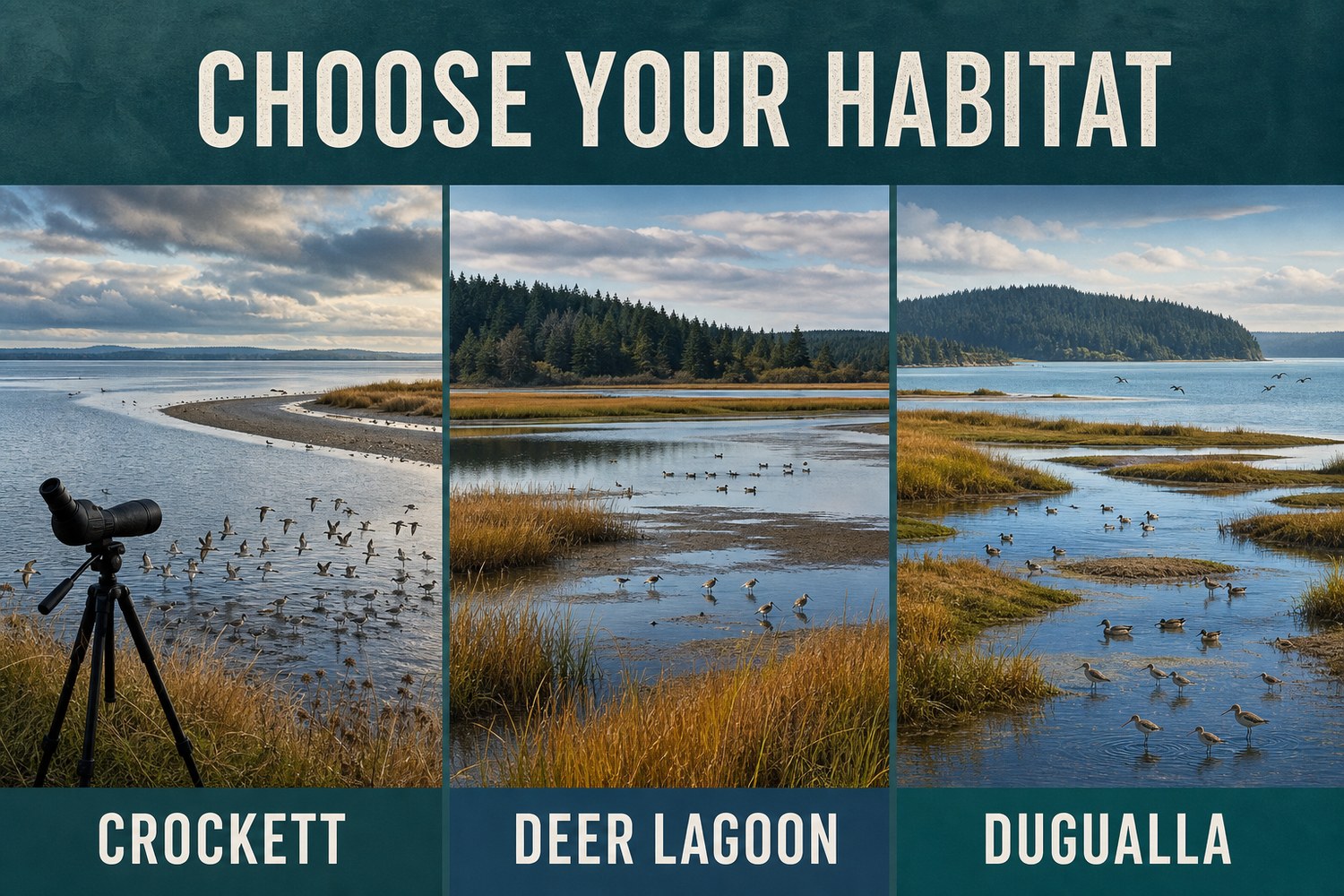
Whidbey fall birding habitat comparison for Crockett Lake, Deer Lagoon, and Dugualla Bay
Viewing zone Habitat advantage Best fit Planning note
Crockett Lake + Keystone Spit Lake, tidal flat, spit, beach, and open water A first Whidbey birding outing Check Fort Casey access and pass information
Deer Lagoon Lagoon, marsh, mudflat, open water, and woods Watching mixed shorebirds and waterfowl Very limited residential parking; protect privacy
Dugualla Bay Preserve Restored wetland, channels, brackish water, and bay A North Whidbey habitat-focused outing Confirm current preserve conditions before visiting

Central Whidbey · Best first outing

1. Crockett Lake and Keystone Spit

Best for: Broad sightlines and several habitats from one general area.
Scan: Mud and shallow margins for shorebirds, open water for ducks, and posts or sky for raptors.
Access cue: Confirm Fort Casey notices and vehicle-pass requirements before leaving.

Crockett Lake is a natural starting point because one viewing area can place several habitats in front of you. The Whidbey Camano Land Trust describes the 423-acre Crockett Lake Preserve as a Pacific Flyway stop used by more than 230 bird species across the year.

Keystone Spit separates Crockett Lake from Admiralty Bay, adding protected-water and saltwater perspectives. A bird-viewing platform associated with nearby Fort Casey can make stationary scanning easier than walking toward a flock. Review the current Fort Casey State Park page, then open the Crockett Lake birding area in Google Maps.

For a longer Central Whidbey day, use the Guide to Coupeville rather than adding extra birding stops merely to fill an itinerary.

South Whidbey · Rich mixed habitat

2. Deer Lagoon

Best for: Comparing shorebirds, waders, ducks, and woodland-edge birds.
Scan: Wet mud, shallow water, open lagoon, marsh edges, and the wooded approach.
Access cue: Parking is very limited in residential areas; keep roads and driveways clear.

Deer Lagoon lies along Useless Bay east of Freeland. The Whidbey Audubon Society’s Deer Lagoon guide describes a documented list of at least 211 species and a combination of marsh, mudflat, open water, and surrounding woods. It is especially useful for comparing feeding styles: small birds probing wet mud, longer-legged birds working shallows, and ducks using deeper water.

The common entry points are in quiet residential areas, and neighboring yards and beaches may be private. Carpool when practical, remain on recognized public access, and choose another destination if legal parking is unavailable. Open Deer Lagoon in Google Maps for general orientation, then follow Audubon’s access guidance rather than improvising a shoreline route.

North Whidbey · Restored wetland

3. Dugualla Bay Preserve

Best for: A habitat-focused North Whidbey outing.
Scan: Channels and mud edges for shorebirds, open water for ducks, and nearby perches for raptors.
Access cue: Confirm current preserve directions and conditions with the Land Trust.

At Dugualla Bay, restored wetland and tidal habitats create another migration stop with a different feel. The Whidbey Camano Land Trust’s current Dugualla Preserves page identifies 201 protected acres with public access and bird-viewing opportunities.

Use Google Maps for Dugualla Bay Preserve, but check the Land Trust page before leaving. If you want food, services, or another non-birding stop nearby, the Guide to Oak Harbor can help with the rest of the day.

What to watch for without memorizing every bird

Fall shorebirds can be challenging because many are small, fast-moving, and dressed in subtler nonbreeding plumage. Begin with structure and behavior rather than forcing an immediate species name:

  • Small flocking sandpipers: Compare body size, bill length, leg color, and whether they probe, peck, or chase retreating water.
  • Longer-legged waders: Notice water depth, bill shape, and whether the bird stands and waits or walks continuously while feeding.
  • Ducks and other waterbirds: Watch whether they dabble at the surface, tip forward, or dive completely.
  • Raptors: Check fence posts, snags, and open sky. A sudden synchronized flock lift may mean a predator is nearby, but it can also result from disturbance.

Species such as Western Sandpipers, Least Sandpipers, Dunlin, Sanderlings, dowitchers, and other migrants may occur in suitable Whidbey habitat, but no guide can promise what will be present on a particular visit. “Small sandpiper” is a valid field note until you have enough evidence to be more specific.

Light and wind can matter as much as distance

Work around glare

When practical, choose a viewpoint with the sun beside or behind you. Looking directly into reflected light can hide bill shape, leg color, and subtle plumage. Change your angle before walking closer.

Expect wind

Wind can shake binoculars and scopes and may push birds toward sheltered edges. Brace your elbows, lower a tripod, and scan protected shorelines rather than assuming the birds have left.

Dress for a stationary outing

Standing still beside exposed water can feel cooler than the parking area. Bring a wind-resistant layer and keep the visit comfortable enough that you can watch patiently.

A 20-minute beginner scan

  1. Minutes 0–3: stop and listen. Let the area settle after your arrival. Notice alarm calls, flock movement, and where exposed mud meets shallow water.
  2. Minutes 3–7: scan without binoculars. Find the largest groups, moving waterlines, isolated perches, and obvious differences in bird size.
  3. Minutes 7–14: sweep slowly with binoculars. Move left to right in overlapping sections. Pause at flock edges, where a different species may stand apart.
  4. Minutes 14–18: study one bird or flock. Record size, bill, legs, feeding motion, and nearby species before consulting an identification tool.
  5. Minutes 18–20: recheck the whole scene. Tide and flock position may already have changed.

Simple gear that helps

Bring binoculars, a weather layer, water, and a notebook or phone for observations. A spotting scope is useful across broad mudflats, but a first outing can be rewarding with ordinary 8x or 10x binoculars. Avoid stepping closer just because your optics cannot resolve a bird.

Use recent reports as context, not a chase list

eBird Hotspots can show recent visits and the species birders have reported at shared public locations. Use that information to understand what is moving through the area—not as permission to enter closed or private land, crowd a rare bird, or expect yesterday’s sighting to remain.

Merlin Bird ID can help narrow possibilities using location, date, appearance, and sound. Make your own observations first. Sound identification is a clue, not proof, especially when several birds are calling or the recording is faint.

Watch without disrupting migration

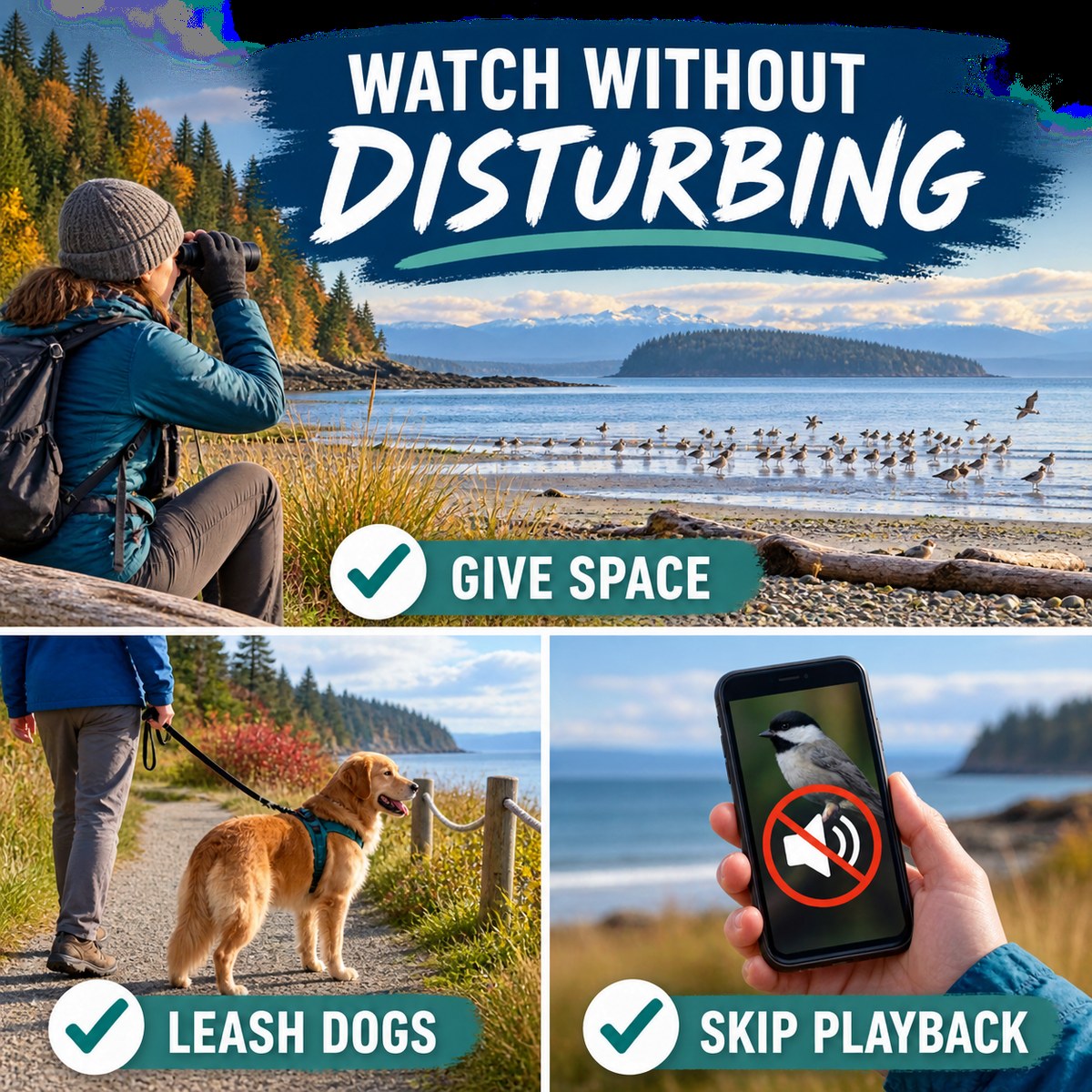
Responsible Whidbey birdwatching checklist to give birds space, leash dogs, and skip bird-call playback

A shorebird on migration has a limited energy budget. Repeatedly forcing a flock to stop feeding or take flight can consume energy it needs for the next leg of the journey. Follow the American Birding Association Code of Birding Ethics and current U.S. Fish & Wildlife Service shorebird guidance:

  • Let behavior set the distance. If birds stop feeding, become alert, move away, or take flight because of you, back up.
  • Use established public access. Do not cross private yards, beaches, fields, fences, or closed restoration areas.
  • Keep dogs leashed where dogs are allowed. Check site rules first; for a bird-focused outing, leaving a dog at home is often the least disruptive choice.
  • Skip recorded bird calls. Playing a song or call from a phone or speaker to make a wild bird respond or approach is called playback. A bird may treat the sound as a rival, mate, flock member, or warning and stop feeding, leave cover, or spend energy searching for a bird that is not there. The Audubon playback explainer notes that continuous or loud playback is especially poor practice. For this migration outing, keep identification audio inaudible to wild birds—use headphones or wait until you have left the viewing area.
  • Do not fly a drone near flocks. An aerial object can trigger escape behavior even when the operator remains far away.
  • Share carefully. Do not post directions that encourage trespassing or crowding at a sensitive location.

A realistic 60-minute fall birding plan

  1. Before leaving: Check the official access page, weather, and NOAA tide prediction. Choose one location rather than three.
  2. First 10 minutes: Park legally, settle in, and identify the main habitat zones without approaching birds.
  3. Next 35 minutes: Repeat the 20-minute scan, then study one flock or feeding edge as the tide changes.
  4. Next 10 minutes: Review your notes with Merlin Bird ID or recent eBird context.
  5. Final 5 minutes: Leave the site quieter than you found it and record uncertainties along with confident identifications.

Frequently asked questions

When is fall bird migration on Whidbey Island?

Southbound migration is already underway by late summer and continues through fall, but different species move on different schedules. Weather, tide, food, and disturbance can change what is present from day to day.

Which tide is best for watching shorebirds?

A rising, mid-level tide is often useful because it can move feeding birds toward the remaining mud edge. At low tide birds may spread far across exposed flats, while high tide can cover much of the feeding habitat. Conditions vary by location, so check NOAA predictions and observe the site.

Where should a beginner start birding on Whidbey?

Crockett Lake and Keystone Spit are a strong first choice because the area combines lake, mudflat, spit, beach, and open-water habitats with broad viewing opportunities. Check the Crockett Lake Preserve and Fort Casey pages before visiting.

Do I need binoculars or a spotting scope?

Binoculars make a major difference, and many birders find 8x or 10x magnification practical. A spotting scope helps with distant birds on broad flats, but it is optional. Never close the distance if doing so disrupts the birds.

Can I bring a dog while birdwatching?

Check the rules for the specific site. Where dogs are permitted, keep them leashed and well away from feeding or resting flocks. Leaving a dog at home is often the most wildlife-friendly choice for a shorebird outing.

How can I check recent bird sightings?

Use eBird’s Explore and Hotspot tools to review recent public reports, then confirm access through the official land manager. Treat reports as context rather than a guarantee or permission to enter private or closed areas.

What is bird-call playback, and why should I avoid it?

Playback means playing a recorded song or call from a phone or speaker to make a wild bird respond or come closer. Birds may interpret it as a rival, mate, flock member, or warning and stop feeding, leave cover, or spend energy investigating. Use headphones for identification audio or wait until you have left the viewing area.

Is parking easy at these birding locations?

It varies. Deer Lagoon has especially limited parking in residential areas, so keep driveways and roads clear and choose another site if legal parking is unavailable. Check official pages for current access, closures, and parking information before leaving.

Are particular bird sightings guaranteed?

No. Migration changes daily, and even a recently reported bird may have moved. A successful outing is learning to read habitat and behavior while observing whatever is present without disturbance.

Choose one habitat and give it time

A quieter outing often reveals more than a hurried islandwide checklist. Check the tide, settle into one legal viewpoint, and watch how birds respond to water, weather, and one another.

Continue planning with the Whidbey Island Beach Access Guide, the Guide to Coupeville, or the Guide to Oak Harbor.


Editorial Whidbey listings banner with shoreline, rural road, garden edge, water light, and welcoming island home silhouettes

Curious about everyday life near Whidbey’s open spaces?

Wetland views, shoreline proximity, public access, and wildlife activity are property- and season-specific. Explore current homes with realistic expectations and verify the details that matter to you.

Browse active Whidbey Island listings →

Planning sources

Information and public-access details were last verified August 18, 2026. Migration activity, tide conditions, parking, hours, closures, pass requirements, and site rules can change. Check linked official sources before visiting.

Written by Si Fisher

Things to do on Whidbey • Whidbey Island Lifestyle • July 27, 2026

Whidbey Island Whale Watching from Shore: How to Follow Sightings and Read the Water

Image note: The visuals in this article are editorial guide images created to explain shore-based whale watching on Whidbey Island. They are not documentary photos from a specific place, event, business, property, or moment.

Whale watching from Whidbey Island’s shore is less about memorizing one “best” beach and more about learning how to use a moving sighting. Whales travel through Saratoga Passage, Admiralty Inlet, Possession Sound, Penn Cove, and nearby waterways on their own schedule. A report that was useful 20 minutes ago may point to a different viewing area now—or the whale may have changed direction or disappeared beneath the surface.

This guide explains how to follow current reports, read the water, choose a verified public viewpoint, use Langley’s Whale Bell, and share a useful sighting without promising that wildlife will appear on demand.

The quick answer

  1. Check the Orca Network Whale Sighting Network.
  2. Note the report’s time, location, direction, and side of the channel.
  3. Choose a safe, verified public viewpoint that fits the reported movement.
  4. Scan slowly with your eyes first, then use binoculars.
  5. Expect uncertainty. A sighting report is a clue, not a reservation.

Start with the sighting, not the viewpoint

Orca Network’s community-based Whale Sighting Network gathers reports from the public, partner organizations, volunteers, and scientists. Reports are reviewed and cross-checked, creating records that support research, conservation work, and alerts to vessels in busy waterways.

Before leaving for the shoreline, check the latest sighting resources and Orca Network’s Public Viewpoints Map. Check the timestamp before anything else. Whales can cover considerable water, reverse direction, pause to feed, or remain submerged long enough to frustrate even experienced observers.

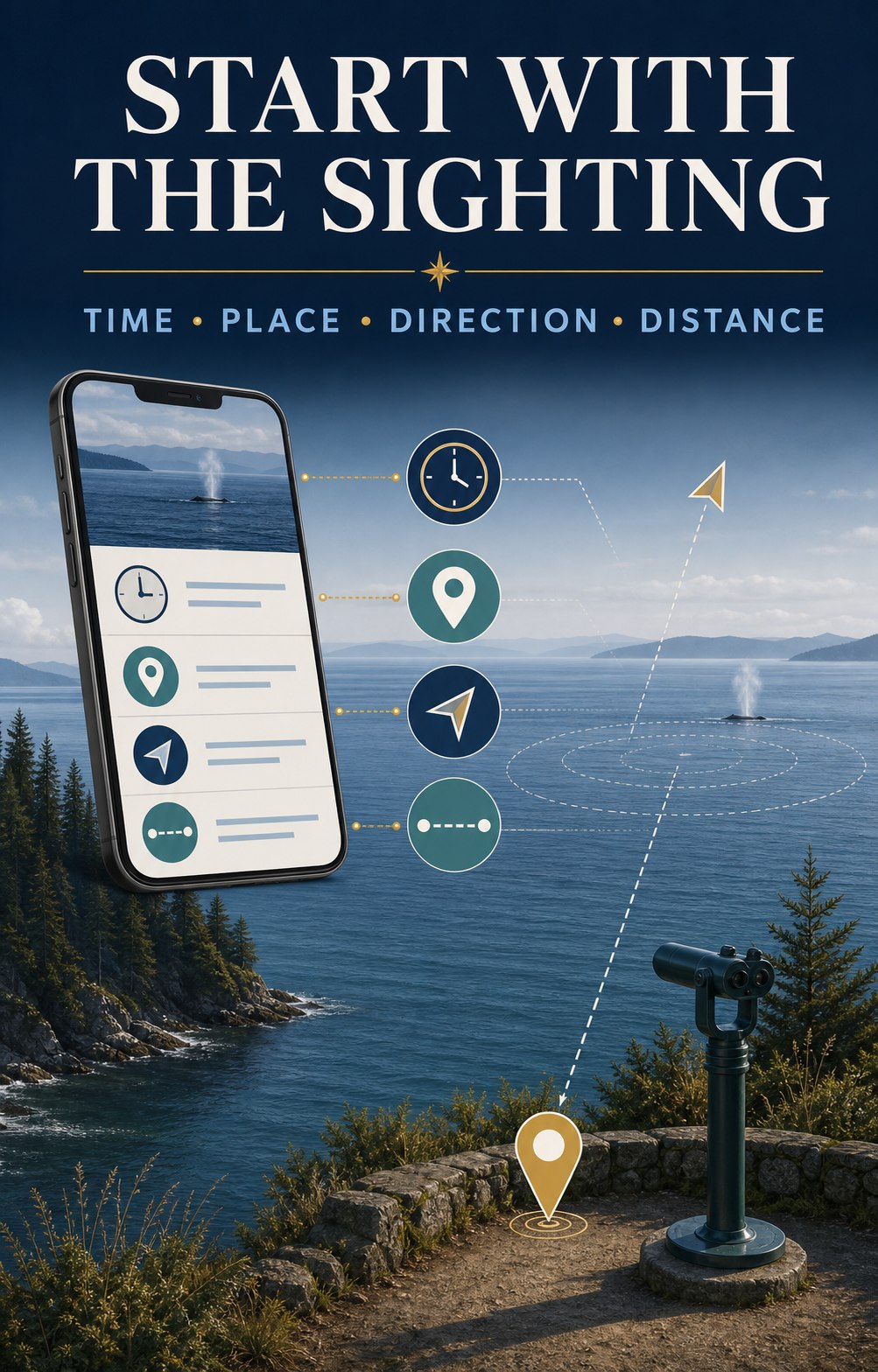
How to read a Whidbey whale report

Whidbey shore whale sighting guide highlighting time, place, direction, and distance
Report detail What it helps you decide
Time Whether the report may still be actionable.
Place Which waterway and public viewpoints make sense.
Direction Where the whale may travel next if it maintains course.
Whidbey side, opposite shore, or mid-channel Whether a shore view is realistic and which side offers the better angle.
Traveling, milling, or feeding Whether movement may be steady or the whale may remain in one area.
Species or “unconfirmed” What clues to watch for without forcing an identification.

Illustrative example—not a live sighting:

“10:20 a.m.—two whales southbound past Sandy Point, Whidbey side of mid-channel, traveling steadily.”

The useful clues are the exact time, southbound direction, and position nearer Whidbey. A reader might consider a legal public viewpoint farther south, but only after checking travel time and current access. Do not race through neighborhoods or stop where parking is prohibited.

Four useful public-viewing zones

These are not ranked and none guarantees a whale. Match the waterway to the latest report, then confirm hours, parking, closures, and access on the official page before driving. For broader shoreline planning, use the Whidbey Island Beach Access Guide.

1. Langley waterfront: Saratoga Passage

Langley is the island’s most complete shore-watching starting point because it combines a waterfront sightline, the Whale Bell, and a staffed educational resource nearby. The Langley Whale Center at 105 Anthes Avenue shares current sighting information, local tips, and exhibits about Salish Sea marine mammals. At the final July 2026 verification, its posted hours were Wednesday through Sunday, 11 a.m.–4 p.m.; hours vary seasonally, so check before visiting. You can also open the Langley Whale Center in Google Maps.

Nearby Whale Bell Park and Seawall Park overlook Saratoga Passage. Visit the Whale Bell Park page, view Whale Bell Park in Google Maps, or explore more of Langley.

2. Bush Point: west-side Admiralty Inlet

When a current report places whales along South Whidbey’s west side or Admiralty Inlet, Bush Point can provide a useful public shoreline angle. Check the Port of South Whidbey facility page for current hours and access information, then use Google Maps for Bush Point. Remember that this is an active boat-ramp and fishing area; keep launch access clear.

3. Fort Casey: broad Admiralty Inlet views

Fort Casey offers broad shoreline and elevated sightlines across Admiralty Inlet. That can be useful when a report is distant or moving through the inlet, but binoculars may still be essential. Confirm park information with Washington State Parks and open Fort Casey in Google Maps. If you are making a day of Central Whidbey, use the Coupeville guide for nearby planning.

4. Clinton and Possession: southern waterways

Reports from Possession Sound or the Clinton ferry approach may make Clinton Beach Park or Possession Beach Waterfront Park relevant. Both facilities can carry changing notices, so use the official pages immediately before visiting. For directions, open Clinton Beach Park or Possession Beach Waterfront Park in Google Maps.

The Langley Whale Bell: look first, then ask which way

Whale Bell Park sits near First Street and Anthes Avenue in downtown Langley. Its memorable instruction is simple: see a whale, ring the bell. The sound invites everyone nearby to turn toward Saratoga Passage and start looking.

The bell is a local signal, not a guarantee that the whale will remain visible. If you hear it, scan the water first and then ask the most useful questions: Where was the whale? Which direction was it moving? How long ago was it seen? Was it close to the Whidbey side, near the opposite shore, or mid-channel?

If you are the person ringing the bell, share the time, approximate position, direction, and number of animals. Name the species only when you are confident or when a qualified observer has confirmed it. “Unconfirmed whale” is more useful than a confident but incorrect identification.

What you may see from shore

Gray whales

A returning group of gray whales known as the North Puget Sound “Sounders” has historically detoured into the region to feed, especially during spring. Gray whales are baleen whales that often feed on small prey in bottom sediments. Their surfacing can show a low, mottled back, a heart-shaped or bushy blow in suitable conditions, and sometimes a tail before a deeper dive.

Recent patterns are less tidy than an old seasonal calendar suggests: some Sounders have arrived earlier, stayed longer, or appeared during winter. Orca Network also reports serious conservation concerns for eastern North Pacific gray whales. Give any whale plenty of space and use the current gray whale information rather than relying on a fixed month.

Killer whales

A tall dorsal fin can be striking even at a distance, but shore observers should be cautious about identification. Bigg’s killer whales and endangered Southern Resident killer whales are distinct populations with different diets and movement patterns. A distant fin alone may not tell you which population you are seeing. Look for a verified report before repeating an identification.

Humpbacks and other marine mammals

Humpback whales and other cetaceans can also move through the greater Salish Sea. Harbor porpoises, seals, and sea lions are more common supporting characters. Distance, glare, waves, and floating logs can fool the eye, so watch for repeated, coordinated movement before deciding that a dark shape is an animal.

How to scan the water

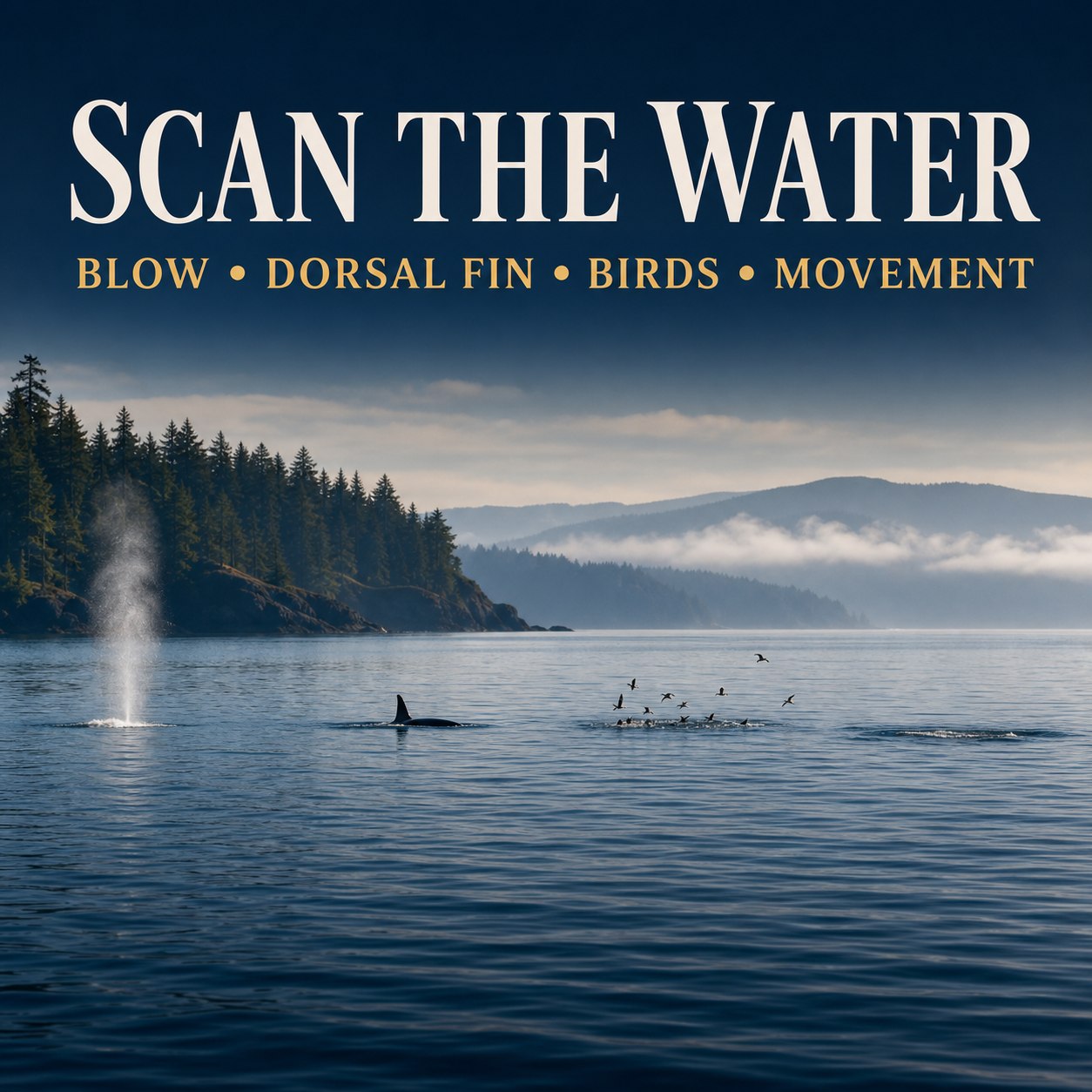
Illustrated guide to scanning for a whale blow, dorsal fin, birds, and movement from shore
  • Begin with your eyes. A wider field of view makes it easier to notice a blow or unusual surface movement.
  • Divide the horizon into sections. Scan slowly from one reference point to the next rather than swinging binoculars randomly.
  • Look for repetition. A blow, back, or fin followed by another surfacing along a consistent path is more useful than one unexplained splash.
  • Watch the birds, but do not overread them. Concentrated bird activity can reveal feeding action or baitfish, but it does not automatically mean a whale is present.
  • Use binoculars to confirm. An 8x or 10x pair is a practical shore-watching range for many people. Brace your elbows or use a railing where permitted.
  • Stay with one area for several minutes. Whales spend much of their time below the surface and may reappear farther along their travel path.

Report what you saw

A useful report includes the date, exact time, location, direction of travel, estimated number of animals, observed behavior, and whether photographs are available. If you are unsure of the species, say so.

Submit your observation through Orca Network’s online whale-sighting report. These reports do more than help the next shore watcher: verified records support research and can help alert ferries and commercial vessels when whales are near busy waterways.

Watch responsibly from shore

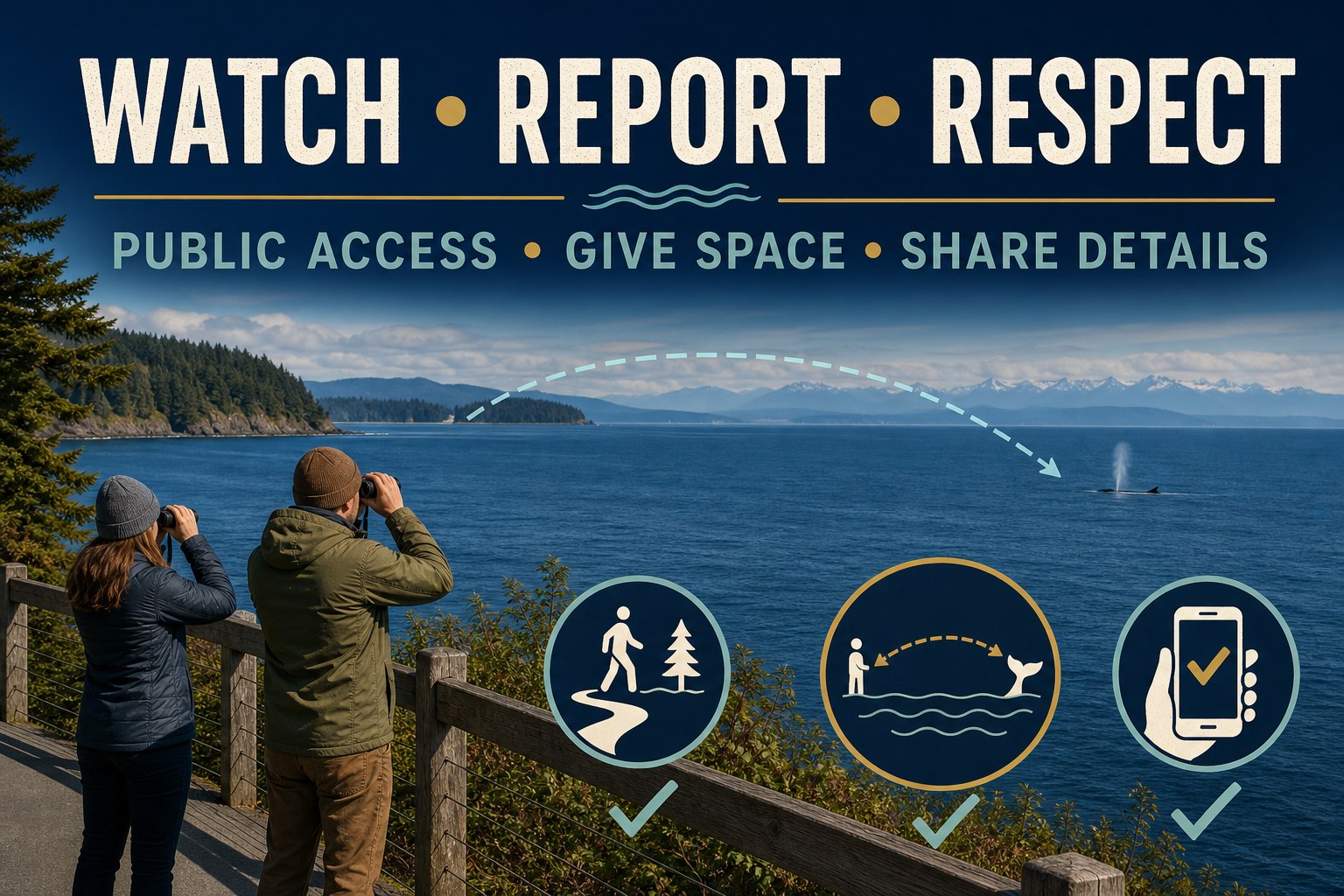
Responsible Whidbey whale watching checklist emphasizing public access, space, and useful sighting reports
  • Use established public access and legal parking; do not cut through private shoreline or residential property.
  • Give seals, sea lions, nesting birds, and other wildlife ample room.
  • Never feed, touch, call to, chase, or attempt to redirect wildlife.
  • Do not launch a drone to get closer to marine mammals.
  • If an animal appears distressed, stranded, entangled, injured, or dead, do not approach it. Use the NOAA West Coast Marine Mammal Stranding Network for current reporting guidance.
  • If you switch from shore to a boat, kayak, or paddleboard, additional legal distances and operating rules apply. Review the current Be Whale Wise regulations and guidelines before getting on the water.

A realistic 60-minute shore-watching plan

  1. 5 minutes: Check the newest sighting and the official access page.
  2. 10 minutes: Travel only to a safe public viewpoint that fits the report. If the drive is longer, reconsider whether the sighting is still actionable.
  3. 35 minutes: Scan in sections, recheck likely zones, and enjoy the wider waterfront scene.
  4. 5 minutes: Record useful details if a whale appears.
  5. 5 minutes: Submit a report—and if no whale appears, leave with the satisfaction of having spent an attentive hour beside the Salish Sea.

Frequently asked questions

What is the best time of year to see whales from Whidbey Island?

Spring is historically associated with North Puget Sound gray whales known as the Sounders, but recent arrival and departure patterns vary. Killer whales and other cetaceans may appear at different times. Current sighting reports are more useful than relying on one guaranteed season.

Where is the Langley Whale Bell?

Whale Bell Park is near First Street and Anthes Avenue in downtown Langley, overlooking Saratoga Passage and close to Seawall Park and the Langley Whale Center.

What does it mean when the Langley Whale Bell rings?

Someone nearby has spotted a whale and is alerting others to look. Scan immediately, then ask where the whale was seen and which direction it was traveling. The bell does not guarantee the animal is still visible.

Where can I find current Whidbey whale sightings?

Start with Orca Network’s Whale Sighting Network, its recent reports, and its Public Viewpoints Map. The Langley Whale Center can also provide current sighting context and local tips during open hours.

Can I see whales from the Clinton–Mukilteo ferry?

It is possible to spot marine mammals from a ferry, but it is never dependable. Treat any sighting as a bonus, remain in authorized passenger areas, and do not let whale watching interfere with boarding, unloading, or crew instructions.

What binoculars are useful for whale watching from shore?

Many shore watchers find 8x or 10x binoculars practical. Start with your unaided eyes to locate movement, then use binoculars to confirm details. A stable stance matters as much as magnification.

Should I report a whale sighting?

Yes. Record the exact time, location, direction, estimated number of animals, behavior, and whether photos are available. Submit the details to Orca Network, and label the species unconfirmed when you are unsure.

What should I do if I see a stranded or distressed whale?

Keep people and pets away, do not touch or attempt to move the animal, and report it through the NOAA West Coast Marine Mammal Stranding Network. Follow instructions from authorized responders.

The best shore-watching habit is attention

Check the report, read the direction, use public access, and give the water time. Whether a whale surfaces or not, the process makes you more aware of the living waterways around Whidbey Island.

Continue planning with the Whidbey Island Beach Access Guide or Guide to Langley.

Editorial Whidbey listings banner with shoreline, rural road, garden edge, water light, and welcoming island home silhouettes

Curious about everyday life on Whidbey?

Explore current island homes while keeping expectations grounded: shoreline proximity, water views, and whale sightings are all property- and moment-specific, never guaranteed.

Browse active Whidbey Island listings →

Information and public notices were last verified July 27, 2026. Wildlife activity, hours, access conditions, closures, and regulations can change. Check linked official sources before visiting.

Written by Si Fisher

Places • Things to do on Whidbey • Whidbey Island Lifestyle • July 14, 2026

Whidbey Island Camping Guide: Campgrounds, Reservations & Tips

Camping on Whidbey Island is less about finding the one “best” campground and more about choosing the right base for the kind of trip you want. North Whidbey puts you close to Deception Pass and an activity-rich state park setting. Central Whidbey offers coastal trails and quieter historic surroundings. South Whidbey has a practical near-town campground option for tent and RV travelers.

Use this guide to compare the main public campground choices, understand what to verify before leaving home, and avoid an easy mix-up: South Whidbey State Park is day-use only, not an overnight campground.

Image note: The visuals in this article are editorial guide images created to explain Whidbey camping planning. They are not documentary photos from a specific place, event, business, property, or moment.

Quick planning note: Campground availability, burn restrictions, route conditions, ferry service, and site details can change. Check the official campground page and live travel tools immediately before your trip.

Coming from the mainland? Start with the dedicated Whidbey ferry guide before you finalize your arrival plan.

Quick comparison: choose your Whidbey camping base

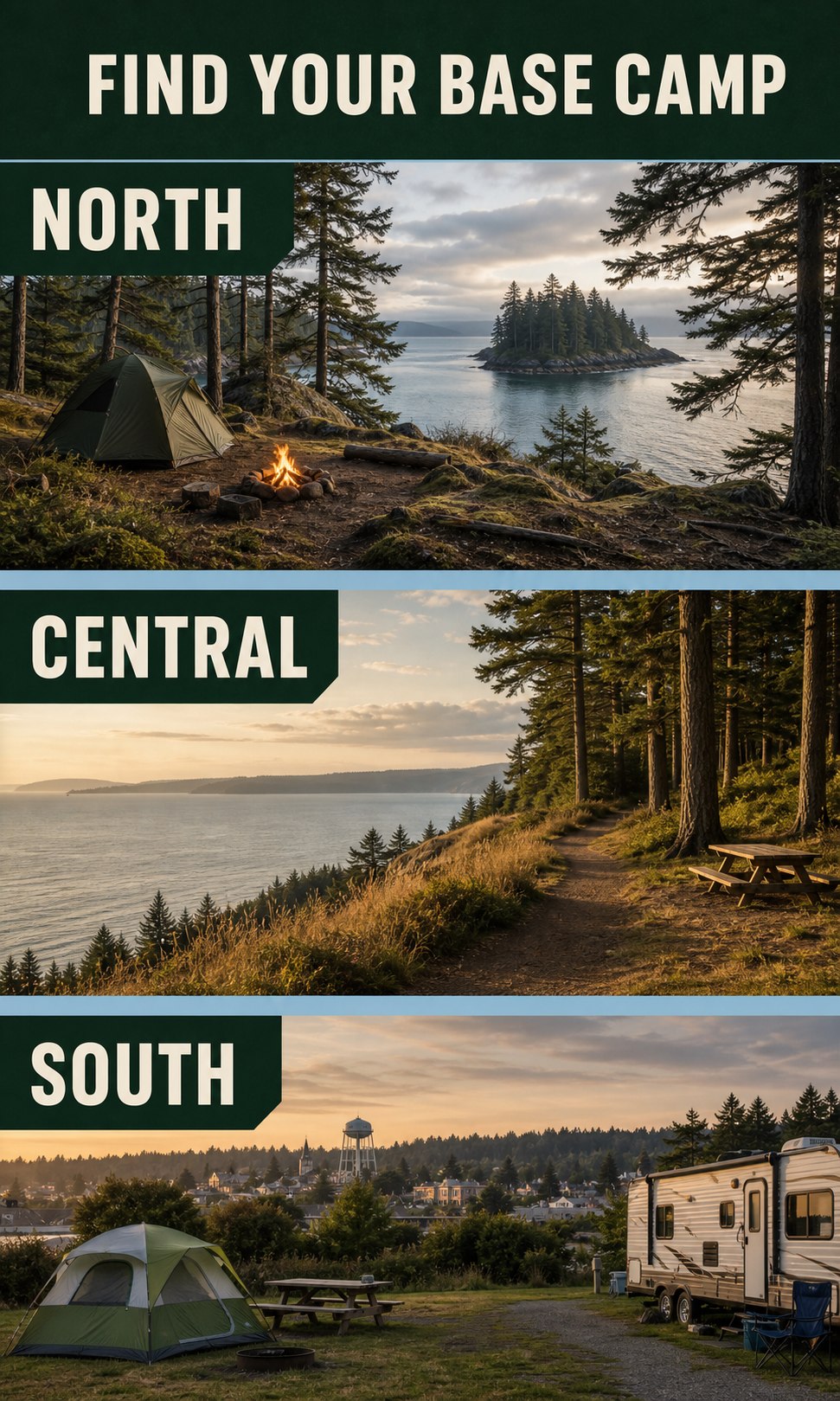
Three-panel editorial comparison graphic labeled North, Central, and South, showing different Whidbey camping base-camp settings.

North Whidbey: Deception Pass State Park

Best for campers who want forest, water, trails, beach exploration, and a full state-park base camp. It is the most activity-rich option of the three, so checking current alerts and site details matters.

Central Whidbey: Fort Ebey State Park

Best for coastal views, wooded trails, military history, and an easy Central Whidbey base near Coupeville and Oak Harbor. It is a strong fit for a slower trip built around walking, beach time, and exploring nearby towns.

South Whidbey: Whidbey Island Fairgrounds Campground

Best for tent or RV campers who want a practical near-town base close to Langley, with published hookups, showers, and easy access to South Whidbey errands, meals, and evening plans.

Deception Pass State Park: for a full North Whidbey base camp

Deception Pass State Park is a natural choice when your camping trip centers on trails, shoreline, forest, freshwater, and saltwater access. The park lists camping, accessible campsites, restrooms, showers, drinking water, fire pits, and a trailer dump among its amenities.

It is also a place where current conditions matter. Before driving up, check the official park page for alerts, burn restrictions, trail or parking limitations, and the site information that applies to your tent, trailer, or RV. Do not assume a vehicle that fits one campground loop will fit every parking area or campsite.

Open Deception Pass State Park in Google Maps

Fort Ebey State Park: for coastal trails and Central Whidbey access

Fort Ebey State Park is a coastal camping park with wooded trails, beach access, open views, and the distinctive atmosphere of a former military site. The park describes 25 miles of wooded trails, along with camping, showers, drinking water, accessible campsites, and nearby beach exploration.

One useful local detail belongs in your planning conversation: the official park page notes that NAS Whidbey training flights may create aircraft noise above the campground at various times. That will not bother every visitor, but it is worth knowing before choosing a site for a quiet reset.

If you are building a Central Whidbey itinerary, pair your stay with the local context in Your Guide to Coupeville and the practical shoreline details in the Whidbey Island Beach Access Guide.

Open Fort Ebey State Park in Google Maps

Whidbey Island Fairgrounds Campground: for a South Whidbey, near-town stay

The Whidbey Island Fairgrounds Campground in Langley is currently identified by the Port of South Whidbey as the only public campground on South Whidbey. It is a practical choice when you want to camp without being far from town.

The campground lists 20 RV sites with power and/or water hookups, tent camping, private-shower bathrooms, a dump station, and online registration and payment. Its published 2026 rates are $25 per night for tent camping with a car, $40 for regular RV sites, and $50 for premium RV sites; always confirm rates, site availability, event-period conditions, and rules directly with the campground before booking.

For a South Whidbey stay, the location can make it easier to add a meal, harbor stroll, or village stop without turning the trip into a long drive. Explore the broader local context in the Guide to Langley.

Open Whidbey Island Fairgrounds Campground in Google Maps

What to reserve and verify before you leave

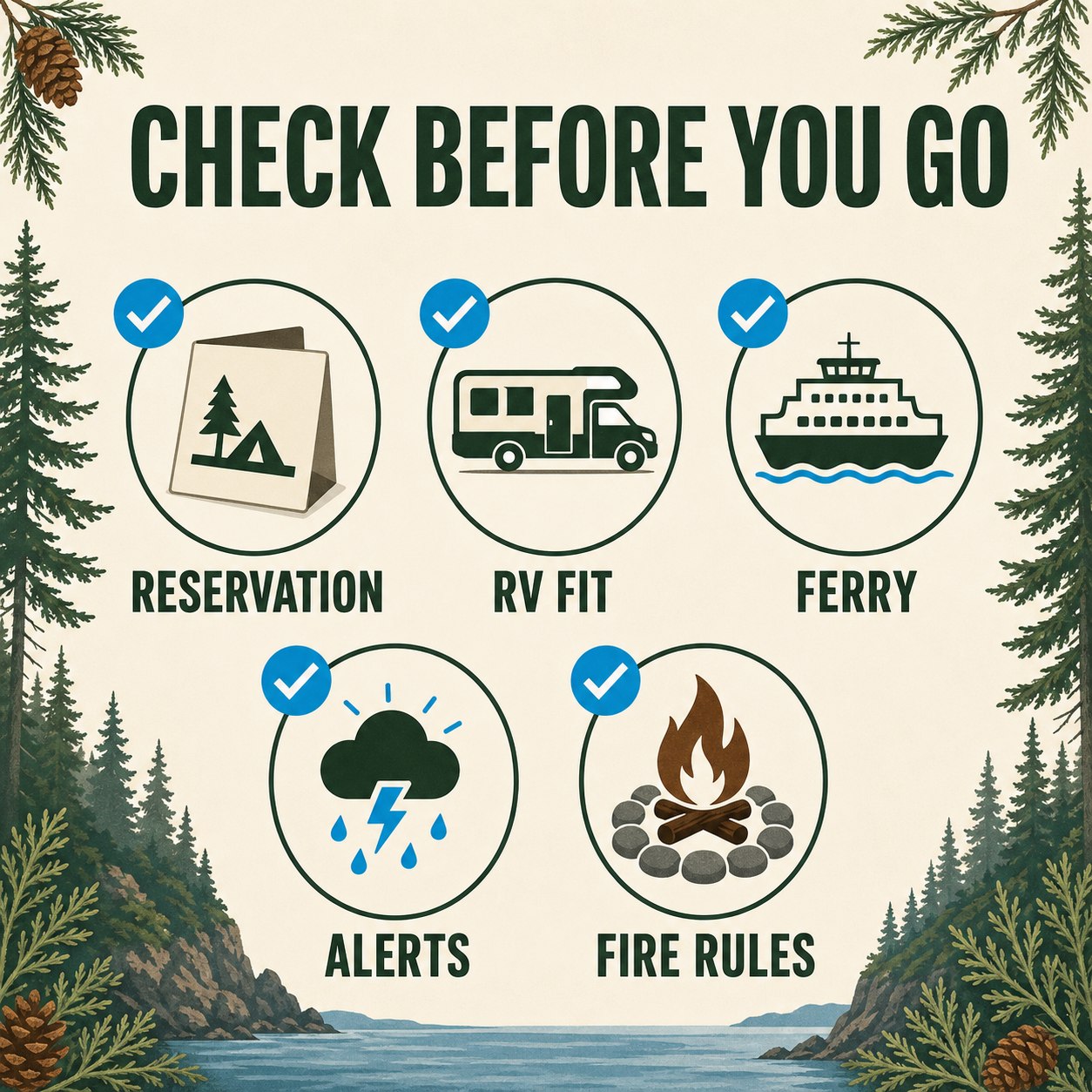
Camping planning checklist graphic labeled reservation, RV fit, ferry, alerts, and fire rules.

  • Reservation and site fit: Know your dates, party size, tent count, vehicle length, trailer length, and whether you need hookups. Washington State Parks says reservations can be made up to nine months ahead, while same-day campsite reservations may be possible until 2 p.m. when space remains. Review State Parks reservation guidance.
  • Alerts and fire rules: Check the official park page on travel day. Conditions, burn restrictions, water availability, trail access, and parking limits can change.
  • Ferry or route plan: Use Washington State Ferries live tools for schedule and service updates. Vehicle reservations are available on the Port Townsend–Coupeville route; a ticket does not guarantee a particular sailing on every route.
  • Passes: State Parks says overnight campers do not need a Discover Pass to park in the state park where they are staying. A pass may still be needed for day-use parking at other state recreation lands. Review Discover Pass details.
  • Quiet-hours expectations: State park campers should plan for check-in and checkout rules, leash requirements, and quiet hours. These basics help everyone have a better stay. Review current State Parks camping rules.

A simple three-day Whidbey camping rhythm

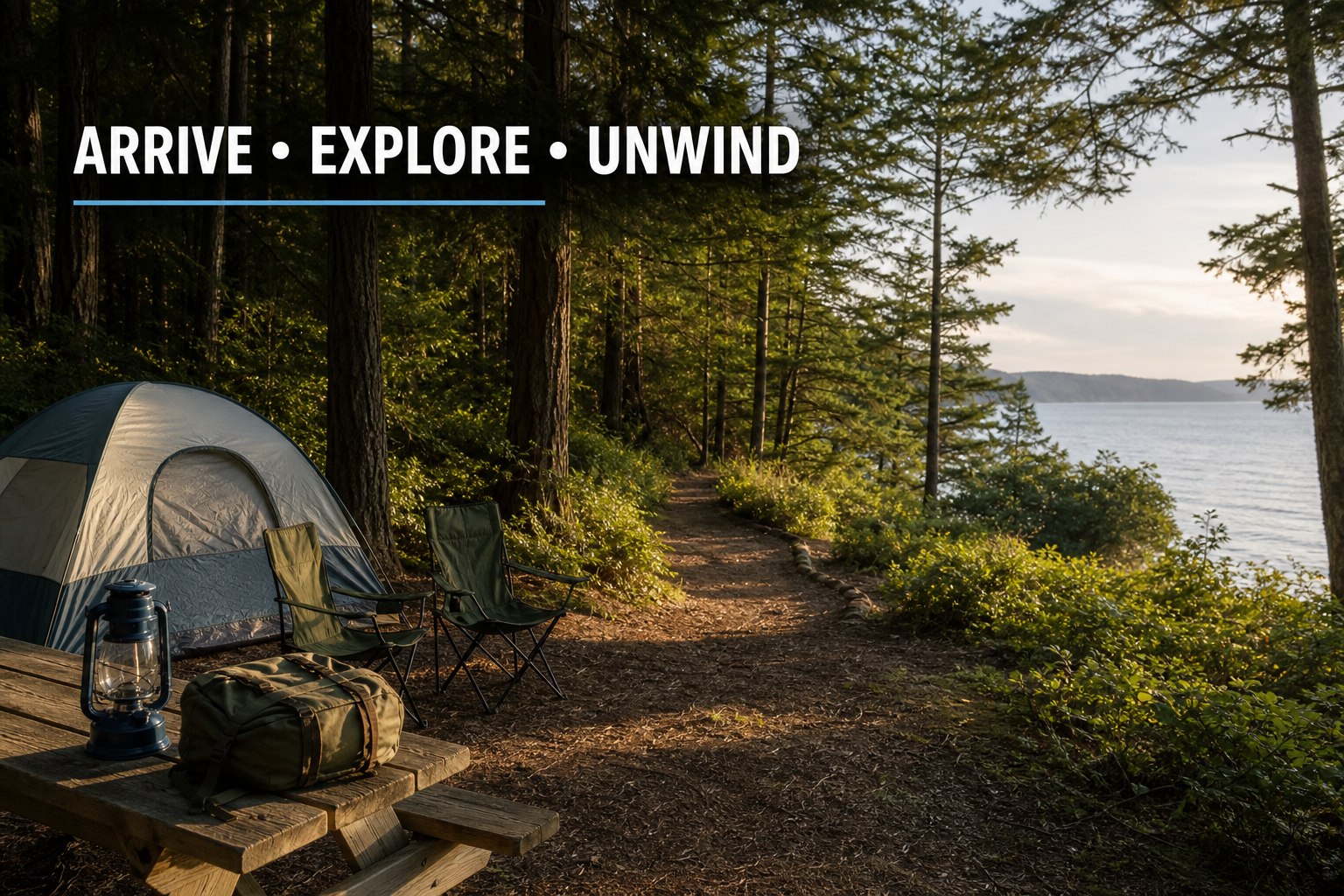
Editorial campsite scene with a tent, chairs, lantern, and forest trail beside calm water, labeled “Arrive, Explore, Unwind.”

Day 1: Arrive and settle in. Keep the first afternoon simple. Set up camp, take a nearby short walk, and learn the immediate layout before trying to fit in a major island outing.

Day 2: Choose one anchor adventure. Make one park, trail, beach, town, or water activity the center of the day. Whidbey feels better when there is time for detours, weather changes, and a slower meal.

Day 3: Leave room for the return trip. Check ferry status or your northbound route before packing up. A final short walk or nearby shoreline stop is usually a better finish than overloading the last morning.

Camping versus imagining a longer Whidbey stay

A camping trip is one of the best ways to notice the practical rhythms that a quick day trip can hide: travel distances, morning fog, evening quiet, park access, nearby services, ferry timing, and the pace that feels right for your household. If a weekend here starts to feel like more than a getaway, explore homes for sale on Whidbey Island when it is useful—not as a substitute for spending time in the places that fit your life.

Frequently asked questions

What are the main public campground choices on Whidbey Island?
This guide focuses on Deception Pass State Park on North Whidbey, Fort Ebey State Park on Central Whidbey, and the Whidbey Island Fairgrounds Campground in Langley on South Whidbey. Each has a different setting and planning profile, so confirm current availability and site details before booking.
Can I camp at South Whidbey State Park?
No. Washington State Parks currently lists South Whidbey State Park as day-use only. It can still be a worthwhile hiking or picnic stop during a South Whidbey camping trip.
Do I need a Discover Pass if I am camping at a Washington state park?
Washington State Parks says overnight campers do not need a Discover Pass to park in the state park where they are staying. You may still need one when visiting other state recreation lands for day use.
How early should I reserve a Whidbey campsite?
For a specific summer weekend or a particular RV site, reserve as early as possible. Washington State Parks allows reservations up to nine months in advance, though last-minute sites can sometimes be booked if inventory remains.
What should I check on the day I leave?
Review your campground reservation, RV or tent-site fit, official park alerts, burn restrictions, weather, and live ferry or road conditions. Those checks are more useful than relying on an old screenshot or a general travel post.

Written by Si Fisher

Events • Things to do on Whidbey • Whidbey Island Lifestyle • July 1, 2026

July 2026 Whidbey Island Events Guide: Fireworks, Concerts, Fair, Gardens & LittleBIGFest

July is one of those months when Whidbey Island feels wonderfully full. Fireworks kick things off, outdoor concerts settle into the parks, Bayview turns into a dance floor, gardens hit their summer stride, and the Whidbey Island Fair brings the whole island together before the month is done.

Use this guide as a starting point for July 2026 plans, then check the linked organizers before you go. Event details can change with weather, ferry timing, ticket availability, and venue updates.

Quick July Highlights

  • Holiday weekend: Freeland Freedom Fest & Fireworks, Oak Harbor Independence Day events, the Chum Run, art walks, and live music.
  • Free summer music: South Whidbey Tuesday Concerts in the Park, Bayview Corner Street Dances, and Coupeville’s Summer Concert Series.
  • Big community anchor: The Whidbey Island Fair returns July 23-26 at the fairgrounds in Langley.
  • Arts and theatre: WICA events, Whidbey Island Music Festival, and Island Shakespeare Festival’s summer season.
  • Looking ahead: Meerkerk’s Bluegrass Festival and LittleBIGFest are August events, but July is the right time to plan for them.
Whidbey Island waterfront fireworks scene for Fourth of July weekend events.

Start with the Holiday Weekend

The first weekend of July is packed from Oak Harbor to Freeland and Langley. If you are crossing by ferry, give yourself extra time, especially around July 3-5.

Freeland Freedom Fest & Fireworks

Friday, July 3. Festival activities begin in the afternoon, with fireworks after dark at Freeland Park.

Event details | Map

Oak Harbor Independence Day

July 3-5. Oak Harbor’s waterfront celebration includes carnival fun, community events, parade activity, and fireworks around Windjammer Park.

Event details | Map

Chum Run 5K

Friday, July 3. The Chum Run starts holiday weekend in Oak Harbor with a 5K and family-friendly Fry Run.

Event details | Map

Also watch for July 4 weekend art and music in Langley, including the Whidbey Art Gallery Art Walk, Troy Chapman & The Groovetones at WICA, and TAMA Festival music at The Top Restaurant & Lounge.

Outdoor Whidbey Island summer concert with park audience, musicians, trees, and water view.

Free Summer Concerts and Street Dances

If July has a soundtrack, much of it is free and outdoors. South Whidbey, Bayview, and Coupeville all have reliable summer music options this month.

South Whidbey Tuesday Concerts in the Park

The South Whidbey Parks and Recreation series runs Tuesdays from 6-7:30 PM at South Whidbey Community Park.

  • July 7: Nathaniel Talbot Trio.
  • July 14: Emily McVicker.
  • July 21: The Sunset Grooves.
  • July 28: No concert listed.

Series details

Bayview Corner Street Dances

Goosefoot’s Bayview Corner Street Dances are free, family-friendly, and held from 6-8 PM at the Bayview Cash Store.

  • July 8: Rubatano Center Marimba.
  • July 22: ROSSaCONN.

Series details

Coupeville Summer Concert Series

On Sunday, July 19, from 2-4 PM, Ike and the Old Man play the Coupeville Summer Concert Series at Coupeville Town Park Pavilion. See event details.

Whidbey Island Fair scene with ferris wheel, fair booths, livestock barn, ribbons, and families.

Fairs, Festivals, and Big July Weekends

Whidbey Island Fair: July 23-26

The Whidbey Island Fair returns to the Whidbey Island Fairgrounds and Events Center in Langley from Thursday, July 23, through Sunday, July 26. Expect rides, food vendors, exhibits, livestock, crafts, entertainment, and the kind of hometown fair energy that belongs on a summer calendar.

The fair parade is listed for Saturday, July 25. Check the fair’s official site before you go for tickets, gate hours, entertainment, parking, and parade-route updates.

Whidbey Island guitar festival scene with guitars, outdoor stage, sunset, tents, and summer crowd.

Whidbey Island Guitar Festival: July 26

Presented by the LittleBIGFest team, the Whidbey Island Guitar Festival lands on Sunday, July 26, at Royal Alvin Hall in Freeland.

The posted lineup includes Troy Chapman + Honza Kourimsky, Keith Bowers, Andre Feriante, Tyler Richart, Elisabeth Brown, Charlie Solbrig, and Nick Mardon. See the lineup.

Outdoor theatre performance under trees on Whidbey Island with audience and stage lights.

Arts, Theatre, and Live Music

July is also a strong month for indoor stages, outdoor theatre, gallery nights, and local music rooms.

Island Shakespeare Festival

Island Shakespeare Festival’s 2026 summer season runs July 17-Sept. 6 with Macbeth and Robin Hood of Sherwood Forest.

Season details | Map

WICA July Events

Watch WICA for Troy Chapman & The Groovetones, Nearly Dan, Vinyl Cabaret, Treasure Island, and Different Mistakes during July.

WICA calendar | Map

Whidbey Island Music Festival

Heavenly Harmonies is listed for July 10 at Nordic Hall and July 11 at St. Augustine’s in-the-Woods.

Festival events

Whidbey Island farmers market table with berries, bread, flowers, cheese, wine glasses, and sunny market tents.

More July Music, Food, and Markets to Watch

  • Dancing Fish Vineyards: July listings include Ranger & the Re-Arrangers, Monday Bites, The Hipocrats, Fishstock, Wild Horses, and The EVM Quintet. See the Dancing Fish calendar or open the map.
  • The Top Restaurant & Lounge: July music highlights include TAMA Festival music July 3-5, Kristi O’Donnell Quartet July 12, Joe Cook Blues Band July 18, Ribbons and Bows July 26, and Mayme O’Toole July 31. Verify directly with the venue before final plans.
  • Salish Moon: July dates include The Top, WICA Under the Tent, Thirsty Crab, and Double Bluff Brewery.
Whidbey Island garden path with rhododendrons, hydrangeas, evergreens, walkers, and water view.

Gardens, Walks, Markets, and Summer Outside

Meerkerk Garden Tours and Forest Walks

Meerkerk Gardens lists guided forest walks on July 5 and July 19, with summer garden tours on July 11 and July 25.

Tour details | Map

Whidbey Island Garden Tour

The 30th anniversary Whidbey Island Garden Tour is listed for Saturday, July 18, with private gardens and proceeds supporting local causes.

Event listing | Tour website

Farmers Markets

Look for July markets in Oak Harbor, Bayview, Coupeville/Central Whidbey, and South Whidbey. Schedules vary by market and day.

Island calendar | Whidbey Island Grown events

Cozy Whidbey community library table with books, calendar, craft supplies, yarn, and island water view.

More July Community Calendar Picks

Local July calendars also include library programs, author talks, civic forums, food-and-wine events, and community gatherings. Here are a few more picks that may be useful for a broad July roundup.

Date Event Where Notes
July 2 Mocktails & Masterpieces Langley Library Check Sno-Isle before you go.
July 3 Poetry Open Mic Night Commons Cafe & Books Local community arts pick.
July 7 and 14 Island County Candidate Forums Clinton Community Hall Local civic forum.
July 9 Freedom to Read Panel Clinton Community Hall Community conversation.
July 10 Blind Date with a Book The Barnyard, Freeland Library and books event.
July 11 Kick It at the Library Langley Library Sno-Isle listing.
July 14 Welcome to Medicare Freeland Library Community learning event.
July 15 Connecting Through Crafts Freeland Library Library community event.
July 16 Kicking Gas dinner, panel, and book talk Clinton Community Hall Sustainability and community event.
July 18 Jewelry Job Escape Room Langley Library Sno-Isle listing; verify session times.
July 19 Kick It: Soccer Watch Party Freeland Library Family and youth event.

Planning More Than a Summer Visit?

Events are a good way to understand Whidbey’s different communities. A concert in Langley, a fair weekend at the fairgrounds, a garden walk in Greenbank, or a market morning in Oak Harbor can tell you a lot about the daily rhythm of island life.

Meet a local Windermere Whidbey agent | See our active listings | Search Whidbey properties

Bluegrass musicians playing in a garden gazebo at Meerkerk-style gardens with flowers and picnic audience.

Looking Ahead: August Events to Book in July

Two of the events people often ask about are technically August events, but they belong on your July radar because tickets, lodging, ferry planning, and weekend schedules can move quickly.

Meerkerk Bluegrass Festival

Saturday, August 8, noon-4 PM. Meerkerk Gardens hosts bluegrass at the gazebo with Ricky Gene Powell and the Boys of Greenwood Glen and Salish Moon.

Festival details | Map

LittleBIGFest

August 14-16. LittleBIGFest returns to Langley for three days of live music, vendors, food, and family-friendly festival energy.

Festival details | Map

A Few Practical July Tips

  • Check the organizer before leaving. Outdoor concerts, garden tours, and waterfront events can shift with weather or staffing.
  • Plan around ferry pressure. Holiday weekends, fair weekend, and major concert days can make normal travel windows feel slower.
  • Buy tickets early when possible. WICA shows, Whidbey Island Guitar Festival, Meerkerk Bluegrass Festival, and select garden events may not be last-minute friendly.
  • Use the map links. Many Whidbey venues are close in spirit but not always close by road, especially when you are crossing the island north to south.

July Whidbey Events FAQ

What are the biggest July 2026 events on Whidbey Island?

Major July highlights include Freeland Freedom Fest & Fireworks on July 3, Oak Harbor Independence Day weekend events, South Whidbey Tuesday Concerts in the Park, Bayview Corner Street Dances, the Whidbey Island Fair from July 23-26, and the Whidbey Island Guitar Festival on July 26.

Are there free outdoor concerts on Whidbey Island in July?

Yes. South Whidbey Tuesday Concerts in the Park are listed for July 7, July 14, and July 21 at South Whidbey Community Park. Bayview Corner Street Dances are listed for July 8 and July 22 at Bayview Cash Store, and Coupeville’s Summer Concert Series has a July 19 concert at Coupeville Town Park Pavilion.

When is the Whidbey Island Fair in 2026?

The Whidbey Island Fair is scheduled for Thursday, July 23, through Sunday, July 26, 2026, at the Whidbey Island Fairgrounds and Events Center in Langley. Check the official fair website before you go for tickets, hours, entertainment, parking, and parade updates.

Is LittleBIGFest a July event?

LittleBIGFest itself is scheduled for August 14-16, 2026, but it is worth planning for in July. The LittleBIGFest team also presents the Whidbey Island Guitar Festival on Sunday, July 26, at Royal Alvin Hall in Freeland.

When is the Meerkerk Bluegrass Festival?

The Meerkerk Bluegrass Festival is scheduled for Saturday, August 8, 2026, from noon to 4 PM at Meerkerk Gardens in Greenbank. Because tickets and summer plans can move quickly, it is a good event to put on your July planning list. Check Meerkerk’s festival page for ticket and event details.

Should I check event details before going?

Yes. Whidbey summer events can change because of weather, venue updates, ticket availability, staffing, or ferry-related travel timing. Use the linked organizer pages as the final source before you leave.

Written by Si Fisher.

Things to do on Whidbey • Whidbey Island Lifestyle • June 23, 2026

Whidbey Island Bioluminescence Kayak Guide

Editorial Whidbey Island bioluminescence kayak guide hero with glowing paddle trails and Whidbey after dark overlay text

Image note: The visuals in this article are editorial guide images created to explain Whidbey bioluminescence kayaking. They are not documentary photos from a specific tour, date, launch, business, or on-water moment.

If Whidbey had a night mode, this would be it. Dark water. Quiet paddles. Salt air. And, if the timing is right, blue-green sparkles lighting up around your kayak like Puget Sound decided to show off.

Bioluminescence kayaking is not about racing across the water or checking off another scenic viewpoint. You are not going out to cover distance. You are going out to watch the water answer back, which is objectively a better party trick than anything your phone can do.

Around dark summer moon cycles, tiny marine organisms in Puget Sound can glow when the water is disturbed. A paddle stroke, a hand in the water, or the wake beside a kayak can create quick blue-green flashes. It is not a guaranteed theme-park light show, and no responsible guide can promise exactly how bright it will be on a given night. That uncertainty is part of the magic.

Quick Takeaways

  • Best for: curious locals, summer visitors, older kids/teens, and anyone who wants a memorable night on the water.
  • Best local resource: Whidbey Island Kayaking.
  • Good to know: 2026 listings describe the experience as 2 hours, ages 10+, tandem kayaks, and no previous experience needed.
  • Not ideal for: people who want a hard paddle workout, guaranteed bright conditions, or an early bedtime.
  • Before you go: check dates, price, weather, start time, cancellation rules, and what to bring.

The Quick Answer

If you are looking for a Whidbey Island bioluminescence kayak experience, start with Whidbey Island Kayaking. Their current bioluminescence page describes a guided nighttime kayak experience on Puget Sound, offered only a few times during summer when dark skies around new moon periods give the best viewing chance.

Why a guided paddle matters:

This is for people who want the glow-water night without personally solving tides, currents, launch logistics, gear, darkness, safety, and “wait, where exactly do we park?” all at once.

Helpful links:
Whidbey Island Kayaking bioluminescence page
Whidbey Island Kayaking main site
Whidbey/Camano tourism event listing
Whidbey Island Kayaking on Whidbey/Camano tourism
South Whidbey Harbor at Langley
Whidbey Island Kayaking on Google Maps

What Bioluminescence Kayaking Actually Is

Bioluminescence is light produced by living organisms. In Puget Sound, the glow people hope to see on night paddles is often caused by tiny marine organisms that flash when the water is disturbed. The effect can look like sparkles, streaks, or small bursts of blue-green light around a paddle, hand, or moving kayak.

Set your expectations this way:

This is not neon water glowing evenly from shore to shore. It is more subtle and more intimate: dark water, quiet paddling, stars if the sky cooperates, and little flashes that appear when the water moves.
Whidbey Island bioluminescence kayak night explainer showing slow paddle, dark water, and glowing ripples

When The 2026 Whidbey Bioluminescence Dates Are Listed

The Whidbey/Camano tourism listing currently shows 2026 bioluminescence dates grouped around dark summer nights:

  • June: 12, 13, 14, and 15 at 10:00 p.m.
  • July: 9, 10, 11, 12, 13, 14, and 15 at 10:00 p.m.
  • August: 8, 9, 10, 11, 14, 15, and 16 at 9:30 p.m.
  • September: 4, 5, 6, 11, and 12 at 9:00 p.m.

The same listing describes the experience as 2 hours, ages 10+, no previous experience needed, tandem kayaks, and shared tours, with pricing currently listed at $120 per paddler plus taxes and fees. Because tour pricing, availability, and details can change, use those numbers as a current planning reference and check Whidbey Island Kayaking’s booking page before making plans.

Featured Local Resource: Whidbey Island Kayaking

Whidbey Island Kayaking also offers daytime tours, private adventures, retreats, classes, and rentals from April through October. So if a nighttime paddle is not the right fit, or if your group would rather see the shoreline in full daylight, their main site is still a useful place to start.

That local guide piece matters. Whidbey water is beautiful, but tides, wind, currents, cold water, darkness, launch logistics, and changing conditions are not things to casually improvise. For first-timers and limited-experience paddlers, a guided outing is the calmer, smarter way to enjoy the water.

Editorial Whidbey waterfront listings banner with shoreline, calm water, driftwood, coastal home silhouettes, and due diligence cue

If a night on the water has you thinking beyond a single paddle, look at current Whidbey waterfront listings with a practical eye toward access, exposure, shoreline rules, and everyday maintenance.

What To Expect On The Water

Expect the pace to be slower than a normal sightseeing paddle. Whidbey Island Kayaking describes the bioluminescence experience as more of a float than a distance paddle, because there can be plenty to see close to shore in intertidal waters.

The night usually includes:

  • Setup, safety, gear, and getting comfortable in tandem kayaks.
  • A quieter paddle pace so your eyes can adjust to the dark.
  • Watching for glow where paddles, hands, or kayaks disturb the water.
  • A reminder that some nights are brighter than others because nature is delightfully unconcerned with our schedule.

Cloud cover, moonlight, plankton concentration, wind, and water conditions can all affect the experience. This is one reason the article should not promise “guaranteed glow.” The better promise is a guided Whidbey summer night on the water with a real chance to see one of Puget Sound’s strangest and loveliest natural effects.

What To Bring And What To Skip

For a night paddle, comfort is about layers, timing, and being ready to listen to your guide. Check the tour’s current instructions before you go, but a sensible planning list includes:

  • Warm layers, even if the day was hot.
  • Shoes or sandals that can get damp.
  • A headlamp if the tour requires or recommends it.
  • A small water bottle.
  • A phone secured in a waterproof pouch if you bring it.
  • A realistic plan for late-night driving afterward.

One more practical note: save the celebratory drink for after the paddle. Being on the water after dark is much more fun when everyone is steady, alert, and able to follow guide instructions. Your kayak will appreciate your life choices.

Whidbey bioluminescence kayak booking checklist with dark skies, warm layers, date check, and price confirmation reminders

Who This Is Best For

A Whidbey bioluminescence paddle is a good fit if you like quiet experiences, natural phenomena, small-group outings, and being outside after dark. It can work for beginners because the listed experience uses tandem kayaks and does not require previous experience, but beginners should still be honest about comfort level.

This is probably your paddle if you like:

  • Quiet nights and slower experiences.
  • Being close to the water.
  • Natural phenomena that do not perform on command.
  • A guided outing where someone else handles the hard logistics.

Maybe choose a daytime paddle instead if you want:

  • A workout.
  • A guaranteed bright visual show.
  • An early bedtime.
  • A trip with kids younger than the listed age minimum.
Whidbey bioluminescence kayak decision guide comparing quiet night wonder with daytime workout preferences

Pair It With A Langley Evening

Because Whidbey Island Kayaking is closely tied to Langley and South Whidbey Harbor, this works best as a Langley evening rather than a rushed drive-by activity. Have dinner early, walk the village, leave extra time for parking and waterfront wayfinding, and keep the post-paddle drive simple.

Local tip: Do not schedule your evening like you are teleporting from dinner table to kayak seat. Langley is charming, but it is still a real place with parking, waterfront paths, and clocks that insist on moving forward.

Useful local links:
South Whidbey Harbor at Langley
South Whidbey Harbor on Visit Langley
Windermere Whidbey Langley guide
South Whidbey Harbor on Google Maps

Editorial Langley listings banner with village storefront feeling, garden color, artful South Whidbey streets, and water-view atmosphere

If a harbor walk, dinner in town, and a quiet paddle after dark sounds suspiciously close to your ideal version of island life, browse active Langley listings.

A Few Planning Notes Before You Book

Check the official booking page, not a saved screenshot or old article, before you commit. Confirm the date, start time, meeting location, current price, weather/cancellation rules, age minimum, what to bring, and whether you are booking a shared or private tour.

Especially if you are coming from off-island:

Check ferry timing before you build the evening plan. A 9:00 or 10:00 p.m. start can make for a late night after the tour ends, especially if you still need to drive back to Clinton and catch a ferry.

Related local reads:
Langley guide
Clinton guide
Whidbey Island beach access guide
South Whidbey summer music guide

Why This Is A Very Whidbey Kind Of Summer Night

Bioluminescence kayaking works because it asks you to slow down. You have to wait for dark. You have to accept that nature decides how bright the show will be. You have to notice small movement in black water instead of chasing a big attraction.

That is part of why it belongs on Whidbey. The island’s best experiences often are not the loudest ones. Sometimes they are a quiet harbor, a patient guide, a paddle stroke, and a few seconds of light where you did not expect it.

FAQs About Whidbey Island Bioluminescence Kayaking

Can you see bioluminescence on Whidbey Island?

Yes, Whidbey Island Kayaking offers summer bioluminescence kayak experiences timed around darker new-moon periods when viewing conditions may be better. Conditions vary, so the glow should be treated as a natural phenomenon, not a guaranteed light show.

Do you need kayaking experience for a Whidbey bioluminescence tour?

The current Whidbey/Camano tourism listing describes the experience as beginner-friendly, with no previous experience needed and tandem kayaks. Still, anyone booking should be comfortable being on the water at night and should follow the guide’s instructions.

When are Whidbey bioluminescence kayak tours in 2026?

The current tourism listing shows selected June, July, August, and September 2026 dates, generally grouped around darker summer nights. Check Whidbey Island Kayaking’s booking page for the latest availability, price, and start time before making plans.

Where do Whidbey bioluminescence kayak tours leave from?

Whidbey Island Kayaking is closely tied to Langley and South Whidbey Harbor. Check your booking confirmation for the exact meeting location, because tour logistics can depend on weather, water conditions, and the specific experience booked.

What should you bring for a night kayak tour?

Bring warm layers, footwear that can get damp, and any required items listed by the operator, such as a headlamp. Avoid heavy alcohol before the tour so you can stay steady, alert, and able to follow guide instructions. Also plan for late-night transportation, ferry timing if needed, and a careful drive after the tour.

Written by Si Fisher.

Things to do on Whidbey • Whidbey Island Lifestyle • Whidbey Island Resources • June 17, 2026

Whidbey Island Gardens Guide: Meerkerk, Lavender, Greenbank Farm & Quiet Stops

Editorial Whidbey Island garden guide hero with bloom walk, lavender, and quiet trail imagery

Image note: The visuals in this article are editorial guide images created to explain Whidbey garden-day planning. They are not documentary photos from a specific garden, farm, park, property, event, or access point.

Not every beautiful Whidbey day has to be a beach day. Some of the island’s best slow-day outings happen away from the shoreline: rhododendron paths in Greenbank, lavender fields near Coupeville, farm trails with water views, reflective ponds, prairie restoration sites, and quiet art-in-the-woods walks.

The useful question is not “which garden is best?” It is “what kind of Whidbey day are you trying to have?”

Quick Picks

  • Best classic garden: Meerkerk Gardens
  • Best easy mid-island pairing: Greenbank Farm
  • Best seasonal lavender field: Western Sun Lavender
  • Best in-town lavender stop: Lavender Wind
  • Best quiet reflective walk: Earth Sanctuary
  • Best art-and-nature add-on: Price Sculpture Forest
  • Best native prairie/ecology add-on: Pacific Rim Institute

How To Choose A Whidbey Garden Day

Start with the kind of outing you want. Some Whidbey garden stops are about blooms and paths. Others are better for lavender season, quiet walking, bird habitat, art, food, or pairing with a nearby town.

Whidbey Island garden season guide with spring rhodies, summer lavender, fall color, and winter quiet

Use this guide to sort by:

  • Season and bloom timing
  • Walking surface and outing length
  • Dog rules
  • Admission, payment, or reservation details
  • Nearby town pairings
  • Whether the day should feel social, scenic, quiet, or reflective

Meerkerk Gardens

Meerkerk Gardens is the island’s clearest answer when someone asks for a true garden walk. The official visitor page describes a woodland garden in Greenbank with 10 acres of display gardens and 43 acres of woodland nature trails. It is especially known for rhododendrons, but the better local way to think about Meerkerk is as a four-season garden-and-forest outing.

Use Meerkerk when the goal is blooms, paths, shade, a peaceful pace, and a place that feels intentionally gardened rather than simply scenic.

Helpful links:
Meerkerk Gardens visitor page
Meerkerk Gardens FAQ
Meerkerk Gardens on Google Maps

Greenbank Farm

Greenbank Farm is more flexible than a single-purpose garden stop. The Port of Coupeville describes a working farm setting with fields, water views, forests, wetlands, shops, food, wine, art, trails, birding, and master gardens. That makes it useful for groups because people can walk, browse, eat, sit, look at art, or wander at different speeds.

Use Greenbank Farm when the group wants an easy mid-island stop with multiple ways to enjoy the same place.

Helpful links:
Greenbank Farm from the Port of Coupeville
Greenbank Farm tourism page
Greenbank Farm on Google Maps
Windermere Whidbey Greenbank guide

Editorial Greenbank listings banner with quiet roads, farm views, evergreens, and island lifestyle imagery

If Greenbank’s quieter middle-island rhythm feels like the right fit, browse current Greenbank listings.

Western Sun Lavender And Lavender Wind

Lavender deserves its own category because the island has both field-based and in-town lavender experiences.

Western Sun Lavender is the seasonal field visit near Coupeville. Its official page describes U-cut and U-pick lavender and other flowers, lavender bundles, buds, essential oil, farm tour reservations, a labyrinth walk, and Olympic Mountain views. The page currently points readers to the mid-June 2026 purple season, with summer hours and reservations.

Lavender Wind is the Coupeville boutique, bakery, and cafe side of the lavender experience. It is better framed as an in-town stop for lavender products, baked goods, and lunch rather than a field walk.

Helpful links:
Western Sun Lavender
Western Sun Lavender on Google Maps
Lavender Wind
Lavender Wind on Google Maps
Windermere Whidbey Coupeville guide

Editorial Coupeville listings banner with Penn Cove, prairie landscape, historic village cues, and calm Central Whidbey light

For a Central Whidbey life close to prairie views, Penn Cove, lavender season, and Front Street, see active Coupeville listings.

Earth Sanctuary

Earth Sanctuary is not a casual flower-garden stop. It is a quieter, more reflective nature reserve with forests, ponds, sculpture and sacred-site elements, bird habitat, a labyrinth, and about two miles of paths. Its plan-your-visit page lists daylight-hours access year-round, a per-person fee, and no dogs.

Use Earth Sanctuary when the point of the outing is quiet, birds, slow walking, and reflection.

Helpful links:
Earth Sanctuary plan your visit page
Earth Sanctuary main page
Earth Sanctuary on Google Maps
Windermere Whidbey Freeland guide

Whidbey Island garden outing decision guide with big blooms, lavender, quiet reflection, and dog-friendly walk options

Editorial Freeland listings banner with Holmes Harbor light, services, quiet roads, and South Whidbey homes

If a quieter Freeland-area rhythm appeals to you after a reflective nature day, look through current Freeland listings.

Optional Quiet Add-Ons

Price Sculpture Forest can be a good art-and-nature add-on, especially for readers who like a walk with discoveries along the way.

Helpful links:
Price Sculpture Forest visitor page
Price Sculpture Forest on Google Maps

Pacific Rim Institute is a better fit for readers interested in native prairie restoration, ecology, birds, and conservation-minded land stewardship. Use it as an ecology add-on, not as a manicured garden.

Helpful links:
Pacific Rim Institute
Pacific Rim Institute on Google Maps

Simple Whidbey Garden-Day Pairings

Greenbank garden day: Meerkerk Gardens plus Greenbank Farm. Best when you want blooms, forest paths, a farm setting, food/shop options, and a relaxed mid-island route.

Coupeville lavender and prairie day: Western Sun Lavender, Lavender Wind, and Pacific Rim Institute. Best in summer lavender season, with Coupeville as the town pairing.

Freeland quiet nature day: Earth Sanctuary plus a slower Freeland stop. Best for reflective walks and less crowded outdoor time.

Visitor-friendly South Whidbey day: Pair a garden or quiet nature stop with Langley or Freeland if the day is also about lunch, shops, or showing guests the island.

Related local guides:
Langley guide
Freeland guide
Whidbey Island farmers markets and farm stands guide
Whidbey Island beach access guide

Editorial Langley listings banner with village storefront feeling, garden color, artful South Whidbey streets, and water-view atmosphere

If your ideal garden day ends with galleries, dinner, and a South Whidbey village walk, browse active Langley listings.

Before You Go

Check the official page before you leave. Garden hours, admission, dog rules, reservations, and seasonal access can change.

Whidbey Island garden day checklist with hours, shoes, dog rules, payment, and town pairing reminders

  • Check current hours and seasonal closures.
  • Bring shoes that can handle gravel, forest paths, grass, or damp spots.
  • Confirm dog rules before promising a dog-friendly day.
  • Expect some places to use self-pay, cash/check, QR payment, reservation systems, or posted payment instructions.
  • Pair the stop with a nearby town instead of trying to race the whole island.

What These Places Tell You About Whidbey Life

Beach days are part of Whidbey, but they are not the whole island. Garden days show a different texture: slower roads, rural pockets, community farms, restoration work, small businesses, seasonal rhythms, and the difference between visiting a beautiful place and understanding how people actually live here.

For anyone thinking seriously about Whidbey, that local texture matters as much as the view.

Editorial Whidbey listings banner with shoreline, rural road, garden edge, water light, and welcoming island home silhouettes

Still comparing which part of the island feels right? scan all active Whidbey listings.

For the practical side of island living, read what to know before buying a home on Whidbey Island.

FAQs About Whidbey Island Garden Days

What is the best garden to visit on Whidbey Island?

Meerkerk Gardens is the best fit for a classic garden outing, especially if you want display gardens, rhododendrons, woodland trails, and a peaceful Greenbank setting.

When is lavender season on Whidbey Island?

Lavender is a summer experience. Western Sun Lavender’s site currently points readers to the mid-June 2026 purple season, but visitors should confirm current hours and reservation details before going.

Are dogs allowed at Whidbey Island gardens?

It depends on the location. Meerkerk Gardens says dogs on leash are welcome, while Earth Sanctuary says no dogs. Check each official page before planning a dog-friendly outing.

What is an easy garden stop to pair with lunch or shopping?

Greenbank Farm is one of the easiest options because it combines trails, fields, gardens, food, shops, art, and a central island location.

Is Earth Sanctuary a garden?

Earth Sanctuary is better described as a nature reserve and reflective outdoor site than a traditional flower garden. It is a good fit for quiet walking, birds, ponds, forest, and contemplative spaces.

Written by Si Fisher.

Places • Things to do on Whidbey • Whidbey Island Lifestyle • June 8, 2026

Whidbey Island Beach Access Guide: Public Beaches, Dog Rules & Tide Tips

A good Whidbey beach day starts before you step onto the sand. The right public access point depends on what you want to do: walk the dog, picnic with kids, follow a bluff trail, beachcomb at low tide, watch the sunset, or simply find a quiet stretch of shoreline where the rules are clear.

Whidbey Island has public beaches, county parks, state parks, road-end access points, private shoreline, tidelands, shellfish rules, leash boundaries, parking limits, and tide conditions that can change the whole feel of a visit. This guide is meant to help you choose wisely, check the right sources, and enjoy the shoreline respectfully.

Quick Takeaways

  • Double Bluff is the best-known South Whidbey beach for long sandy walks and off-leash dog access, but dogs must be leashed from the parking lot until the marked off-leash boundary.
  • Fort Casey, Fort Ebey, and Joseph Whidbey are state parks, so plan around Discover Pass requirements and current park rules.
  • Ebey’s Landing is a bluff-and-beach outing, not a casual flat beach stroll for every visitor.
  • Shellfish harvesting is never a guess. Check current DOH, Island County, and WDFW information before harvesting.
  • Not every shoreline is public. Public access points and private beach areas can sit close together on Whidbey.

Match the Beach to the Day

Instead of asking for the single best beach on Whidbey, start with the day you want. A beach that is perfect for a low-tide walk may be less convenient for a picnic. A dramatic bluff trail may not be the right fit for a stroller. A dog-friendly beach may have specific boundaries that matter as soon as you leave the parking lot.

Match the beach to the day graphic showing dog walk, family picnic, bluff hike, and low-tide walk options

Dog Walk

Start with Double Bluff, then verify the current leash boundary and county rules before assuming your dog can be off leash.

Family Picnic

Look for restrooms, picnic tables, playgrounds, and simpler parking. Freeland Park and Maxwelton Park are practical South Whidbey examples.

Bluff Hike

Ebey’s Landing and Fort Ebey are better for walkers who want views, trail time, and a more active outing.

Low-Tide Walk

Check the tide first. Some Whidbey beaches open up dramatically at low tide and feel much tighter when the water is high.

Before You Go: Four Checks That Save the Day

Whidbey beach access is not complicated, but it is local. The details matter: tide timing, dog rules, shellfish closures, parking, passes, and where public access ends. A few minutes of checking can prevent a frustrating trip.

Before You Go checklist for Whidbey beaches with tide, dog rules, private shoreline, and shellfish safety reminders

1. Check the tide

NOAA keeps current online tide predictions, and that is a better source than memory or a stale screenshot. Low tide can make a beach feel spacious and walkable; high tide can narrow the usable shoreline, cover tide flats, or make driftwood areas harder to navigate. Use the NOAA tide tables before planning a long beach walk or low-tide outing.

2. Know dog rules

Dog rules vary by location. At Double Bluff, FETCH notes that the off-leash area begins about 500 feet from the parking lot, with dogs required to stay leashed until the marked boundary. State parks generally require dogs to be on leash. Check the specific park or access point before turning a beach walk into a dog outing.

3. Respect private shoreline

Public access and private shoreline can sit close together on Whidbey. Island Beach Access describes public/private shoreline boundaries as a common point of confusion for walkers and boaters. Use signed access points, stay aware of boundaries, and avoid assuming that every beach-looking stretch is open to public use.

4. Verify shellfish safety

If harvesting shellfish is part of the plan, check both safety closures and harvest rules immediately before you go. The Washington State Department of Health shellfish closure tools, Island County shellfish advisories, and WDFW beach information should all be treated as live planning sources, not background reading.

South Whidbey: Sandy Walks, Family Parks, and Dog-Friendly Planning

South Whidbey has some of the island’s most approachable beach-day choices, especially if you are coming through Clinton, staying near Freeland, or building a day around local food, farms, and small-town stops. For trip pairing, the Whidbey farmers markets and farm stands guide can help you turn a beach walk into a picnic day.

Double Bluff

For many people, Double Bluff is the South Whidbey beach that comes to mind first. Island County describes it as a popular beach with an off-leash area, iconic views, and a wide shallow beach. It is a strong fit for long walks, big-sky views, and dog owners who understand the boundary rules.

The important detail: off leash does not mean off leash from the parking lot. FETCH notes that dogs must be leashed until the off-leash area begins, and that the boundary is marked near the beach. That makes Double Bluff excellent for dog people who plan well, but less ideal for anyone expecting instant off-leash freedom the second the car door opens.

Links: Island County park info | Double Bluff dog rules | WDFW shellfish beach profile | Double Bluff on Google Maps

Freeland Park

Freeland Park is more practical than dramatic, which is exactly why it belongs in a beach access guide. Island County lists amenities including a boat ramp and dock for non-commercial use, picnic areas, restrooms, playground, walking trails, and clamming when in season. For families or multi-generation groups, amenities can matter more than scenery.

Links: Island County park info | Freeland Park on Google Maps

Maxwelton Park

Maxwelton Park is another useful South Whidbey option, especially for people who want beach access with park infrastructure. Island County lists beach access, restrooms, picnic shelters, a playground, ballfield facilities, and views toward the shipping lanes, Olympic Mountains, and Kitsap Peninsula. It is a better fit for a planned gathering than a remote shoreline wander.

Links: Island County park info | Maxwelton Beach on Google Maps

If you are comparing South Whidbey communities as part of a move, the Clinton guide and Freeland guide can help connect beach access with everyday life, ferry timing, services, and neighborhood feel.

Central Whidbey: Bluffs, History, and Westside Views

Central Whidbey beach access often feels more layered: historic landscapes, bluff trails, state park rules, west-facing water, and changing weather. This is the part of the island where a beach day can become a hike, a history stop, or a sunset plan.

Ebey’s Landing

Ebey’s Landing is one of Whidbey’s signature bluff-and-beach experiences. The National Park Service describes the Bluff Loop Trail as a moderate beach-and-bluff walk with a few steep sections, marine ecosystems, views across the strait, and Perego’s Lake. It is not the simplest beach for every visitor, but it is one of the strongest choices when the goal is landscape, movement, and a sense of place.

Links: NPS Ebey’s Landing trail info | Ebey’s Landing on Google Maps

Fort Casey

Fort Casey Historical State Park combines beach exploration with military batteries, Admiralty Head Lighthouse, picnic areas, fishing, boating, and wide Admiralty Inlet views. Washington State Parks lists dogs as allowed on leash and shows standard state park fees, including Discover Pass requirements. It is a strong Central Whidbey choice when the group wants more than shoreline alone.

Links: Fort Casey State Park info | Fort Casey on Google Maps

For more Central Whidbey context, use the Coupeville guide, especially if you want to pair Fort Casey, Ebey’s Landing, Penn Cove, and Front Street into one slower day.

North Whidbey: State Parks, Sunsets, and Bigger Water

North Whidbey beach access often feels more open and wind-shaped. It can also be more state-park-oriented, which means passes, leash rules, seasonal hours, and official park alerts matter.

Fort Ebey

Fort Ebey State Park is a coastal camping park with a historic military fort, wooded trails, bluff views, and beach exploration. Washington State Parks lists 25 miles of wooded trails and notes that visitors can explore the beach, surf, picnic, and take in views of the Olympic Mountains, Vancouver Island, and the Strait of Juan de Fuca. Dogs are allowed on leash, and a Discover Pass is part of the normal parking picture.

Links: Fort Ebey State Park info | Fort Ebey on Google Maps

Joseph Whidbey State Park

Joseph Whidbey State Park is a day-use park on the west shore of Whidbey Island. State Parks describes it as a place for sunsets, moderate trail hiking, picnicking, and beach time with kids. It is seasonal, with summer hours listed as 8 a.m. to dusk and winter closure from November 1 through March 31, so check the park page before using it as a shoulder-season destination.

Links: Joseph Whidbey State Park info | Joseph Whidbey on Google Maps

For broader North Whidbey planning, the Oak Harbor guide is a good companion, especially if you are comparing parks, everyday services, Navy-area realities, and access north through Deception Pass.

Public Access, Private Shoreline, and Owning Near the Water

Beach access is not only a visitor question. It also matters when people are thinking about buying, selling, or owning near the water on Whidbey. Two homes can both feel close to the shoreline while offering very different realities: private tidelands, community beach access, public road-end access nearby, bluff conditions, erosion considerations, septic and well systems, or rules that affect how the shoreline can be used.

Beach Access Game Plan graphic with steps to pick public access, check rules, and time the tide

That is why local due diligence matters. If a listing mentions beach access, waterfront, tidelands, community beach, boat launch, or shoreline amenities, ask what those words mean in practice. Is access deeded, shared, public, private, seasonal, tide-dependent, or governed by a community association? Is the trail or stairway maintained? Are there bluff, drainage, erosion, septic, or insurance considerations?

For a broader ownership lens, read What to Know Before Buying a Home on Whidbey Island. Beach access is one part of the same larger pattern: island properties reward careful questions.

Thinking About a Home Near the Water?

A Whidbey shoreline setting can be beautiful, but the details matter: access, bluff conditions, septic, wells, roads, insurance, association rules, and long-term maintenance. Local guidance helps turn a pretty view into a clear decision.

Browse Whidbey Island homes

Frequently Asked Questions

What is the best public beach on Whidbey Island?

It depends on the day. Double Bluff is a strong choice for sandy walks and dog planning, Ebey’s Landing is excellent for a bluff-and-beach hike, Fort Casey and Fort Ebey pair shoreline with state park scenery, and Freeland or Maxwelton can be more practical for picnics and family park amenities.

Are dogs allowed on Whidbey beaches?

Dogs are allowed at many Whidbey beach areas, but rules vary. Double Bluff has a marked off-leash area, while Washington State Parks generally require dogs to be on leash. Always check the current rule for the specific access point before you go.

Do I need a Discover Pass for Whidbey beaches?

You need a Discover Pass when parking at Washington State Parks and certain state-managed recreation lands. Fort Casey, Fort Ebey, Joseph Whidbey, South Whidbey State Park, and Deception Pass are state park examples where pass planning matters.

Should I check tides before going to a Whidbey beach?

Yes. Tide timing can change how much beach is usable, especially for long walks, tide flats, driftwood areas, and shellfish-related outings. NOAA tide predictions are the best starting point.

Can I harvest shellfish on Whidbey beaches?

Only when the beach, species, season, license requirements, and health status allow it. Check Washington State Department of Health, Island County, and WDFW resources immediately before harvesting. Conditions and closures can change quickly.

Image note: The visuals in this article are editorial guide images created to explain Whidbey beach access planning. They are not documentary photos from a specific park, beach, event, property, or access point.

Written by Si Fisher

Events • Things to do on Whidbey • April 30, 2026

A Local’s Guide to Whidbey Island Farmers Markets and Farm Stands (2026)

Hyperlocal Guide · Whidbey Island

One of the best ways to understand Whidbey Island is to shop where islanders shop.

Farmers markets and farm stands reveal the everyday rhythm of island life: where people pick up berries, flowers, eggs, vegetables, honey, and small local finds that make Whidbey feel personal instead of generic. This guide is designed to help readers discover the island’s standout seasonal markets and the many farm stands that make local shopping part of the experience.

It also gives a deserved nod to WhidbeyFarmStands.com, a useful local resource that helps track these places in one directory. Read this guide first, then head over there and bookmark it for ongoing use.

Images in this article are figurative editorial representations designed to support the story and may not be direct on-site photographs of the specific people, places, businesses, or scenes discussed.

Quick Takeaways

Big Seasonal Markets

Bayview, Coupeville, Oak Harbor, and South Whidbey Tilth
Keep reading for the island’s biggest recurring market anchors.

Stand-by-Stand Guide

This article breaks out each farm stand individually
So readers can find specific places they are already searching for.

Useful Search Detail

Links, locations, dates, and what each stop is known for
A better fit for real search intent than a vague roundup.

After You Read

Then bookmark WhidbeyFarmStands.com
Use it as the ongoing local directory after finishing the guide.

Local market-themed image showing the community energy and seasonal abundance of Whidbey Island farmers markets

Whidbey Island Farmers Markets

If you want the broadest browse-and-discover experience, start with the island’s major farmers markets. These are the best places to find a mix of produce, flowers, prepared food, handmade goods, and local community energy all in one stop.

Bayview Farmers Market

Location: Bayview Farmers Market, Bayview Road, Langley
Season: April 25 – October 17, 2026
Hours: Saturdays, 10 AM – 2 PM
Learn more: Official website

Bayview Farmers Market is one of South Whidbey’s best-known market anchors and an easy first recommendation for anyone looking for a lively seasonal market with strong local character.

Coupeville Farmers Market

Location: Coupeville Farmers Market, Northwest Alexander Street, Coupeville
Season: April 18 – October 10
Hours: Saturdays, 10 AM – 2 PM
Learn more: Profile / market info

Held on the Coupeville green, this market pairs especially well with a day in town and gives central Whidbey shoppers an easy recurring seasonal stop.

Oak Harbor Farmers Market

Location: Oak Harbor Farmers Market, Rotary Park State Route 20, Oak Harbor
Season: May 7 – September 10
Hours: Thursdays, 4 PM – 7 PM
Learn more: Official website

Oak Harbor’s market gives North Whidbey shoppers a dedicated weekly market stop and broadens the island’s seasonal market rhythm beyond the weekend circuit.

South Whidbey Tilth Farmers Market

Location: 2812 Thompson Rd, Langley
Season: Sundays, May 3 – October 18, 2026
Hours: 11 AM – 3 PM
Learn more: Official market page

This market adds a strong community-centered South Whidbey option with local produce, flowers, gifts, hot food, music, and family-friendly amenities.

Editorial image representing Whidbey Island's biggest seasonal farmers markets
2720 Thompson Road in Langley, a lifestyle listing connected to the South Whidbey local-food and market experience

Featured Listing: 2720 Thompson Road, Langley — $2,600,000

Explore this South Whidbey property →

Why These Markets Matter

For many locals and future buyers, markets are not just shopping stops. They are one of the clearest windows into the island’s weekly rhythm, local priorities, and small-community feel.

That is part of why specific market names matter for search — and for real local usefulness.

Whidbey Island Farm Stands

Beyond the larger markets, Whidbey’s farm-stand culture is where local shopping becomes more personal. These stops range from all-year farm stores to seasonal honesty stands and flower stands, each with its own specialty and rhythm.

To make this easier to scan, the farm stands below are grouped loosely by area. That helps readers find a stop near where they already are, while still giving each stand its own searchable section.

Farm stand themed image showing a welcoming local produce stop on Whidbey Island

Coupeville / Central Whidbey Farm Stands

3 Sisters Market

Location: 779 Holbrook Rd, Coupeville
Open: All year
Hours: 7 days a week, 9 AM – 6 PM
Learn more: Official website

Known for beef, pork, lamb, chicken, eggs, dairy, produce, local gifts, and gluten-free baked goods.

Bell’s Farm

Location: 892 W Beach Rd, Coupeville
Open: Daily
Hours: 8 AM – 6 PM
Learn more: Official website

A regenerative-practices honesty stand with pasture-raised lamb and beef, plus flowers and herbs.

South Whidbey Farm Stands

Canfield Orchard Farmstand

Location: 4968 Canfield Lane, Langley
Open: Year-round
Hours: Dawn to dusk

A quieter South Whidbey stop for seasonal fruits and vegetables, especially useful for readers looking for simple local produce access without a full market setting.

Editorial image representing North Whidbey farm stands

North Whidbey Farm Stands

Case Farm

Location: 98 Case Road, Oak Harbor
Season: May – October
Hours: 10 AM – 7 PM
Learn more: Official website

Known for tomato and veggie starts, eggs, seasonal produce, and a fall pumpkin patch, with deep North Whidbey family-farm roots.

Editorial image representing South and Central Whidbey farm stands

Fainting Goat Farms & Whidbey Island Honey

Location: 5515 Coles Road, Langley
Open: Year-round
Hours: Daily, daylight hours
Learn more: Official website

Known for Whidbey Island Honey, flowers, eggs, fruit, vegetables, honey, and beeswax candles.

Flight Path Farmstead

Location: 5662 Crawford Road, Langley
Season: April – November
Hours: Daylight hours

Offers assorted fruits and vegetables, berries, and chicken and quail eggs in a smaller-scale stand format that feels rooted in everyday local shopping.

Foggy Hill Farm

Location: 5623 Double Bluff Road, Langley
Season: Mid March – mid December
Hours: 7 days a week, 8 AM – 8 PM
Learn more: Official website

Produce, cut flowers, and herbs in a strong South Whidbey location.

Forget Me Not Farms

Location: 5700 Double Bluff Rd, Freeland
Season: Mid-March through October
Hours: Daily, dawn to dusk
Learn more: Official website

Naturally grown flowers, berries, and vegetables.

Foxtail Farm

Location: Bush Point Road between Shore Meadow Rd and Kemp Lane
Open: All year
Hours: Summer 9 AM – 6 PM; Winter 10 AM – 5 PM
Learn more: Official website

Certified organic vegetables, herbs, berries, and cut flowers.

Full Cycle Farm

Location: Corner of Quade and Maxwelton Roads, Clinton
Season: March – December
Hours: Daily, dawn to dusk
Learn more: Official website

Fresh vegetables, fruit, flowers, trees, wreaths, and plants.

Glendale Shepherd

Location: 7616 Glendale Heights Rd, Clinton
Open: Daily, year-round
Hours: 11 AM – 4 PM
Learn more: Official website

Known for sheep cheeses, yogurt, seasonal lamb, and its new Wheyfarer tasting room.

High Family Farms

Location: 279 E Fakkema Rd, Oak Harbor
Open: Year-round
Hours: Daily
Learn more: Profile

Chicken eggs, duck eggs, and seasonal produce make this a straightforward North Whidbey option for staple local-food stops.

Huckleberry Hill Homestead

Location: 5310 Crawford Rd, Langley
Season: June – October
Hours: Tuesday – Friday, 8 AM – 5 PM
Learn more: Profile

Fruits, vegetables, preserves, honey, eggs, and native plants.

Island Seed

Location: 765 Classic Rd, Greenbank
Season: April – September
Hours: 10 AM – 6 PM
Learn more: Profile

Vibrant flower bouquets, fresh eggs, plant starts, and seedlings give this Greenbank stop a strong spring-and-summer appeal.

K and R Farms

Location: 36699 State Route 20, Oak Harbor
Season: April 1 – October 31
Hours: 7 days a week, 11 AM – 6 PM
Learn more: Official website

A classic larger stop for strawberries, pumpkins, honey, beef, corn, vegetables, flowers, berries, and gourmet ice cream.

Loghouse Flowers

Location: 6653 Maxwelton Road, Clinton
Season: May – October
Hours: 24 hours
Learn more: Profile

Farm-grown flowers in vases with simple self-serve convenience make this a charming stop for seasonal color rather than a full produce run.

Muscle and Arm Farm

Location: 21910 State Route 525, Freeland
Season: Seasonal
Hours: Honor stand open 24/7
Learn more: Official website

Known for heritage fruit trees, plant starts, and seasonal fruit offerings.

Mutiny Bay Blues

Location: 5486 Cameron Road, Freeland
Open: Year-round
Hours: Farm store Thursday – Saturday, 9 AM – 1 PM
Learn more: Official website

Organic blueberries, mushrooms, eggs, granola, and more from a recognizable South Whidbey stop.

Nettle Forest Farm

Location: 6215 Wahl Rd, Freeland
Season: Seasonal
Hours: Friday & Sunday
Learn more: Official website

Organic vegetables, berries, eggs, fruit, herbs, and flowers.

Nutty Goat Farm

Location: 28 E Fakkema Rd, Oak Harbor
Season: Friday – Sunday
Hours: Self-serve
Learn more: Official website

Eggs, honey, plant starts, seasonal produce, flowers, soaps, and baked goods.

Ohana`Re Farms

Location: 4293 Welcome Road, Langley
Season: April – November
Hours: Honesty stand

All-natural farm eggs, plant starts, fruit, and vegetables in season give this Langley-area honesty stand a practical local-neighborhood feel.

One Willow Farm

Location: 29332 Washington 20, Oak Harbor
Season: April – October
Hours: Wednesday – Sunday, dawn to dusk
Learn more: Official website

The Old Yellow Truck farm stand offers eggs, flowers, seasonal vegetables, and microgreens.

Orchard Kitchen Farm Stand

Location: 5574 Bayview Road, Langley
Season: Spring through end of October
Hours: Wednesday – Saturday, noon to dusk
Learn more: Official website

Organic-practice vegetables, flowers, and a respected South Whidbey stop for fresh produce.

Organic Farm School

Location: 6390 Maxwelton Road, Clinton
Open: Year-round
Hours: Daylight
Learn more: Official website

A regenerative learning center with seasonal organic vegetables and pasture-raised eggs, plus deeper community value through its educational mission.

Owl Haven Produce

Location: 1495 Arnold Road, Oak Harbor
Season: June – December
Hours: Daylight hours

Potatoes and other seasonal produce grown with natural farming practices make this a useful North Whidbey self-serve stop for simple farm-stand shopping.

Editorial image representing specialty and seasonal farm stops on Whidbey Island

Specialty / Seasonal Farm Stops

Pacific Rim Institute

Location: 180 Parker Road, Coupeville
Open: Year-round
Hours: Weekdays 9 AM – 4 PM; drop in or call for appointment
Learn more: Official website

A more specialized stop for native plants and landscape-focused local gardening value.

Petry Farm Stand

Location: 3117 Poor Rd, Greenbank
Season: Seasonal
Hours: Daily

Perennial flowers, herbs, fresh cut flowers, and produce when available make this a nice fit for readers searching more for garden beauty and seasonal color than a large market haul.

Prairie Bottom Farm

Location: 293 Engle Rd, Coupeville
Season: May – October
Hours: Thursday – Saturday, 12 PM – 6 PM
Learn more: Official website

Eggs, vegetables, dry beans, herbs, berries, flowers, and locally roasted organic coffee.

Scenic Isle Farm

Location: 46 S Ebey Rd, Coupeville
Season: October 1 – 31
Hours: Daily, trolley rides on weekends 10 AM – 5 PM
Learn more: Official website

A seasonal pumpkin-patch tradition with family appeal and heirloom squash grown without synthetic chemicals or sprays.

Silva Family Farms

Location: 29279 SR 20, Oak Harbor
Season: June – October
Hours: Vary
Learn more: Official website

Known for strawberries, raspberries, blackberries, and blueberries.

South Whidbey School Farm Stand

Location: 5675 Maxwelton Rd, Langley
Season: April through December
Hours: All hours, self-serve
Learn more: Official website

Student-grown produce and flowers, including greens, root vegetables, starts, squash, and more when in season.

South Whidbey Tilth Farm Stand

Location: 2812 Thompson Road, Langley
Open: Year-round; check for open sign; closed during Sunday market
Hours: Dawn to dusk
Learn more: Official farm stand page

Eggs, flowers, vegetables, berries, apples, and plant starts with practical payment options and SNAP access on select days.

The Cheeky Chicks Farmstand

Location: 753 Southwest Thornberry Drive, Oak Harbor
Season: March – October
Hours: 7 AM – 7 PM
Learn more: Profile

Eggs, berries, and vegetables in a straightforward local stand format make this a simple, highly practical North Whidbey stop.

Tiller’s Farm and Garden

Location: 2133 Lancaster Road, Freeland
Season: Mid-June – Mid-December
Hours: Daily, 8 AM – 8 PM
Learn more: Official website

Vegetables, fruits, plant starts, bouquets, U-pick flowers, and farm-stay appeal.

Western Sun Lavender Farm

Location: 2530 Darst Road, Coupeville
Season: Mid June – end of August
Hours: Wednesday – Sunday, 9 AM – 5 PM
Learn more: Official website

Fresh and dried lavender offerings, essential oil, hydrosol, and related seasonal farm products.

Whidbey Farm and Market

Location: 1422 Monroe Landing Road, Oak Harbor
Season: May – October
Hours: Friday – Sunday, 11 AM – 6 PM; open until 10 PM Fridays and Saturdays in October
Learn more: Official website

A larger destination-style stop with produce, pasture-raised meats, coffee, gifts, ice cream, and strong fall family attractions.

Woodsong Family Farm

Location: 7800 Mortland Drive, Clinton
Season: May 1 – October 1
Hours: Thursday – Sunday, 10 AM – 5 PM
Learn more: Official website

Pasture-raised pork, eggs, seasonal produce, and flowers.

A Different Kind of Whidbey Rhythm

What makes these stops memorable is not only what they sell. It is the feeling of buying from places that still reflect the island’s agricultural and community character.

That local rhythm is exactly why people search for these specific stands by name — and why this article should help them find them.

7683 Maxwelton Road in Clinton, a Whidbey lifestyle listing tied to island living and local-food culture

Featured Listing: 7683 Maxwelton Road, Clinton — $2,695,000

Explore this Clinton property →

Seasonal local shopping image supporting a section about choosing the right Whidbey market or farm stand by area or vibe

Why This Matters to Future Whidbey Buyers Too

For many future buyers, guides like this are about more than a shopping errand. They show what everyday life feels like on the island. A place becomes more real when you know where to get eggs, flowers, berries, produce, lavender, honey, or a Saturday market routine that feels like your own.

0 37xx Emmet Place in Langley, an approachable Whidbey property tied to local-lifestyle curiosity and future-mover appeal

Featured Listing: 0 37xx Emmet Place, Langley — $419,000

Explore this Langley opportunity →

The Search Intent Is Real

People do search for these places by name. Bayview Farmers Market. K and R Farms. South Whidbey Tilth. Orchard Kitchen Farm Stand. A good local article should help them find those specific places, not just speak in broad lifestyle generalities.

That is what makes this updated structure stronger.

Keep Exploring Local Whidbey Life

If you enjoy discovering how Whidbey works town by town and season by season, you may also like exploring Windermere Whidbey’s Explore Whidbey Island page and related local guides on the site.

Frequently Asked Questions

What are the biggest Whidbey Island farmers markets?

Some of the biggest and best-known recurring options include Bayview Farmers Market, Coupeville Farmers Market, Oak Harbor Farmers Market, and South Whidbey Tilth Farmers Market.

When do Whidbey Island farmers markets open?

Most of the major seasonal markets begin in spring and run into fall, but dates vary by market. This guide includes current timing details for Bayview, Coupeville, Oak Harbor, and South Whidbey Tilth based on the latest source information used for this article.

Which Whidbey farm stands are open year-round?

Several stands in this guide present themselves as year-round or all-year options, including places such as 3 Sisters Market, Foxtail Farm, Glendale Shepherd, Organic Farm School, and South Whidbey Tilth Farm Stand, though shoppers should still check current hours before visiting.

Where can I buy eggs, flowers, berries, or produce on Whidbey Island?

That depends on what you want. Some stands lean toward eggs and vegetables, others toward flowers, berries, honey, lavender, or seasonal fruit. This guide is structured so readers can scan specific farm names and specialties instead of sorting through a vague general roundup.

After You Read, Bookmark the Directory

Now that you’ve read the guide, head to WhidbeyFarmStands.com and bookmark it as an ongoing local directory →

Written by Si Fisher