Facebook
 X
X
 Pinterest
 Copy Link

Why Some Whidbey Homes Still Sell Fast — While Others Sit
If the Whidbey market feels confusing right now, you are not imagining it. Some homes still move quickly and close near asking, while others linger long enough to make buyers and sellers wonder whether the market has quietly changed. The truth is more nuanced: Whidbey is not frozen, but buyers are more selective, pricing matters more, and North and South Whidbey are not behaving exactly the same way.
This is where generic housing headlines stop being useful. Locally, the better question is not whether the market is “hot” or “cold.” It is why one property gets momentum immediately while another stalls. For buyers, that affects negotiating power. For sellers, it affects timing, pricing, and expectations from day one.
Key Takeaways
- Selective buyers are shaping outcomes: Well-positioned homes still get attention, while overpriced or less compelling listings lose momentum faster.
- South Whidbey still has real energy: Pending sales are up sharply month to date, and current days on market are down significantly from the prior month.
- A stale listing does not automatically mean a weak market: It often points to pricing, presentation, or product-market fit problems.
- North and South Whidbey should not be treated the same: The local story matters more than broad island averages when consumers are making real decisions.
Why the Whidbey Market Feels So Uneven Right Now
Nationally, one of the biggest consumer housing stories right now is that buyers have become more selective. Inventory has improved in many markets, mortgage rates are still elevated enough to make people cautious, and shoppers are comparing every listing more closely. That same pattern shows up on Whidbey, but with island-specific twists.
On Whidbey, limited inventory still supports values, especially when a property lines up with what buyers actually want: realistic pricing, strong condition, useful layout, and a location that fits their life. But that does not mean every listing gets the same response. In a more selective market, the difference between “compelling” and “close enough” is much wider.
South Whidbey Market Snapshot
What the latest local data shows: buyer activity is still very real in South Whidbey, but outcomes are getting more selective.
Prior month-to-date
Current month-to-date
Why it matters: This is not a market where everything is stalling. South Whidbey still has active buyers, faster current market movement, and strong pricing discipline — but that momentum is concentrating around the homes buyers see as worth acting on.
What Makes One Home Move Fast While Another Lingers?
The simplest answer is that buyers are comparing value more critically than they did when almost everything felt urgent. A home can still move fast on Whidbey, but usually because several factors align at once.
Pricing Is Doing More Work Than It Used To
In a market where buyers are watching affordability closely, pricing errors stand out faster. South Whidbey’s current active price is still high, but not every listing can command a premium just because inventory is relatively limited. If the asking price is built on last year’s optimism instead of this month’s competition, buyers notice.
Buyers Want the Right Product, Not Just Any Product
A home that feels turnkey, well-maintained, and easy to understand will often beat a prettier-on-paper property that comes with uncertainty. That matters even more in areas where buyers are balancing island lifestyle goals with monthly payment pressure.
Presentation Still Shapes Perceived Value
Well-photographed, well-prepared listings still create emotional momentum. When a home looks clean, bright, and aligned with Pacific Northwest buyer expectations, it earns stronger early attention. When it feels dated, confusing, or overpromised, it can sit even in a market that is still producing closings.
Why North and South Whidbey Should Not Be Lumped Together
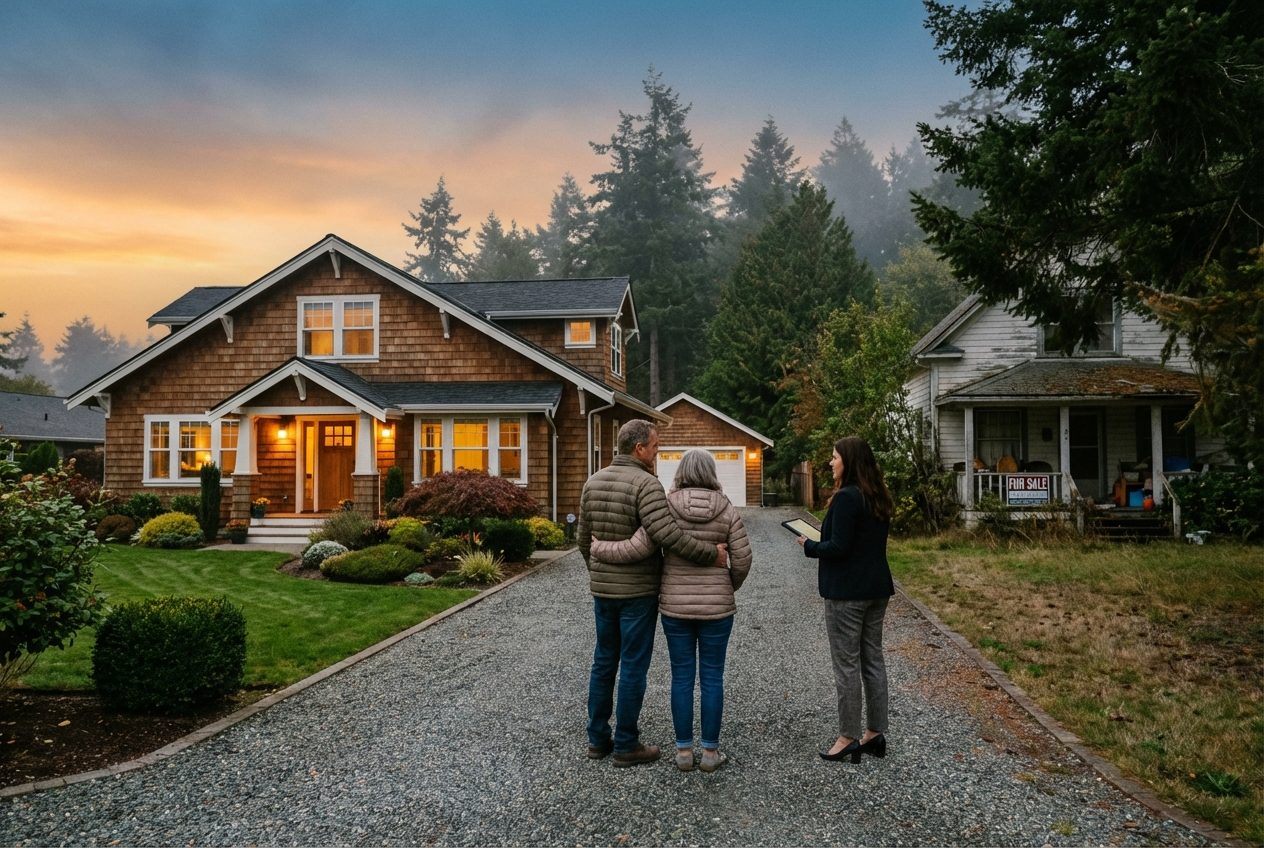
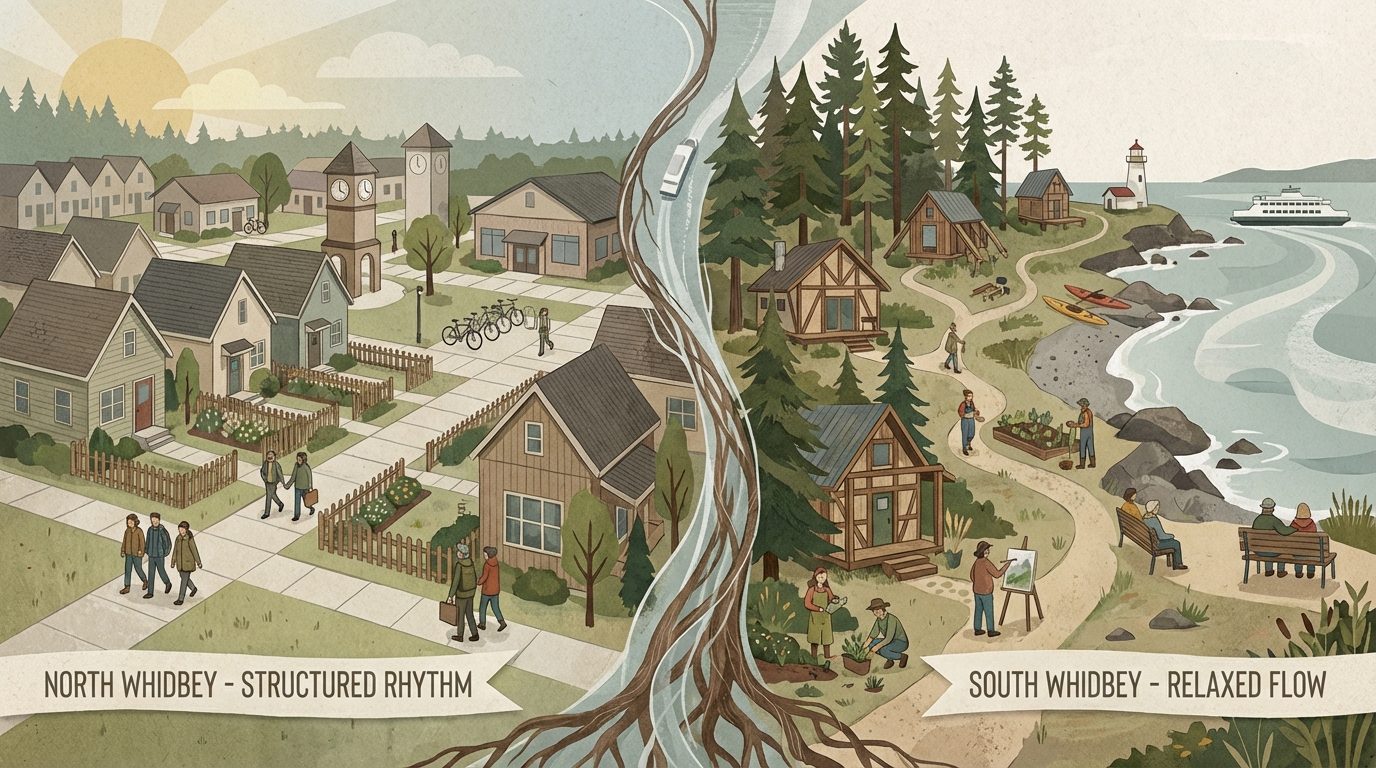
One of the easiest mistakes people make is talking about Whidbey as if it behaves like a single market. It does not. South Whidbey and North Whidbey often move at different speeds, attract different buyers, and respond differently to inventory shifts, price sensitivity, and lifestyle demand.
That is why a homeowner in Langley or Freeland should be cautious about drawing conclusions from broad island averages alone. If your property competes in South Whidbey’s buyer pool, the local interpretation matters more than the generic island headline. The same goes for buyers trying to decide whether conditions feel more negotiable in one part of the island than another. If you want better local context, it helps to compare current market conditions with the broader Windermere market trends and then ground them in the specific South Whidbey communities that match your search.
Local Tip
If a South Whidbey listing has been sitting, look beyond the raw days-on-market number. Price, condition, ferry convenience, view quality, and whether the layout fits full-time living can all matter more here than an island-wide average suggests.
What This Means for Buyers Right Now
For buyers, this kind of uneven market can actually be useful. If a listing is sitting because it is mispriced or poorly presented, there may be more room for negotiation than broad seller-market headlines suggest. But if a home is well-positioned and aligned with what the local buyer pool wants, waiting too long can still cost you.
This is especially true if you are trying to compare community fit as much as price fit. Someone deciding between South Whidbey lifestyle options may want to look more closely at Langley, Freeland, or the broader Whidbey area guide before assuming every part of the island offers the same tradeoffs.
What This Means for Sellers Right Now
For sellers, the takeaway is not “the market is bad.” It is that the market is less forgiving. Strong homes are still getting traction. But buyers are no longer giving every listing the benefit of the doubt.
If your goal is to sell well rather than simply list high, pricing, prep, and positioning need to work together from the start. That is where local interpretation matters. In an uneven market, a smart launch often matters more than a dramatic later price cut. If you are trying to understand how your home would likely compete in today’s environment, the next step is not guesswork — it is a sharper local strategy conversation.
Thinking About Island Life?
If you are buying, selling, or trying to understand where your home fits in today’s market, a local read matters more than a generic headline. Contact Windermere Whidbey for a grounded conversation about pricing, timing, and what your corner of the island is really doing right now.
Frequently Asked Questions
Why do some Whidbey homes sell quickly while others sit?
Usually because buyers are being more selective. Pricing, condition, layout, and location fit all matter more when affordability is tighter and shoppers are comparing every listing more carefully.
Is South Whidbey still a seller’s market in 2026?
In many ways, yes, but not in a blanket sense. Current South Whidbey data still shows meaningful pending activity and strong sale-to-list discipline, but sellers cannot assume every property will move automatically.
Does a home sitting on the market mean buyers have leverage?
Sometimes. A lingering listing can create negotiating room, but only if the issue is pricing or positioning rather than a deeper problem with the property itself.
Should buyers treat North and South Whidbey the same?
No. The buyer pools, price points, pace, and motivations can differ enough that the two markets are often better understood separately.
Next Steps
- Want a clearer read on today’s local market? →
Talk with Windermere Whidbey
Explore Whidbey Island by area
Contact Windermere Whidbey
Written by
Si Fisher.