Places • Things to do on Whidbey • Whidbey Island Lifestyle • June 8, 2026

Whidbey Island Beach Access Guide: Public Beaches, Dog Rules & Tide Tips

A good Whidbey beach day starts before you step onto the sand. The right public access point depends on what you want to do: walk the dog, picnic with kids, follow a bluff trail, beachcomb at low tide, watch the sunset, or simply find a quiet stretch of shoreline where the rules are clear.

Whidbey Island has public beaches, county parks, state parks, road-end access points, private shoreline, tidelands, shellfish rules, leash boundaries, parking limits, and tide conditions that can change the whole feel of a visit. This guide is meant to help you choose wisely, check the right sources, and enjoy the shoreline respectfully.

Quick Takeaways

  • Double Bluff is the best-known South Whidbey beach for long sandy walks and off-leash dog access, but dogs must be leashed from the parking lot until the marked off-leash boundary.
  • Fort Casey, Fort Ebey, and Joseph Whidbey are state parks, so plan around Discover Pass requirements and current park rules.
  • Ebey’s Landing is a bluff-and-beach outing, not a casual flat beach stroll for every visitor.
  • Shellfish harvesting is never a guess. Check current DOH, Island County, and WDFW information before harvesting.
  • Not every shoreline is public. Public access points and private beach areas can sit close together on Whidbey.

Match the Beach to the Day

Instead of asking for the single best beach on Whidbey, start with the day you want. A beach that is perfect for a low-tide walk may be less convenient for a picnic. A dramatic bluff trail may not be the right fit for a stroller. A dog-friendly beach may have specific boundaries that matter as soon as you leave the parking lot.

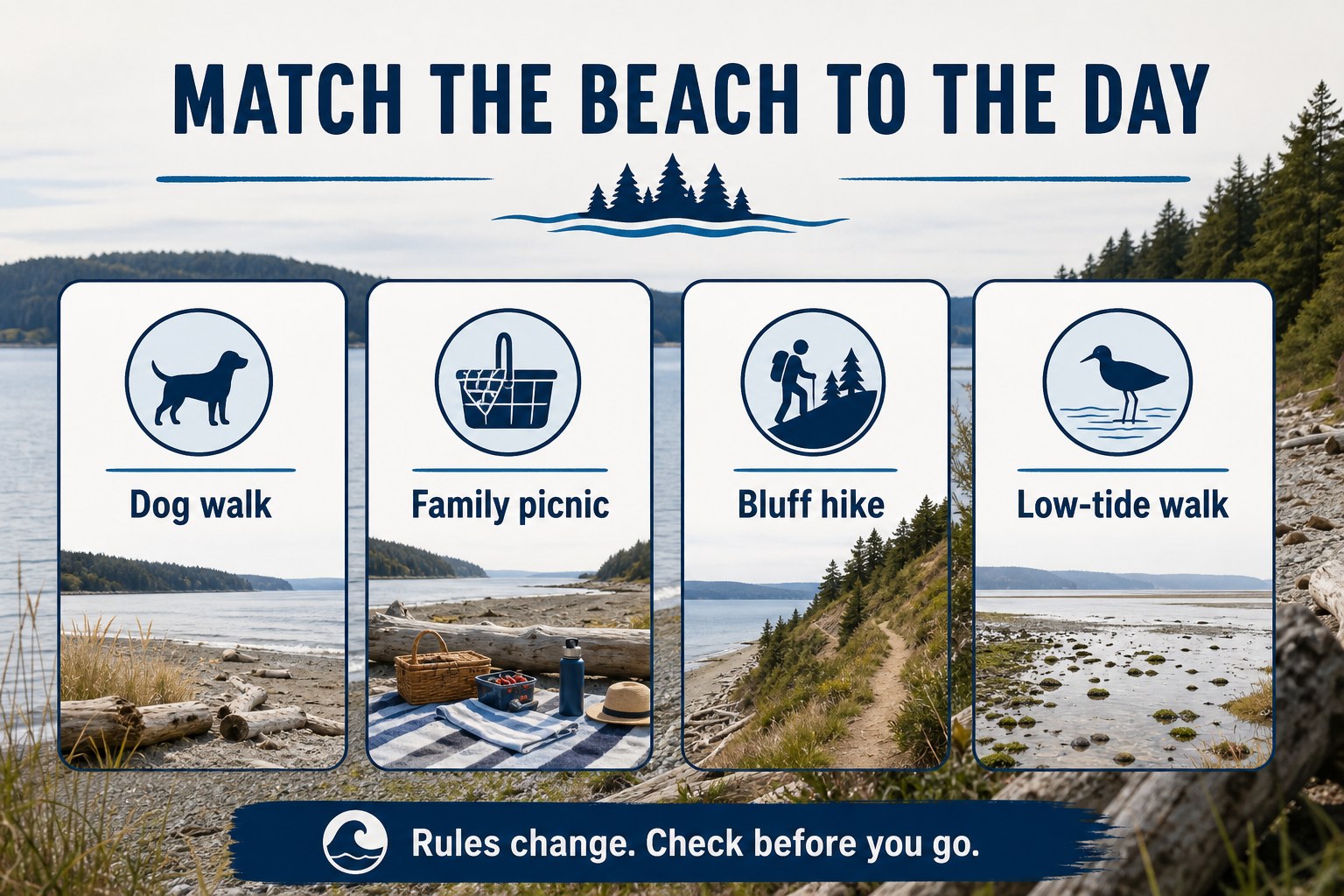
Match the beach to the day graphic showing dog walk, family picnic, bluff hike, and low-tide walk options

Dog Walk

Start with Double Bluff, then verify the current leash boundary and county rules before assuming your dog can be off leash.

Family Picnic

Look for restrooms, picnic tables, playgrounds, and simpler parking. Freeland Park and Maxwelton Park are practical South Whidbey examples.

Bluff Hike

Ebey’s Landing and Fort Ebey are better for walkers who want views, trail time, and a more active outing.

Low-Tide Walk

Check the tide first. Some Whidbey beaches open up dramatically at low tide and feel much tighter when the water is high.

Before You Go: Four Checks That Save the Day

Whidbey beach access is not complicated, but it is local. The details matter: tide timing, dog rules, shellfish closures, parking, passes, and where public access ends. A few minutes of checking can prevent a frustrating trip.

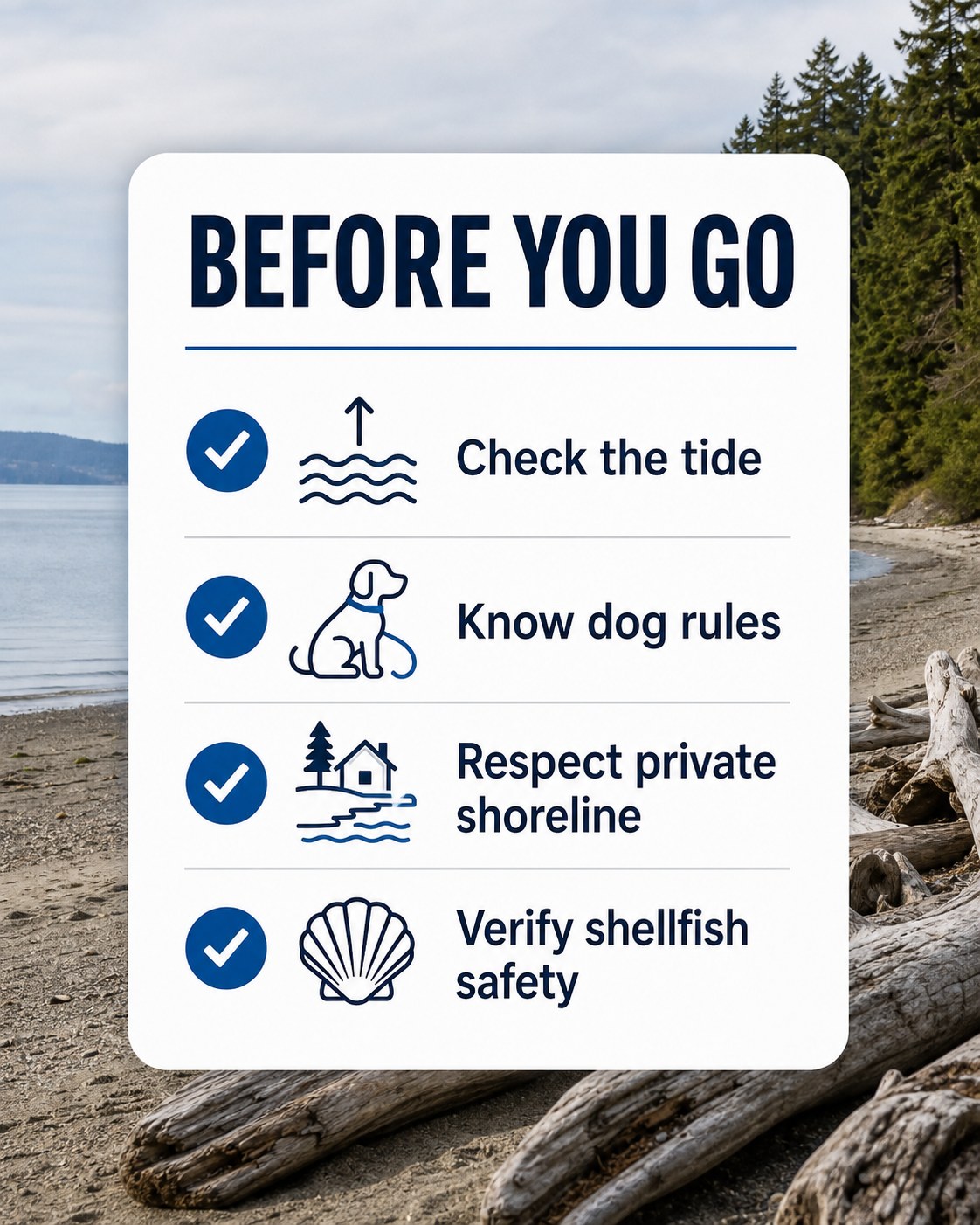
Before You Go checklist for Whidbey beaches with tide, dog rules, private shoreline, and shellfish safety reminders

1. Check the tide

NOAA keeps current online tide predictions, and that is a better source than memory or a stale screenshot. Low tide can make a beach feel spacious and walkable; high tide can narrow the usable shoreline, cover tide flats, or make driftwood areas harder to navigate. Use the NOAA tide tables before planning a long beach walk or low-tide outing.

2. Know dog rules

Dog rules vary by location. At Double Bluff, FETCH notes that the off-leash area begins about 500 feet from the parking lot, with dogs required to stay leashed until the marked boundary. State parks generally require dogs to be on leash. Check the specific park or access point before turning a beach walk into a dog outing.

3. Respect private shoreline

Public access and private shoreline can sit close together on Whidbey. Island Beach Access describes public/private shoreline boundaries as a common point of confusion for walkers and boaters. Use signed access points, stay aware of boundaries, and avoid assuming that every beach-looking stretch is open to public use.

4. Verify shellfish safety

If harvesting shellfish is part of the plan, check both safety closures and harvest rules immediately before you go. The Washington State Department of Health shellfish closure tools, Island County shellfish advisories, and WDFW beach information should all be treated as live planning sources, not background reading.

South Whidbey: Sandy Walks, Family Parks, and Dog-Friendly Planning

South Whidbey has some of the island’s most approachable beach-day choices, especially if you are coming through Clinton, staying near Freeland, or building a day around local food, farms, and small-town stops. For trip pairing, the Whidbey farmers markets and farm stands guide can help you turn a beach walk into a picnic day.

Double Bluff

For many people, Double Bluff is the South Whidbey beach that comes to mind first. Island County describes it as a popular beach with an off-leash area, iconic views, and a wide shallow beach. It is a strong fit for long walks, big-sky views, and dog owners who understand the boundary rules.

The important detail: off leash does not mean off leash from the parking lot. FETCH notes that dogs must be leashed until the off-leash area begins, and that the boundary is marked near the beach. That makes Double Bluff excellent for dog people who plan well, but less ideal for anyone expecting instant off-leash freedom the second the car door opens.

Links: Island County park info | Double Bluff dog rules | WDFW shellfish beach profile | Double Bluff on Google Maps

Freeland Park

Freeland Park is more practical than dramatic, which is exactly why it belongs in a beach access guide. Island County lists amenities including a boat ramp and dock for non-commercial use, picnic areas, restrooms, playground, walking trails, and clamming when in season. For families or multi-generation groups, amenities can matter more than scenery.

Links: Island County park info | Freeland Park on Google Maps

Maxwelton Park

Maxwelton Park is another useful South Whidbey option, especially for people who want beach access with park infrastructure. Island County lists beach access, restrooms, picnic shelters, a playground, ballfield facilities, and views toward the shipping lanes, Olympic Mountains, and Kitsap Peninsula. It is a better fit for a planned gathering than a remote shoreline wander.

Links: Island County park info | Maxwelton Beach on Google Maps

If you are comparing South Whidbey communities as part of a move, the Clinton guide and Freeland guide can help connect beach access with everyday life, ferry timing, services, and neighborhood feel.

Central Whidbey: Bluffs, History, and Westside Views

Central Whidbey beach access often feels more layered: historic landscapes, bluff trails, state park rules, west-facing water, and changing weather. This is the part of the island where a beach day can become a hike, a history stop, or a sunset plan.

Ebey’s Landing

Ebey’s Landing is one of Whidbey’s signature bluff-and-beach experiences. The National Park Service describes the Bluff Loop Trail as a moderate beach-and-bluff walk with a few steep sections, marine ecosystems, views across the strait, and Perego’s Lake. It is not the simplest beach for every visitor, but it is one of the strongest choices when the goal is landscape, movement, and a sense of place.

Links: NPS Ebey’s Landing trail info | Ebey’s Landing on Google Maps

Fort Casey

Fort Casey Historical State Park combines beach exploration with military batteries, Admiralty Head Lighthouse, picnic areas, fishing, boating, and wide Admiralty Inlet views. Washington State Parks lists dogs as allowed on leash and shows standard state park fees, including Discover Pass requirements. It is a strong Central Whidbey choice when the group wants more than shoreline alone.

Links: Fort Casey State Park info | Fort Casey on Google Maps

For more Central Whidbey context, use the Coupeville guide, especially if you want to pair Fort Casey, Ebey’s Landing, Penn Cove, and Front Street into one slower day.

North Whidbey: State Parks, Sunsets, and Bigger Water

North Whidbey beach access often feels more open and wind-shaped. It can also be more state-park-oriented, which means passes, leash rules, seasonal hours, and official park alerts matter.

Fort Ebey

Fort Ebey State Park is a coastal camping park with a historic military fort, wooded trails, bluff views, and beach exploration. Washington State Parks lists 25 miles of wooded trails and notes that visitors can explore the beach, surf, picnic, and take in views of the Olympic Mountains, Vancouver Island, and the Strait of Juan de Fuca. Dogs are allowed on leash, and a Discover Pass is part of the normal parking picture.

Links: Fort Ebey State Park info | Fort Ebey on Google Maps

Joseph Whidbey State Park

Joseph Whidbey State Park is a day-use park on the west shore of Whidbey Island. State Parks describes it as a place for sunsets, moderate trail hiking, picnicking, and beach time with kids. It is seasonal, with summer hours listed as 8 a.m. to dusk and winter closure from November 1 through March 31, so check the park page before using it as a shoulder-season destination.

Links: Joseph Whidbey State Park info | Joseph Whidbey on Google Maps

For broader North Whidbey planning, the Oak Harbor guide is a good companion, especially if you are comparing parks, everyday services, Navy-area realities, and access north through Deception Pass.

Public Access, Private Shoreline, and Owning Near the Water

Beach access is not only a visitor question. It also matters when people are thinking about buying, selling, or owning near the water on Whidbey. Two homes can both feel close to the shoreline while offering very different realities: private tidelands, community beach access, public road-end access nearby, bluff conditions, erosion considerations, septic and well systems, or rules that affect how the shoreline can be used.

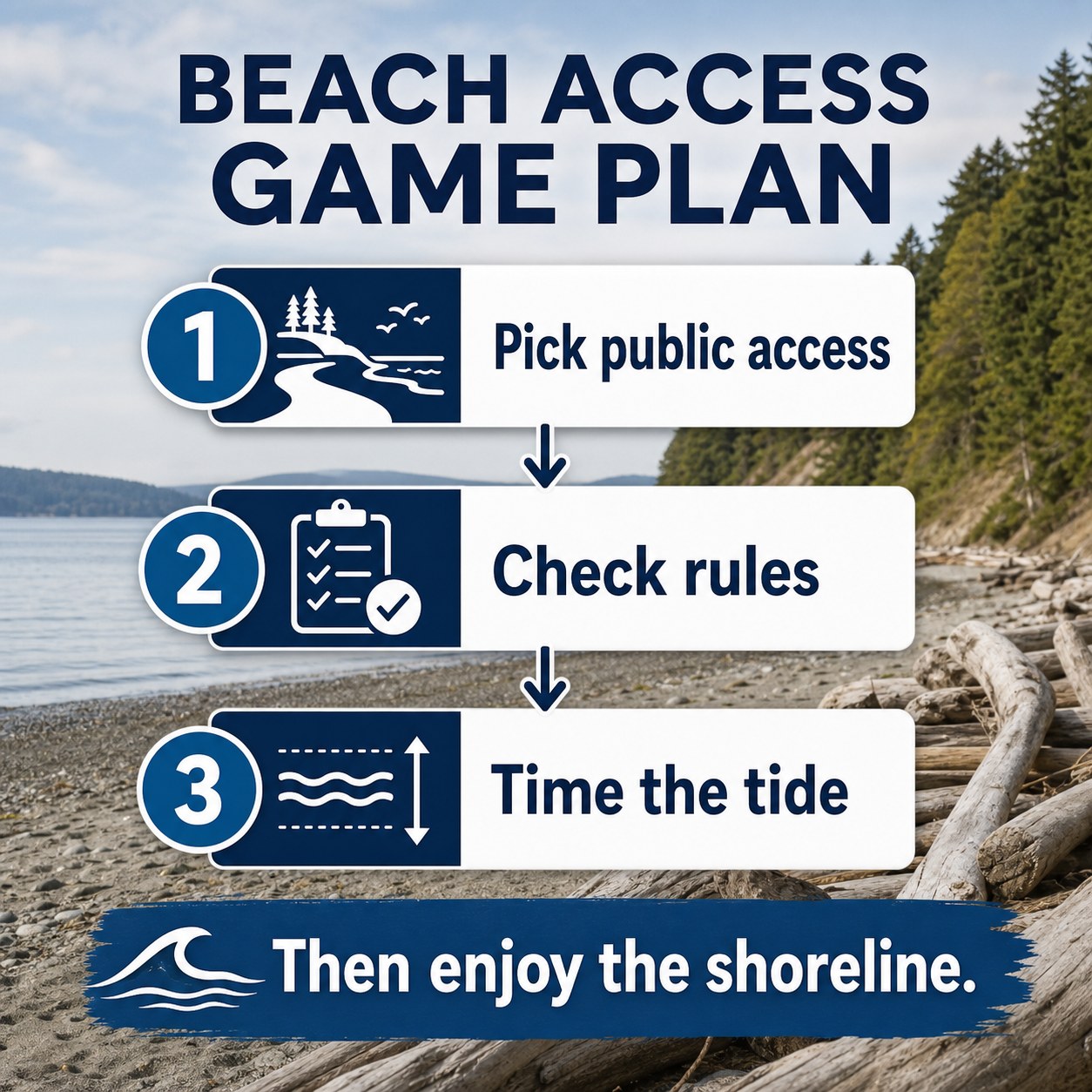
Beach Access Game Plan graphic with steps to pick public access, check rules, and time the tide

That is why local due diligence matters. If a listing mentions beach access, waterfront, tidelands, community beach, boat launch, or shoreline amenities, ask what those words mean in practice. Is access deeded, shared, public, private, seasonal, tide-dependent, or governed by a community association? Is the trail or stairway maintained? Are there bluff, drainage, erosion, septic, or insurance considerations?

For a broader ownership lens, read What to Know Before Buying a Home on Whidbey Island. Beach access is one part of the same larger pattern: island properties reward careful questions.

Thinking About a Home Near the Water?

A Whidbey shoreline setting can be beautiful, but the details matter: access, bluff conditions, septic, wells, roads, insurance, association rules, and long-term maintenance. Local guidance helps turn a pretty view into a clear decision.

Browse Whidbey Island homes

Frequently Asked Questions

What is the best public beach on Whidbey Island?

It depends on the day. Double Bluff is a strong choice for sandy walks and dog planning, Ebey’s Landing is excellent for a bluff-and-beach hike, Fort Casey and Fort Ebey pair shoreline with state park scenery, and Freeland or Maxwelton can be more practical for picnics and family park amenities.

Are dogs allowed on Whidbey beaches?

Dogs are allowed at many Whidbey beach areas, but rules vary. Double Bluff has a marked off-leash area, while Washington State Parks generally require dogs to be on leash. Always check the current rule for the specific access point before you go.

Do I need a Discover Pass for Whidbey beaches?

You need a Discover Pass when parking at Washington State Parks and certain state-managed recreation lands. Fort Casey, Fort Ebey, Joseph Whidbey, South Whidbey State Park, and Deception Pass are state park examples where pass planning matters.

Should I check tides before going to a Whidbey beach?

Yes. Tide timing can change how much beach is usable, especially for long walks, tide flats, driftwood areas, and shellfish-related outings. NOAA tide predictions are the best starting point.

Can I harvest shellfish on Whidbey beaches?

Only when the beach, species, season, license requirements, and health status allow it. Check Washington State Department of Health, Island County, and WDFW resources immediately before harvesting. Conditions and closures can change quickly.

Image note: The visuals in this article are editorial guide images created to explain Whidbey beach access planning. They are not documentary photos from a specific park, beach, event, property, or access point.

Written by Si Fisher

Events • Real Estate • February 25, 2026

A Local’s Guide to Penn Cove Musselfest 2026 & Coupeville Living

A Local’s Guide to Penn Cove Musselfest 2026 & Coupeville Living

Every spring, the heart of North Whidbey comes alive as thousands of visitors flock to the historic waterfront for a weekend of culinary delights, live music, and community celebration. This year is particularly special as we celebrate the 40th Anniversary of the Penn Cove Musselfest, running from March 6th through the 8th. But for many, a weekend visit to Penn Cove is just the beginning. As attendees wander the historic streets, taste the world-famous chowder, and take in the panoramic views of Mount Baker, curiosity about Coupeville Whidbey Island real estate naturally takes hold. Whether you are coming strictly for the “Mussel Mingle” or secretly searching for your forever home, this guide will help you navigate the 2026 festival and explore what it truly means to live the island lifestyle.

Key Takeaways

  • The 40th Anniversary Penn Cove Musselfest runs March 6–8, 2026, hosted by the Coupeville Historic Waterfront Association.
  • Ticketed events like the Chowder Tasting and Mussel Farm Boat Tours require advance purchase via the Eventeny app.
  • Coupeville offers a walkable, historic waterfront lifestyle with immediate access to Ebey’s Landing and state parks.
  • Island County housing values remain strong in 2026, making Coupeville a prime location for those who fall in love with the area during the festival.

What to Expect at Penn Cove Musselfest 2026

Celebrating its 40th anniversary, the 2026 Penn Cove Musselfest runs March 6-8 in Coupeville. Attendees can enjoy world-famous mussel chowder tastings, 45-minute boat tours by Penn Cove Shellfish, and the exclusive Mussel Mingle. It is the perfect weekend to experience the vibrant Coupeville Whidbey Island real estate and community lifestyle.

Since 1986, this festival has been the crown jewel of Coupeville. The weekend kicks off with the 21+ “Mussel Mingle” on Friday and Saturday nights ($50 per ticket). During the day, the highly anticipated Chowder Tasting lets you sample top-secret recipes from nine local restaurants and cast your vote. Don’t miss the 45-minute Mussel Farm Boat Tours ($20 for adults), guided directly by the experts at Penn Cove Shellfish. Remember, all tickets must be purchased in advance via the Eventeny app!
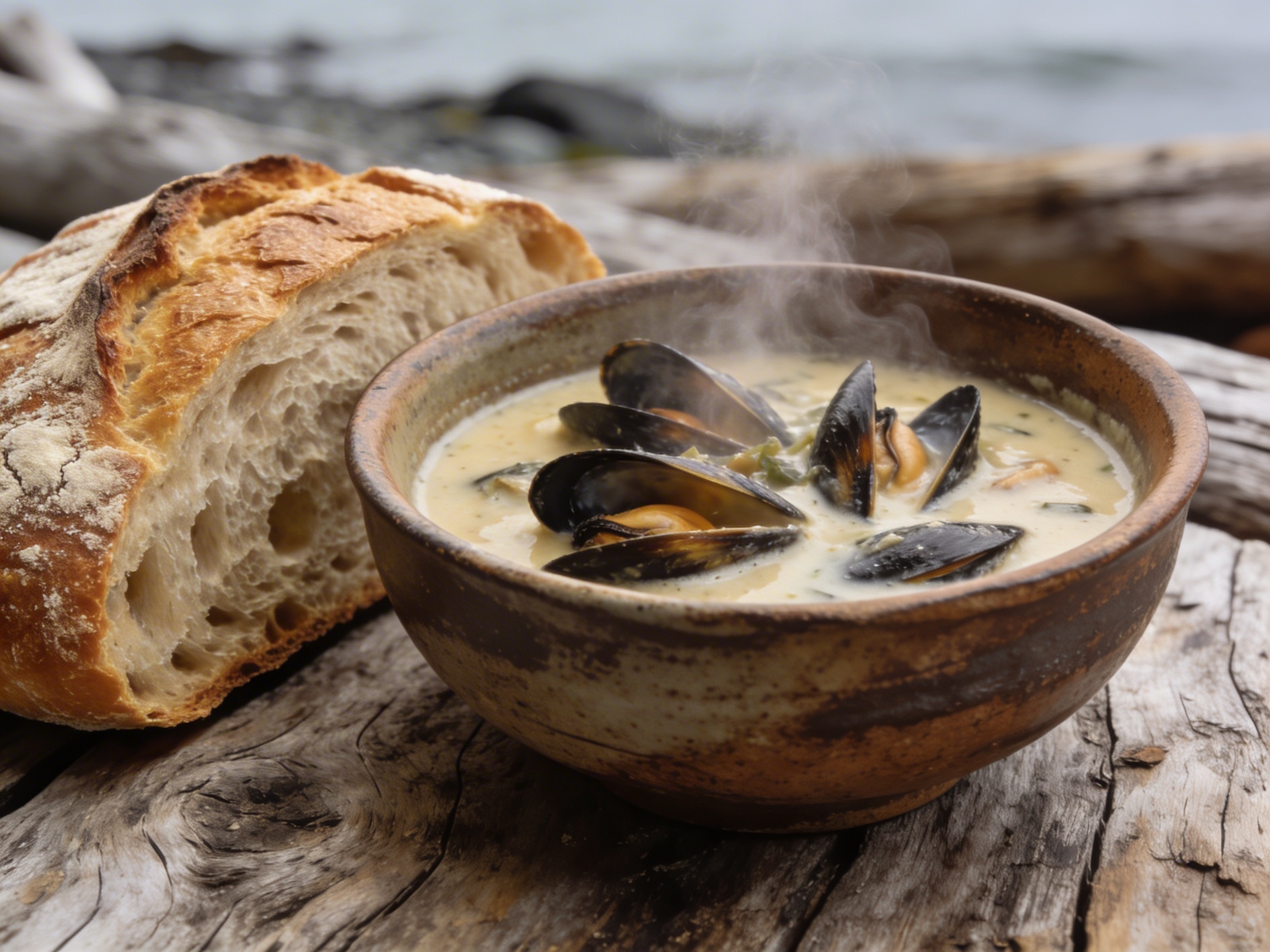
Steaming bowl of mussel chowder on a rustic wood table representing Pacific Northwest coastal cuisine

Why Visitors Fall in Love with Coupeville Living

Beyond the 40th-anniversary festival, Coupeville offers historic charm, waterfront access, and proximity to Ebey’s Landing. Buyers exploring Coupeville Whidbey Island real estate are drawn to its walkable downtown and the tight-knit community feel that the local waterfront association preserves for North End island living.

While the ticketed events draw the crowds, the free family activities—like the Mermaid Cove & Whimsy Wonderland, Chef Demos, and “Fishin’ off the Pier”—showcase the true heart of the town. It is incredibly common for Musselfest attendees to find themselves looking in real estate office windows between the Mussel Eating Contest and the live entertainment. If you are starting to envision a life on the island, taking the time to explore Whidbey Island by area can help you narrow down your ideal neighborhood. Ultimately, deciding to buy a home on Whidbey means investing in a quieter, more connected way of life.
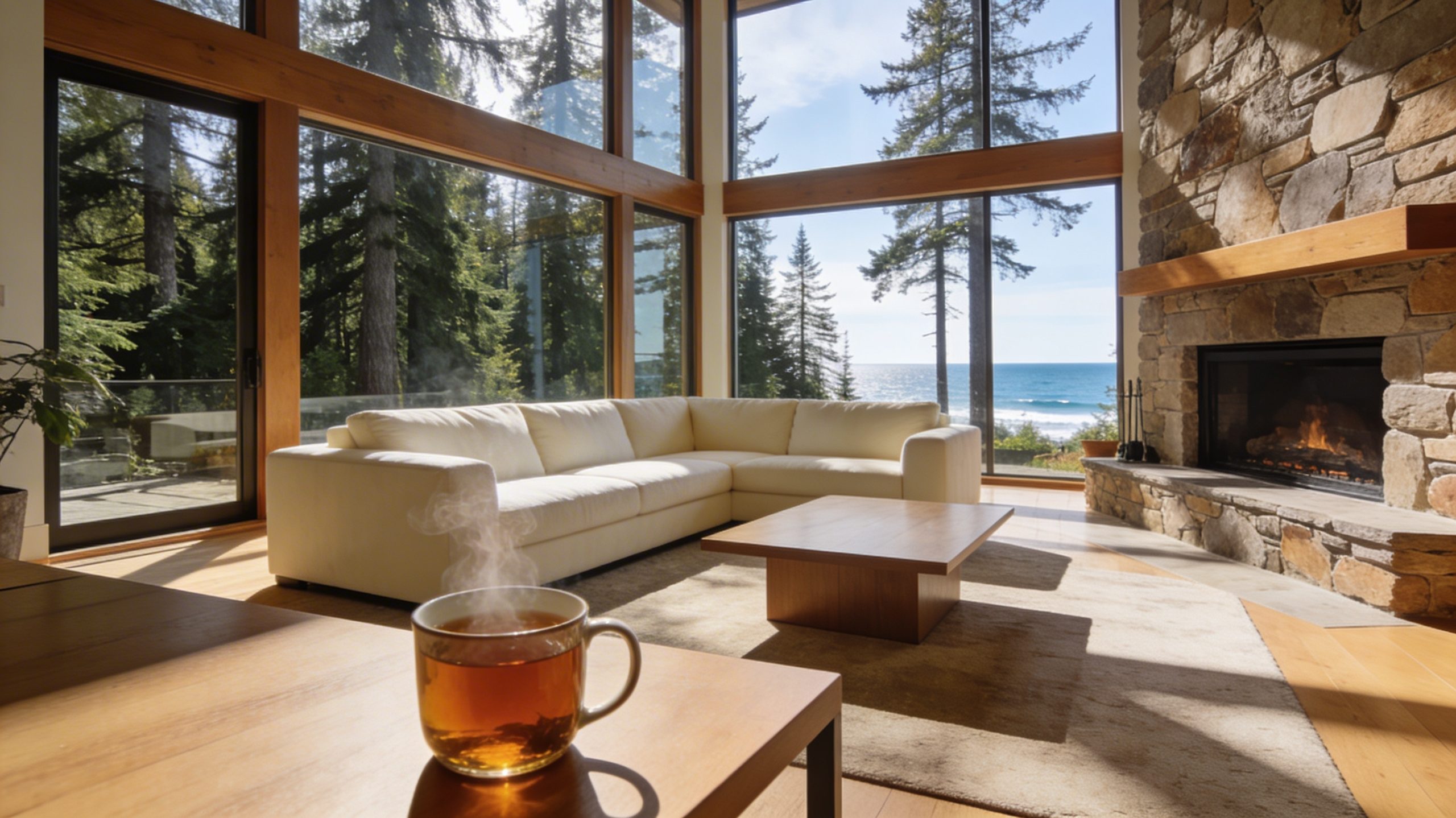
Modern Pacific Northwest living room with large windows facing evergreen trees and coastal waters

2026 Whidbey Island Real Estate Market Trends

Just as Penn Cove Musselfest has grown consistently since 1986, the 2026 Whidbey Island real estate market remains incredibly strong. With an Island County median sale price over five hundred thousand, Coupeville Whidbey Island real estate represents a stable investment for festival-goers looking to relocate.

Data Fact: Island County, WA — Median Sale Price (Jan 2026) — $595,280 (Source: https://www.redfin.com/county/3085/WA/Island-County/housing-market)

Understanding the local data is crucial when you inevitably start daydreaming about moving here. The Coupeville area continues to see steady demand, fueled by its unparalleled beauty and community events. You can easily track these shifts by reviewing our live Whidbey market trends and graphics. Even if you are just visiting for the chowder this year, keeping an eye on the numbers will help you understand why so many people choose to make this island their permanent home.

Minimalist conceptual graphic showing an upward-trending arrow made of ascending blocks, symbolizing rising real estate value and market momentum

Preparing to Sell? Maximizing Your Coupeville Home Value

Musselfest brings thousands of visitors to our island, creating massive exposure for local homeowners. Sellers can leverage this peak spring visibility to maximize their Coupeville Whidbey Island real estate value through strategic, no-upfront-cost home upgrades before listing their property in the competitive 2026 spring market.

If you already live here, you know that spring is traditionally the most active time to sell your Whidbey Island home, and the influx of festival-goers only amplifies this exposure. To ensure your property stands out to discerning buyers who fall in love with the town during Musselfest, we often recommend the Windermere Ready program. This concierge service covers the upfront costs of staging, painting, or minor renovations, allowing you to present a polished, move-in-ready home.

Homeowner and professional discussing property updates in a bright, modern kitchen

Ready to Call Coupeville Home in 2026?

Whether you are captivated by the 40th Anniversary Musselfest or the quiet beauty of Ebey’s Landing, finding the right home requires local expertise. Let’s discuss your timeline, explore exclusive Coupeville Whidbey Island real estate opportunities, and turn your weekend getaway into an everyday reality. Schedule a consultative chat with our local team today.

Frequently Asked Questions

When is the 2026 Penn Cove Musselfest?
The 40th Anniversary Penn Cove Musselfest takes place from March 6th through March 8th, 2026, in historic Coupeville, Washington.
What are the main ticketed events at Musselfest?
The primary ticketed events include the Mussel Mingle (Friday and Saturday nights), the Chowder Tasting (Saturday and Sunday), and the 45-minute Mussel Farm Boat Tours guided by Penn Cove Shellfish.
Where do I buy tickets for the chowder tasting?
All tickets for the 2026 Musselfest must be purchased online in advance via the Eventeny app or through the official Penn Cove Musselfest website.
How does investing in Coupeville Whidbey Island real estate compare to the mainland?
Island real estate often experiences less volatility than mainland suburbs. Coupeville’s limited space, historic preservation rules, and high desirability create strong, long-term equity growth.
Is spring 2026 the right time to buy a Coupeville WA waterfront home?
Spring brings the highest inventory of the year. Buying during the spring season allows you to secure a home and get settled before the busy summer months begin.
What are the zoning and bluff risks of buying waterfront property on Whidbey Island?
Waterfront living requires specific due diligence regarding bluff stability, setbacks, and shoreline management. It is vital to work with a local agent who understands Island County’s unique coastal regulations.

Next Steps

Written by Si Fisher.

Uncategorized • April 5, 2018

Ebey's Reserve:

A historical living landscape 

Ebey's landing, Windermere, Clouds, Blue Water, Bluff

You may have heard of, or even spent an afternoon hiking the bluff on Ebey’s Reserve. It’s spectacular landscape, and unparalleled views of Admiralty Inlet and the Olympic mountains are a treat for the eyes and refreshing to the soul. But, while you are busy soaking it all in, you may not realize how Ebey’s Reserve is a preservation of not just human history but a preservation of how humans interact with the land and nature.

As Early as 1300, Western explores began inhabiting central Whidbey because of the abundance of natural resources from both land and sea. However, it wasn’t until 1851, by suggestion of his friend Samuel Crockett, that Colonel Isaac Neff Ebey claimed land on Central Whidbey. Ebey was delighted with the area and wrote home urging his family to join him. Soon after hearing about the paradise Ebey described, they emigrated to and settled on the island, making the Ebey family one of the first permanent settlers on the Island.

Jacobs Blockhouse, Ebey's Landing, coupeville, Whidbey Island, Windermere   During your visit, you can still view the home of Colonel Isaac’s father, Jacob Ebey, and his blockhouse that was built to protect and defend his claim of the island from Indians.  The house sits overlooking the prairie that is now known as Ebey’s landing and stands as a memoir to the beginning of life on Whidbey Island.

Coupeville Wharf, Boat, Windermere       But, the story doesn’t end there! In addition to farmers, central Whidbey attracted sea captains and merchants because of the protection Penn Cove offers and the high value timber for shipbuilding. One of the many settlers that made their way to Whidbey was the daring Captain Thomas Coupe, who astonished his fellow seafarers when he sailed through Deception Pass in a full-rigged ship, a risk very few were willing to take. Coupe then claimed 320 acres of land on Central Whidbey, that later became our beloved town of Coupeville.

Ebey's Farmland, Windermere, Coupeville Protected by the National Parks and Recreation Act of 1978, Ebey’s Reserve stands as a historical living landscape that promises the same experience for generations to come. It is a place to enjoy the unchanged views, celebrate and honor the history of the area, and preserve the natural resources that attracted so many here in the first place. Ebey’s Reserve is a true treasure of Whidbey Island, no matter how many times you visit you will always return feeling like it’s the first time.

Suggested links:

Our favorite hike in Ebey’s Reserve is the “bluff trail” https://www.alltrails.com/trail/us/washington/ebeys-landing-trail

To learn more about life on Whidbey in the past visit the Museum

https://www.islandhistory.org/

For ways to get involved, attend events or support the Reserve http://www.friendsofebeys.org/events.html

For more about  Ebey’s Landing visit them on the web http://www.nps.gov/ebla

Follow Ebey’s Landing on Instagram https://www.instagram.com/ebeyslanding_nhr/?hl=en

If you liked this blog you might also like:

#mc_embed_signup{background:#fff; clear:left; font:14px Helvetica,Arial,sans-serif; width:100%;}
/* Add your own MailChimp form style overrides in your site stylesheet or in this style block.
We recommend moving this block and the preceding CSS link to the HEAD of your HTML file. */