Facebook
 X
X
 Pinterest
 Copy Link
Whidbey Island Storm Season Guide: Power Outages, Wind, High Tides, and Ferry Disruptions
Image note: The visuals in this article are editorial guide images created to explain Whidbey Island storm and power-outage planning. They are not documentary photos from a specific place, event, business, property, or moment.
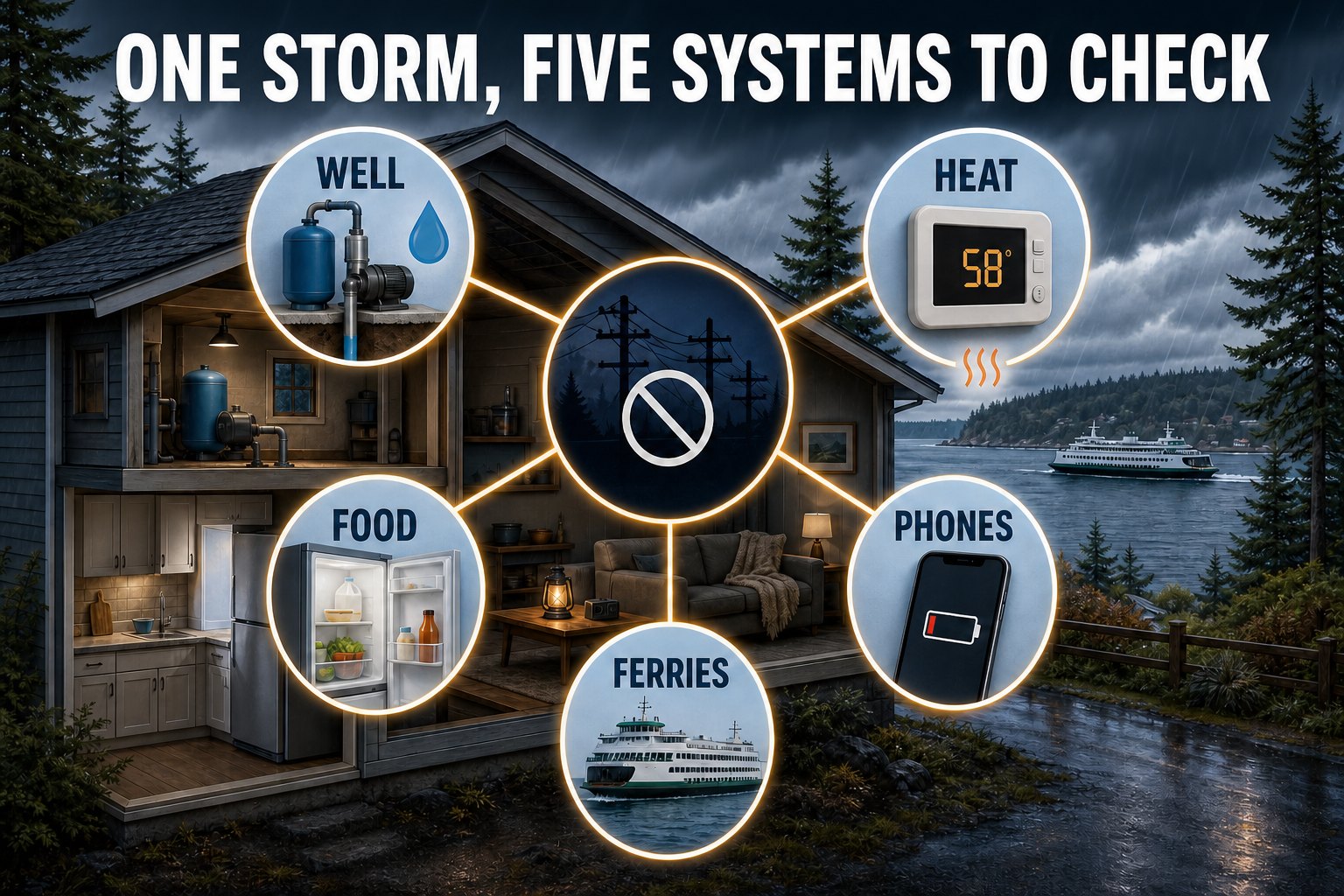
On Whidbey Island, a storm can become more than a bad-weather day. A power outage may also stop a private well pump, interrupt heat and communications, spoil food, complicate medical-device use, close roads, and disrupt one or both ferry routes. The useful question is not simply “Do I own an emergency kit?” It is “What should I check next, for this home, on this part of the island?”
This guide puts the core live tools together first, then walks through a practical sequence for the 48 hours before a windstorm, the final 12 hours, the outage itself, and the return of power. Conditions and official instructions can change quickly, so use the live panel as a starting point—not as a replacement for Island County, the National Weather Service, Washington State Ferries, or Puget Sound Energy.
[whidbey_storm_status]
The quick answer
Check these four things first
- Weather: Read the active NWS alerts for Island County, including timing and the actions in the alert.
- Power: Use the official PSE outage map and report your outage if needed.
- Travel: Check Washington State Ferries for Mukilteo–Clinton and Port Townsend–Coupeville service alerts.
- Water: If shoreline property or a low coastal route is involved, compare the nearest NOAA tide prediction with local weather and official flood guidance.
Prepare in stages, not all at once
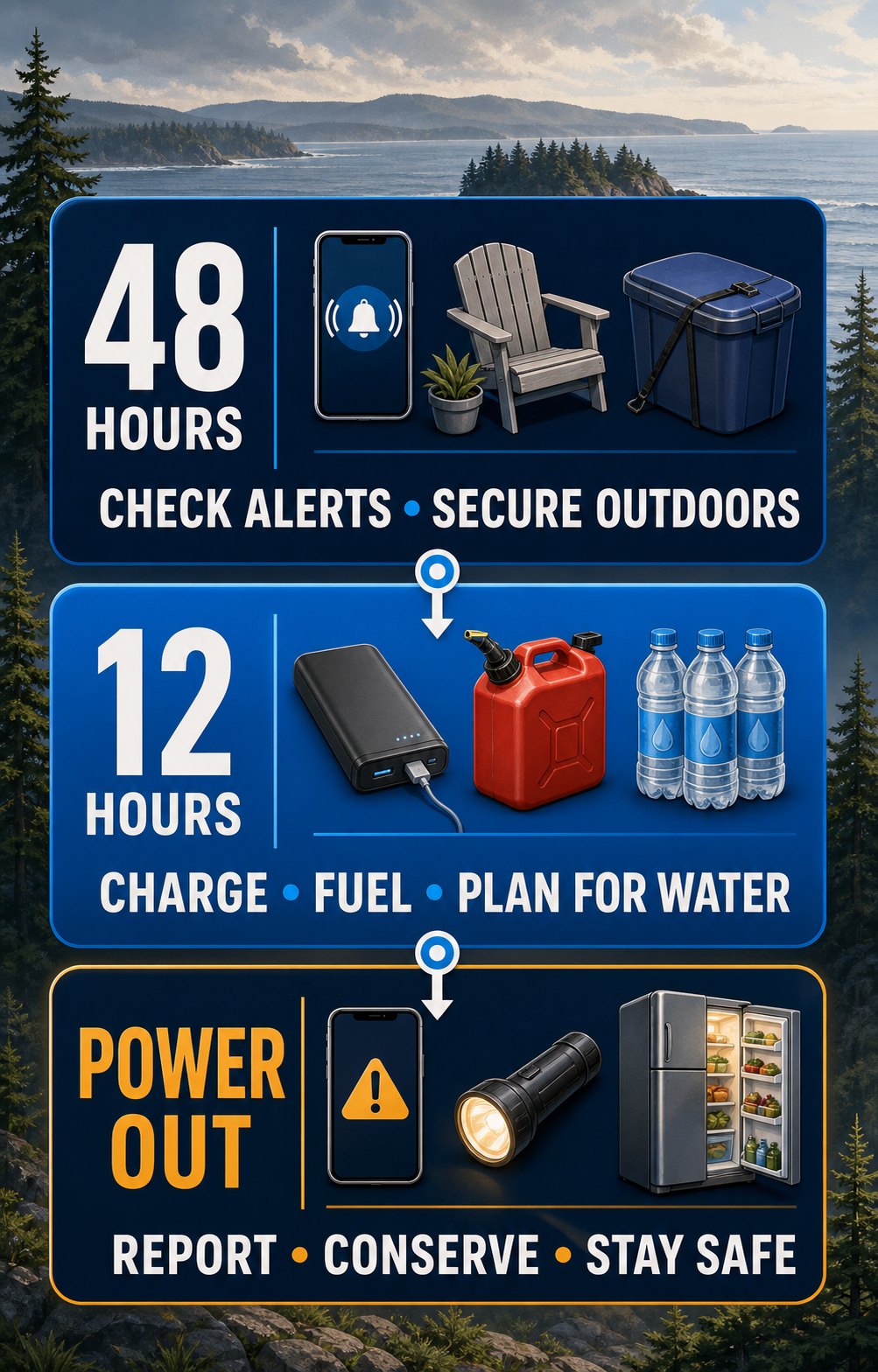
A useful storm plan changes as confidence in the forecast grows. Forty-eight hours out is the time to solve household problems. Twelve hours out is the time to finish charging, check live conditions, and avoid unnecessary travel. Once power is out, the priority shifts to electrical safety, heat, water, food, and reliable information.
Whidbey homeowners
Own a home on Whidbey?
Curious to know what it is worth in today’s market? Request a complimentary home valuation from a local Windermere Whidbey professional.
About 48 hours before
Solve the household problems
- Sign up for Island County myAlerts if you have not already.
- Secure outdoor furniture, cans, tools, and decorations before winds rise.
- Charge battery banks and test flashlights, CO alarms, and backup equipment.
- Fuel the vehicle; stations, card readers, and pumps may be affected by outages.
- Make a specific plan for well water, refrigerated medication, pets, mobility needs, and electrically powered medical equipment.
About 12 hours before
Shift to live conditions
- Read the full NWS alert, not only the headline, and note the expected timing.
- Recheck ferry alerts, road conditions, and any tidal restrictions before traveling.
- Fill clean water containers if your well pump will stop without power.
- Freeze water or gel packs and group freezer items together.
- Bring loose items, devices, medication, pet supplies, and lighting into the part of the home where you expect to stay.
Do this now, not during the storm
Learn the manual parts of your home
Know how to release the electric garage door, where the electrical panel and water shutoffs are, which heat sources work without utility power, and how your well or pressure tank behaves during an outage. Label instructions so another household member can use them. If a system is unfamiliar, arrange professional guidance before severe weather—not while it is failing.
When the power goes out on Whidbey
First determine whether the problem appears limited to your home. Check the electrical panel only if it is safe and dry. If the neighborhood is dark or you see utility damage, use PSE’s official outage tools. Island County notes that outages can disrupt communications, water, transportation, stores, fuel access, food storage, and medical devices—several systems that island households may rely on at the same time.
First 15 minutes
Use this order
- Look and listen for immediate danger. Stay indoors and away from windows if winds are high. Do not investigate falling trees or damaged lines.
- Report and verify. Use the PSE outage page, then conserve phone battery rather than repeatedly refreshing it.
- Protect the home. Turn off or unplug sensitive electronics and heat-producing appliances. Leave one light on so you know when service returns.
- Protect water. If you use a private well, conserve stored and pressure-tank water until you understand what is available.
- Protect cold food. Keep refrigerator and freezer doors shut and write down the outage start time.
Downed line: stay at least 35 feet away
PSE says to assume every downed utility wire is energized, stay at least 35 feet away, and call 911 or the utility. Do not drive over a line or attempt to rescue a person or pet near it. If a line falls on your vehicle, stay inside unless fire or another immediate hazard forces evacuation; follow emergency instructions.
Food safety has a clock
The FDA says an unopened refrigerator keeps food cold for about four hours. A full freezer holds temperature for about 48 hours, or about 24 hours when half full, if the door stays closed. When power returns, use appliance and food temperatures—not smell or appearance alone—to make decisions. The FDA advises discarding refrigerated perishables that have been above 40°F for four hours or more. Read the FDA’s current outage food-safety guidance for the full decision process.
Where to find food, warmth, charging, and community help
During a prolonged Whidbey Island outage, churches, nonprofits, community centers, neighbors, and generator-powered businesses sometimes provide hot meals, coffee, warmth, Wi-Fi, or device charging. The important catch is that storm-specific help is usually activated case by case. A place that helped during one outage may be closed, without power, or serving a different population during the next one.
Confirm before you leave
Check that the location is open, that the specific service you need is available, and that your route is safe. Never drive around barricades or approach floodwater, unstable trees, or downed lines to reach a resource. Call 911 for an immediate threat to life or safety; 211 is an information and referral service, not emergency dispatch.
During an active emergency
Start with Island County
Check Island County Alerts & Warnings for activated facilities, public instructions, road information, and Communication Hub updates. The county has identified public libraries as possible hub locations, but says operational details are still being developed.
Sign up for Island County myAlerts before storm season so time-sensitive notices can reach you directly.
Food, shelter, and essential needs
Ask Washington 211 what is open now
Washington 211 connects residents with current meal, pantry, shelter, warming, utility-assistance, and other community resources.
Call: 211 or 1-877-211-9274
Text: 211WAOD to 898211
Online: Search the resource directory
Standing Whidbey meal and daytime-support resources
The following are standing community programs rather than guaranteed storm shelters. Hours and services were checked on August 25, 2026, but outages, holidays, staffing, and program changes can affect availability. Call or check the linked page before traveling.
| Area | Resource | Standing service | Verify and locate |
|---|---|---|---|
| North Whidbey | SPiN Café 1241 SW Barlow Street, Oak Harbor 360-682-5949 |
Open daily 6:30 a.m.–5 p.m.; offers meals, daytime respite, and connections to community resources. Confirm the current meal schedule. | Official website Google Maps |
| North Whidbey | St. Augustine Catholic Church 185 N Oak Harbor Street, Oak Harbor 360-675-2303 |
Agape hot meal Monday evenings; Island County currently lists service from 4:30–6 p.m. | Official ministry page Google Maps |
| Central Whidbey | Coupeville United Methodist Church 608 N Main Street, Coupeville 360-678-4256 |
Island Senior Resources senior lunch Wednesdays from 11:45 a.m.–12:30 p.m. | Official website Google Maps |
| South Whidbey | Island Church of Whidbey 503 Cascade Avenue, Langley 360-221-6980 |
Free hot meals Tuesdays and Thursdays from 11:30 a.m.–1 p.m.; no eligibility restriction is currently listed. | Current program listing Google Maps |
| South Whidbey | St. Anthony’s Soup Kitchen at St. Hubert 804 3rd Street, Langley 360-221-5303 |
Island County currently lists Wednesday lunch from 11 a.m.–1 p.m. | County meal directory Google Maps |
For food banks and additional programs—including North Whidbey Help House, Good Cheer Food Bank, Gifts from the Heart, Queen-Bee Pantry, Whidbey Island Nourishes, and senior meal services—use the Island County food-bank and meal-program directory.
Watch for verified storm pop-ups
Whidbey businesses and neighbors sometimes create temporary gathering places when a long outage develops. During the December 2025 outage, Pickles Deli operated with generator power, heat, Wi-Fi, coffee, food, and a community meal fund. In December 2024, Bearly Awake Coffee Co. served residents from a generator-powered setup at Windjammer Park. These are examples of Whidbey’s community response—not standing promises for the next storm. Look for current, dated announcements and verify them before leaving home.
Generator safety: outside means fully outside
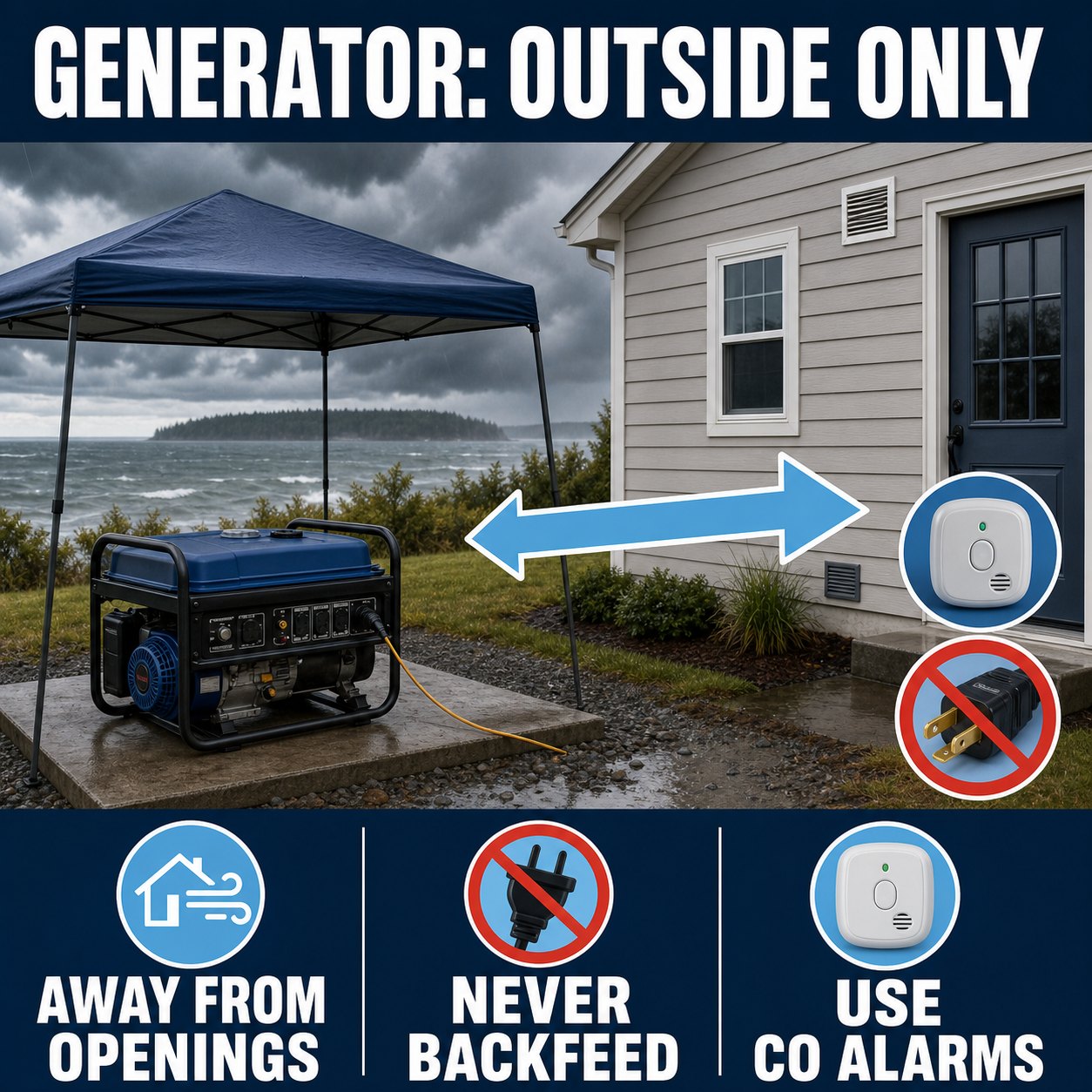
A garage with its door open is not a safe generator location. Neither is a porch, carport, breezeway, crawlspace, or partly enclosed shed. Operate a portable generator fully outdoors and away from doors, windows, and vents, following the manufacturer’s directions. PSE advises keeping the unit on a dry surface under an open canopy-like cover in wet weather and at least 10 feet from combustible surfaces.
- Use working carbon-monoxide alarms. Test them before storm season and replace batteries or units according to their instructions.
- Do not backfeed. Never plug a generator into a wall outlet or directly into home wiring. Backfeeding can energize utility lines and kill a lineworker.
- Use the correct connection. Plug appliances directly into the generator or use a properly rated, intact outdoor cord. A permanent connection requires a correctly installed transfer switch and qualified professional.
- Keep it dry and cool. Do not operate in standing water or touch it with wet hands. Shut it down and let it cool before refueling.
- Do not improvise placement. The PSE generator-safety page and the manufacturer’s instructions should govern the setup.
A high tide is not the whole flood forecast
Island County describes king tides as higher-than-usual tides that can produce local flooding even without rain. But a tide table is only one input. Wind direction, wave action, and atmospheric pressure can push observed water above or below the astronomical prediction. That is why the live panel labels the next predicted high tide without declaring it a flood event.
If official guidance warns of coastal flooding, move vehicles and portable items before water reaches the route or property, identify higher ground, and do not walk or drive through floodwater. For public shoreline planning and legal access reminders, see the Whidbey Island Beach Access Guide.
Check both ferry routes—and the road between you and them
Whidbey’s two ferry connections are different systems: Mukilteo–Clinton at the south end and Port Townsend–Coupeville on Central Whidbey. Wind, vessel availability, terminal conditions, and tidal restrictions can affect travel plans. A reservation, screenshot, or schedule checked earlier in the day is not a live status report.
- Review current WSF alerts and schedules before leaving.
- Check the official tidal cancellations and restrictions page for route-specific limitations.
- Treat trees, standing water, and road closures between home and terminal as separate go/no-go decisions.
- For the mechanics of terminals, reservations, timing, and route choice, use the Whidbey Ferry Guide.
After power returns
Restoration is a transition, not an all-clear. Give the electrical system a moment, then reconnect appliances in stages rather than switching everything on at once. Check food and refrigerated medication using the appropriate official guidance. Look for leaks, damaged branches, blocked access, and signs of electrical trouble—but never approach a line or unstable tree to inspect it.
The 20-minute reset
- Record how long the outage lasted and any official restoration details.
- Check refrigerator, freezer, and medication temperatures before discarding packaging or resetting thermometers.
- Refill water, batteries, fuel, shelf-stable food, and pet supplies that were used.
- Recharge every power bank and backup light.
- Write down the one thing that made the outage harder; solve that issue before the next forecast.
A homeowner’s Whidbey storm-readiness inventory
Storm readiness is property-specific. Two homes on the same road may have different water sources, heat systems, tree exposure, shoreline elevation, cell coverage, driveway access, and backup-power options. Whether you already live here or are evaluating a home, verify the systems rather than relying on a general impression that a property is “storm ready.”
| System | Question to answer before a storm | Evidence to locate |
|---|---|---|
| Water | Will the well pump or treatment system work without utility power? | Well records, pump controls, pressure-tank details, stored-water plan |
| Heat | Which heat source can operate safely during an outage? | Equipment manuals, fuel plan, service history, working CO alarms |
| Backup power | What loads are supported, and how is power connected safely? | Generator rating, transfer-switch documentation, electrician records |
| Access | Can trees, drainage, snow, or shoreline flooding block the route? | Road maintenance, easements, alternate routes, tree assessment |
| Communications | What works when power, internet, or one cell carrier fails? | Battery backup, radio, alert sign-ups, neighbor plan |
For a broader look at wells, septic systems, ferries, insurance questions, and everyday island logistics, continue with What to Know Before Buying a Home on Whidbey Island.
Frequently asked questions
Where do I check a Whidbey Island power outage?
Use Puget Sound Energy’s official outage map and report-outage page. The live panel near the top of this guide links to both. For a downed line or immediate danger, stay away and call 911 or PSE at 1-888-225-5773.
Why is the PSE outage map not embedded on this page?
PSE’s website security settings do not allow the outage map to be framed on another domain. This guide links directly to the official live map rather than copying, scraping, or presenting a broken iframe.
How long will food stay cold during a power outage?
The FDA says an unopened refrigerator keeps food cold for about four hours. A full freezer holds temperature for about 48 hours, or about 24 hours if half full. When power returns, use temperatures and current FDA guidance to decide what is safe.
What happens to a private well when the power goes out?
Most electric well pumps stop. A pressure tank may provide a limited amount of water, but the amount and behavior depend on the system. Know your equipment, store drinking water before forecast high winds, and conserve water during the outage.
Can I run a portable generator in a garage with the door open?
No. A garage is still an enclosed or partly enclosed space where deadly carbon monoxide can accumulate and enter the home. Operate the generator fully outdoors, away from doors, windows, and vents, following PSE and manufacturer instructions.
Which Whidbey ferry routes should I check during a storm?
Check both Mukilteo–Clinton and Port Townsend–Coupeville if either could affect your trip or backup route. Also check the road between your location and the terminal, because a ferry may be operating while local access is disrupted.
Does a high predicted tide guarantee flooding?
No. A tide prediction describes the astronomical tide at a station. Wind, waves, atmospheric pressure, local drainage, and shoreline shape can change actual conditions. Follow official coastal-flood guidance rather than using one tide height as a universal threshold.
Where can I find hot meals or community help during a Whidbey outage?
Check Island County Alerts & Warnings for facilities activated during the incident, and call 211 for current meal, shelter, warming, and utility-assistance resources. Island County also maintains a directory of standing Whidbey meal and food-bank programs. Because outages can close or change services, confirm the location and your route before traveling.
How often does the live storm panel update?
The panel requests refreshed information every five minutes and shows the last-check time. Source agencies may update on different schedules, and network or provider outages can delay data. Open the linked official source before making a safety or travel decision.

Official planning sources
- Island County DEM: Windstorms
- Island County DEM: Alerts & Warnings
- Island County DEM: Flooding
- Island County food banks and meal programs
- Washington 211 community-resource directory
- SPiN Café: Oak Harbor meals and daytime support
- PSE outage map
- PSE downed-power-line safety
- PSE generator safety
- FDA food and water safety during outages
- National Weather Service API
- NOAA Tides & Currents web services
- Washington State Ferries Schedule API
Official guidance, source links, image URLs, and live-feed behavior were last verified August 25, 2026. Weather, outages, tide observations, ferry service, roads, and agency instructions can change without notice. Always follow current official directions.
Written by Si Fisher
What to Know Before Buying a Home on Whidbey Island: Septic, Wells, Ferries, Insurance & Island Reality

Buyer Guide · Whidbey Island Real Estate
Whidbey Island is easy to fall in love with.
The beaches, the towns, the slower rhythm, the trees, the views, and the feeling of being just a little outside the rush of everything else are all very real. But for out-of-area buyers, it is important to understand that buying on Whidbey is not always as straightforward as buying in a more typical suburban or urban market.
Septic systems, private wells, ferries, bluff and waterfront considerations, private roads, insurance questions, and meaningful differences between one Whidbey community and another can all affect the buying experience. That is exactly why local guidance matters here.
Why Buying on Whidbey Feels Different
Systems
Septic and wells are common
You may be evaluating systems many off-island buyers rarely deal with directly.
Access
Ferries, roads, and distance matter
A home’s daily convenience can change dramatically depending on where it sits.
Property Type
Waterfront and rural homes carry extra nuance
Insurance, maintenance, and ownership realities can vary widely.
Local Context
Micro-markets really matter here
Langley, Freeland, Clinton, Greenbank, Coupeville, and Oak Harbor are not interchangeable buyer experiences.

Why Whidbey Is Different From a More Typical Market
Many out-of-area buyers begin with the right instinct: they search listings, compare photos, check prices, and start narrowing down locations. But on Whidbey Island, that is only part of the story. A home can look perfect online and still come with questions that matter a great deal once you begin looking more closely.
That does not mean buying here is risky by default. It means the due diligence is often more local, more property-specific, and more nuanced than buyers first expect. The more clearly you understand those differences, the better decisions you can make.
Septic Systems and Wells Matter More Than Many Buyers Realize
On Whidbey, many homes are not connected to the kinds of utility systems buyers from larger cities or denser suburbs may be used to. Septic systems and private wells are common, and understanding their condition, capacity, maintenance history, and inspection status can make a meaningful difference in how confident you feel about a property.
The Windermere buyer guide reinforces this well: buyers should be thinking not just about the home itself, but also about inspections, water testing, septic review, and how those pieces fit into the overall process. This is one of the first places where local expertise becomes valuable. A local broker is more likely to help you ask the right questions early — not after you are already emotionally attached to a home.
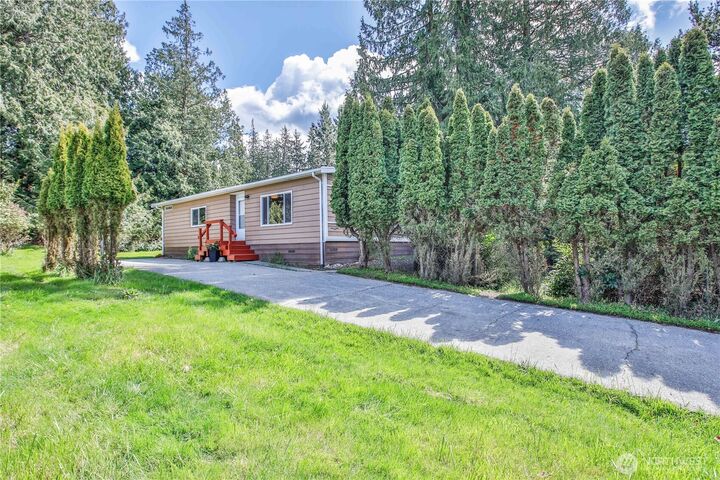
Featured Listing: 3239 Mardell Drive, Langley — $399,000
A Good Example of Why Local Context Matters
This Langley-area home highlights something buyers often discover on Whidbey: neighborhood amenities, beach access, lot feel, and community setup can affect value and lifestyle just as much as bedroom count or square footage.
That is where local guidance helps turn a listing from “interesting online” into “a real fit or not.”
Ferries, Roads, and Daily-Life Logistics Can Shape the Experience of Ownership
Not every Whidbey property lives the same way day to day. Commute habits, ferry use, private-road access, weather exposure, and distance to the towns or services you care about can all influence whether a home feels easy, isolated, convenient, or more work than expected.
For some buyers, that is part of the appeal. For others, it becomes a surprise. Understanding not just the home, but how the location functions in real life, is one of the biggest advantages of working with someone who knows the island firsthand.

Waterfront, Bluff, Rural, and Insurance Questions Add Another Layer
Whidbey properties can differ dramatically depending on whether they are inland, wooded, waterfront, bluffside, part of a private community, or served by systems and access routes that are less common elsewhere. Insurance questions, maintenance expectations, and property-specific due diligence can shift quickly based on those factors.
Two homes with similar square footage and price points may carry very different ownership realities. That is exactly why local context matters so much more than simply comparing listing specs side by side.
A Different Ownership Picture at a Higher Price Point
At the upper end of the market, the stakes on due diligence only rise. Complex properties can bring privacy, views, acreage, and extraordinary appeal — but they also increase the value of asking better questions before moving forward.
That is one reason truly local representation matters across every price bracket.

A Quick Market Reality Check
This is not a market where buyers can assume nothing is happening and they have unlimited time to figure everything out later.
- 30 homes sold from Clinton to Greenbank in the last 30 days
- 6 of those sales were between $1,048,000 and $1,950,000
The takeaway is simple: buyers who understand the local landscape are in a better position to move with confidence when the right home appears.
Whidbey’s Micro-Markets Are Not All the Same
One of the easiest mistakes for out-of-area buyers is assuming that Whidbey works as one unified experience. It does not. Langley feels different from Freeland. Freeland feels different from Greenbank. Clinton, Coupeville, and Oak Harbor each come with their own rhythms, conveniences, tradeoffs, and property patterns.
The right fit is not just about the prettiest listing. It is about matching lifestyle, access, property type, and expectations to the part of the island that actually supports how you want to live.

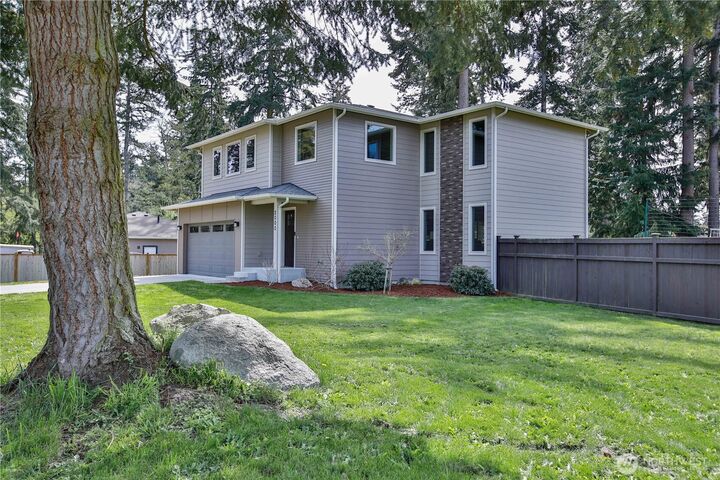
A Useful Mid-Market Comparison Point
This Coupeville listing shows why local comparison matters. A well-maintained, newer home in one part of the island can offer a very different day-to-day ownership experience than a beach-community cottage, acreage property, or bluffside home somewhere else.
Buyers benefit when someone helps them compare more than just price and photos.
Why Working With a Local Whidbey Broker Matters
This is the part many buyers underestimate. A good local broker is not just there to unlock doors or send listings. On Whidbey Island, the right broker can help you ask smarter questions sooner, notice potential blind spots, compare communities more accurately, and understand what really matters for the kind of home you are considering.
That kind of guidance is especially valuable if you are coming from out of area. The more unique the market, the more local knowledge becomes a practical advantage rather than a nice bonus.
Find a Local Whidbey Expert Before You Go Too Far Down the Road
If you are serious about buying on Whidbey Island, one of the smartest first steps is connecting with a broker who knows the island’s communities, property types, and practical ownership realities. You can start here: meet the Windermere Whidbey agents.
Frequently Asked Questions
Why is buying a home on Whidbey Island different from buying in a more typical market?
Whidbey buyers often need to evaluate septic systems, private wells, ferry and access realities, waterfront or bluff considerations, private roads, and meaningful differences between towns and neighborhoods. Those factors can change the buying experience more than many out-of-area buyers expect.
What should buyers ask about septic systems and wells on Whidbey Island?
Buyers should ask about inspection status, maintenance history, water testing, system condition, and how those systems fit into the overall purchase process. These questions matter because many Whidbey homes rely on systems buyers may not deal with regularly elsewhere.
Do ferries and location really affect daily life that much?
Yes. Ferry use, road access, commute patterns, weather exposure, and distance to services can all shape whether a property feels convenient, remote, easy, or more demanding than expected.
Why should out-of-area buyers work with a local Whidbey broker?
A local broker can help buyers ask smarter questions earlier, compare communities more accurately, spot property-specific issues, and understand practical ownership realities that are not always obvious from listing photos alone.
A Better Buying Experience Starts With Better Local Questions
Whidbey Island can be an extraordinary place to buy a home. But the buyers who tend to feel best about their decisions are usually the ones who take the local differences seriously from the beginning. Ask better questions, get more specific guidance, and work with someone who understands the island well enough to help you see beyond the listing photos.
Written by Si Fisher